Windshield Tint Exemption: What States Allow
 by Sahar Mustafa
Last updated:
Medically reviewed by:
Dr. Matthew Reynolds, MD


A windshield tint exemption lets drivers with photosensitivity apply darker tint. Lupus and similar conditions also qualify. Drivers can tint more than state law allows with this exemption. Most states restrict windshield tinting to a narrow strip at the top. Medical exemptions can extend protection across more of the glass when a physician documents the need. Each state sets its own approval process, qualifying conditions, and darkness limits, which makes finding accurate information difficult.
This guide explains which states permit medical exemptions for windshield tint. It covers what medical documentation you need and how the AS-1 line affects where you can apply tint. You’ll also learn the step-by-step application process for getting approved. You’ll learn what to request from your doctor, how to work with tint shops after approval, and what restrictions still apply even with an exemption.
Windshield Tint Exemption: Why Rules Are Stricter Than Side-Window Rules
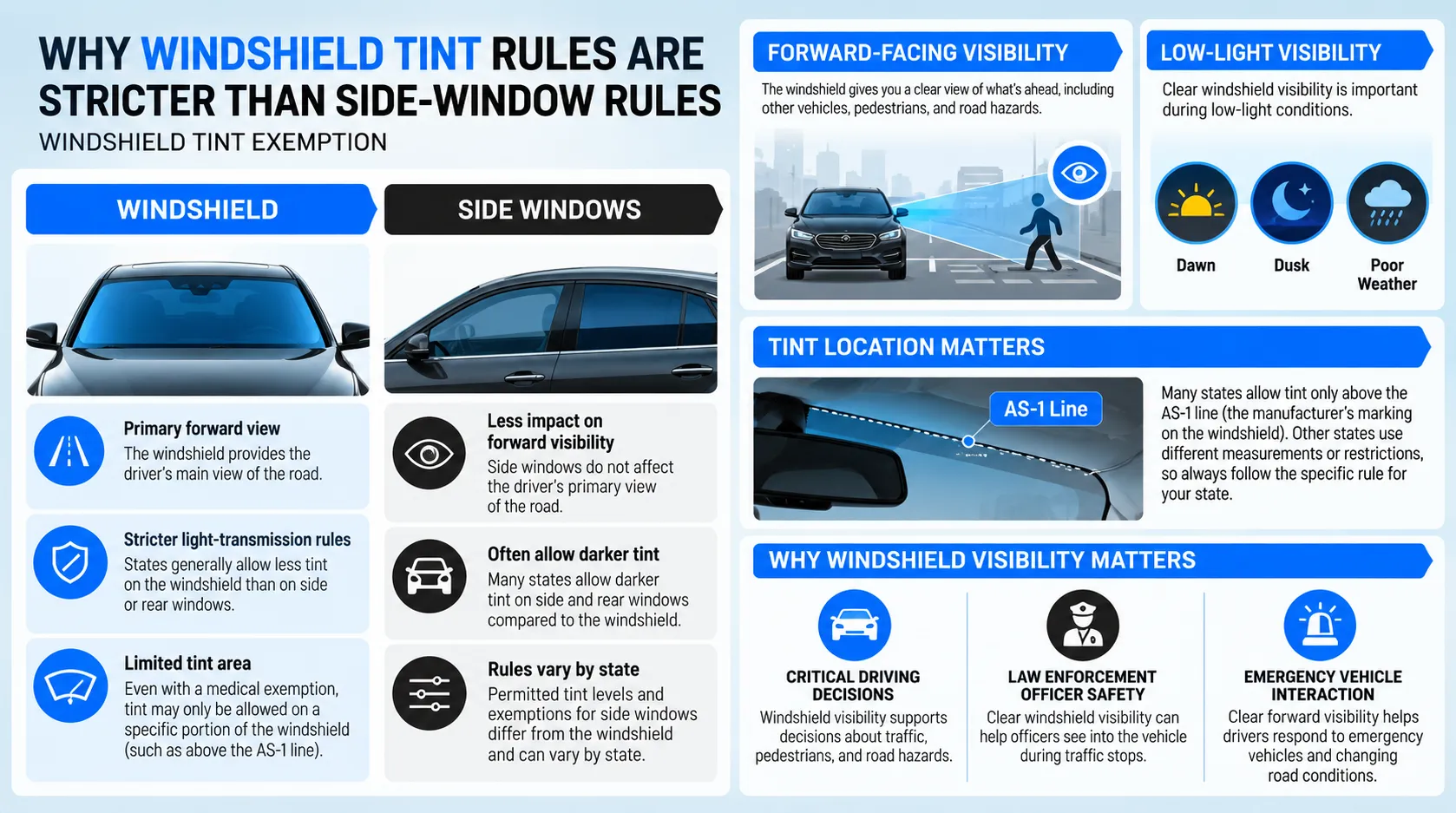
Windshield tint rules are much stricter than side or rear window rules. Safety concerns that touch all drivers on the road drive these rules. These rules protect vehicle occupants during traffic stops. They also protect law enforcement officers.
Why Windshields Have Stricter Tint Requirements
Your windshield provides your primary view of the road ahead. Reduced visibility through your windshield hurts your ability to see. You may miss pedestrians, traffic signals, road hazards, and other cars. You may not have enough time to react safely.
Federal vehicle safety standards set light-transmission requirements for glazing used for driving visibility, including windshields, while states set their own rules for vehicle tinting. These requirements apply nationwide and set the baseline that states cannot weaken, though they can add stricter rules.
Melanin in your eyes helps filter light naturally, but windshield tint reduces the total light reaching your retinas. At dawn, dusk, or in poor weather, even a small reduction in light transmission matters. It can mean the difference between seeing an obstacle clearly or not seeing it until too late.
How Windshield Rules Differ from Side-Window Rules
Side windows and rear windows don’t affect your forward vision, so states allow much darker tinting on these surfaces. A driver can still see the road ahead clearly even with heavily tinted side glass.
Most states permit 20% to 35% visible light transmission (VLT) on front side windows and even darker tinting on rear windows. Windshields, by contrast, typically require 70% VLT or higher in the main viewing area, with tinting allowed only in a narrow strip at the top.
What a Medical Exemption May and May Not Allow
Medical exemptions rarely override windshield safety requirements completely. You may have light sensitivity from lupus or albinism. Most states still limit tint to the top part. They allow tint only above the AS-1 line.
Understanding how state-by-state exemption rules apply to windshields helps you set realistic expectations before starting the application process. Some states allow darker tint in the permitted area. They don’t extend coverage below the marked line.
Law enforcement needs clear visibility through windshields during traffic stops for officer safety. This concern shapes exemption policies across all states, regardless of medical documentation.
State Examples: Florida, Texas, California, and New York
Each state sets its own rules for windshield tinting and medical exemptions. Understanding window tint laws by state helps you avoid citations when traveling across borders.
Florida Windshield Tint and Medical Exemption Rules
Florida allows approved medical exemptions for sunscreening material on the windshield, side windows, and windows behind the driver. See the Florida Highway Safety and Motor Vehicles medical exemption requirements. The exemption must meet the requirements of Florida’s medical exemption program.
Texas Windshield Tint and Medical Exception Rules
Texas permits sunscreening devices above the AS-1 line under its windshield tint rules. Medical exceptions also have specific requirements for qualifying vehicles and windows.
Texas window tinting standards allow sunscreening devices above the AS-1 line. This is subject to its light-transmission and other requirements. Side window exemptions are available, but windshield rules remain unchanged.
California Windshield and Medical Sun-Screening Rules
California allows tint only in a narrow strip at the top of the windshield under state law. A medical exception can allow a qualifying person to use a physician-certified screening device on the front side windows, but it does not allow permanent tinting film on the windshield.
New York Windshield and Tinted-Window Requirements
New York requires at least 70% visible light transmittance through the windshield below the top 6 inches for vehicles from model year 1992 or newer. A medical exemption can allow a different light-transmission level when the physician documents the patient’s medical need and specifies the minimum level required.
Processing takes 4-6 weeks through the Department of Motor Vehicles. Exemptions expire and require renewal with updated physician certification. A New York exemption may not work in other states. Other states have stricter windshield tint rules.
What a Windshield Tint Exemption Can and Cannot Cover
A windshield tint exemption does not grant blanket permission to tint any window on your vehicle. Most exemptions specify exact windows covered: front side, rear side, or rear windshield. Windshield coverage is typically limited to the top strip or AS-1 line area only, even with medical approval.
Understanding these boundaries prevents legal trouble and wasted installation costs.
Which Windshield Areas May Be Covered
The vast majority of states restrict windshield tinting to the uppermost portion of the glass. This usually means the area above the AS-1 line, which sits about five to six inches from the top edge.
Full windshield tinting below this line remains prohibited in most jurisdictions regardless of medical condition. Some states issue separate certificates for different window types, so you might receive approval for side windows but not the windshield itself.
How VLT and Window-Specific Limits Apply
VLT percentages vary by state and window location, even when a medical exemption applies. Your certificate might authorize 35% VLT on front side windows but still require 70% VLT on the windshield’s permitted area.

Each window on your vehicle can have different darkness limits. At TintedMD, we help patients understand these variations before they visit the tint shop.
Why a Side-Window Exemption May Not Authorize Windshield Tint
Side-window exemptions do not automatically extend to windshield protection. Your approval letter must explicitly state windshield coverage, or you risk citations during traffic stops.
Exceeding approved coverage areas can result in fines even with a valid exemption in hand. Officers verify both the certificate and the actual tint placement, so precision matters.
AS-1 Line, Top Strip, and Full-Windshield Restrictions
Understanding windshield tint regulations requires knowing where manufacturers and state laws draw the line. The AS-1 line, top strip allowances, and full-windshield restrictions create a framework that even medical exemptions rarely override.
What the AS-1 Line Means
The AS-1 line is a permanent marking etched or printed on your windshield by the manufacturer. It typically sits 5 to 6 inches below the top edge of the glass.
This line shows the max height for tint in most states. The AS-1 marking identifies a boundary used on some windshields for areas with different light-transmission characteristics.
Rules for Permitted Top Strips
Most states allow tinting above the AS-1 line without any medical exemption. This area protects against sun glare while maintaining clear forward vision.
Some states specify exact measurements instead of referencing the AS-1 line. California permits tint in the top 4 to 5 inches, while other states use the manufacturer marking as the standard.
Restrictions on Tint Across the Full Windshield
Full windshield tinting below the AS-1 line remains prohibited in the majority of states, regardless of medical condition. Safety rules put driver sight first. They also help police during stops.
Reflective or mirrored windshield tints face even stricter bans. These finishes create visibility problems for other drivers and are typically prohibited even with valid exemptions.
How Medical Exemptions Interact with These Limits
Medical exemptions may allow darker tint percentages in the permitted top strip area, but they rarely expand the coverage area itself. A windshield tint exemption allows darker tint above the AS-1 line. It does not cover the full windshield.
Even with documented light sensitivity conditions, most states maintain the AS-1 line boundary. The exemption changes the darkness level, not the protected zone.
Medical Conditions That Qualify for Windshield Protection
Physicians evaluate qualifying medical conditions based on UV sensitivity and light-induced symptoms. The severity of photosensitivity determines whether side-window protection alone is enough or if windshield coverage becomes medically necessary.
Photosensitivity Disorders and Autoimmune Conditions
Lupus patients face disease flares and skin damage from UV exposure. Even brief sunlight through windshields can trigger inflammation and worsen symptoms. For a deeper look, see qualifying medical conditions.
Porphyria, a rare metabolic disorder, causes severe pain and skin blistering when light activates porphyrin compounds in the blood. Patients with this condition often need maximum UV blocking across all windows.
Skin Conditions and Genetic Disorders
Albinism creates extreme light sensitivity due to absent melanin. People with this condition require the highest level of UV protection available.
Xeroderma pigmentosum is a DNA repair deficiency that makes even minimal UV exposure dangerous. Patients develop skin cancer at high rates without full protection.
Medication-induced photosensitivity from chemotherapy or antibiotics can be temporary but severe. Doctors may recommend tinting during treatment periods.
Eye Conditions and Vision-Related Qualifications
Photophobia from traumatic brain injury, migraines, or eye surgery causes pain and vision problems in bright light. Standard sunglasses may not provide enough relief while driving.
Physicians determine windshield necessity by evaluating symptom severity and whether side-window tinting alone controls the condition. Most medical tint approvals target side windows. Windshield rules exist to keep drivers safe. They also protect driver sight lines.
What to Ask the Physician to Write for Windshield Protection
A complete medical exemption letter requires specific elements that satisfy both state regulations and law enforcement verification. Your physician needs to provide documentation that clearly connects your medical condition to the need for windshield protection.
Medical Condition and Need for Light Protection
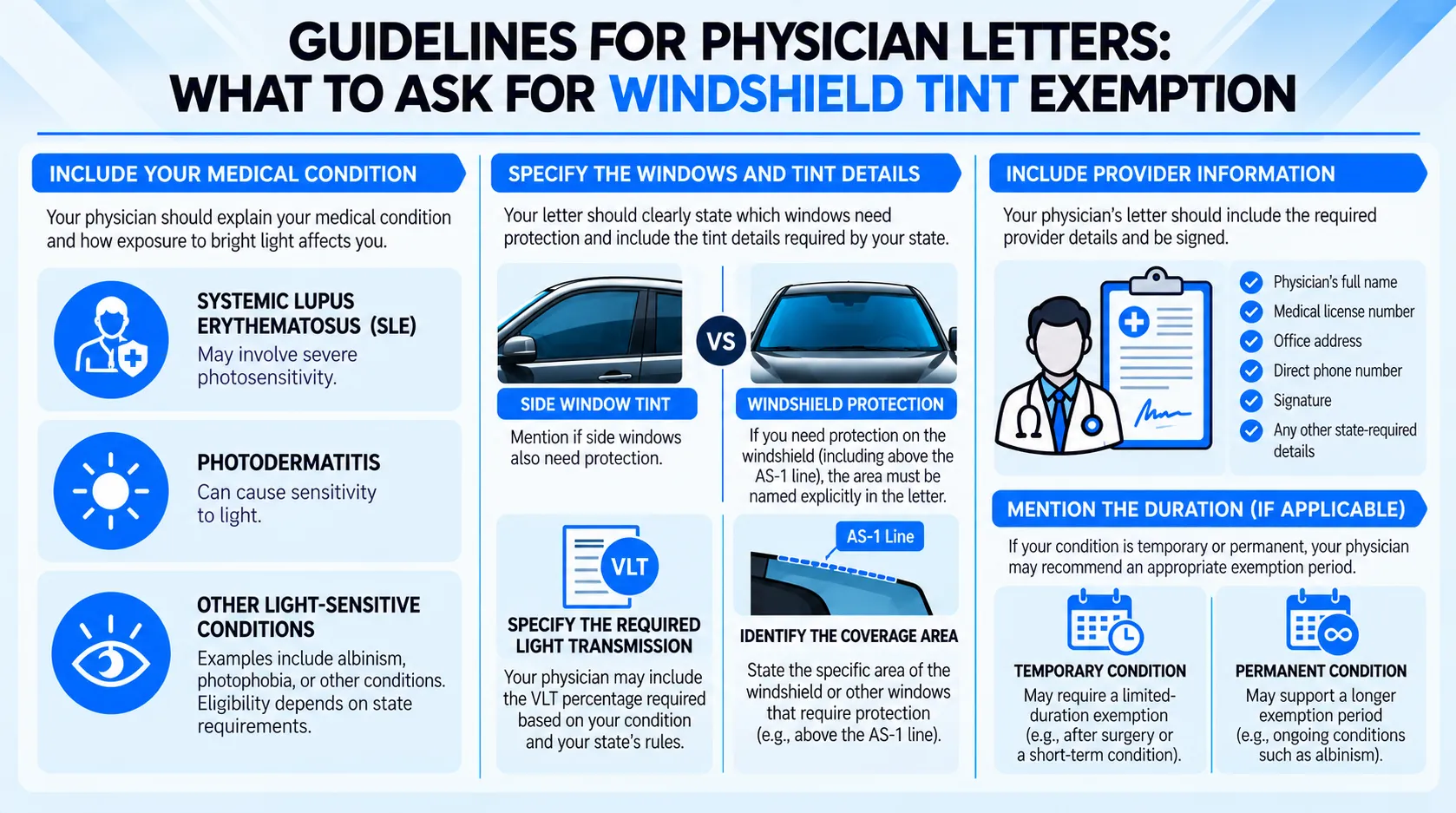
The letter may include your specific diagnosis with the corresponding ICD-10 code. It should also describe the medical need for the requested tint or level of light protection. Example: Lupus has two codes. Cutaneous lupus uses L93.0. Systemic lupus uses M32.9. This code proves the medical legitimacy of your condition.
Your doctor should explain how UV exposure or bright light affects your specific condition. For guidance on what to include, see our doctor note for window tint guide. This distinction matters because most states treat windshield exemptions differently than side-window requests.
Which Windshield or Tint Restrictions the Documentation Addresses
The physician may specify the exact VLT percentage you need and which windows require coverage. If you need windshield protection above the AS-1 line, name that area in the letter. Your doctor should write it down. All these requirements vary state-wise.
Your doctor should state whether your condition is permanent or temporary. Permanent conditions like albinism typically receive longer exemption periods, while post-surgical photophobia might qualify for a limited duration. Understanding how to apply without visiting the DMV can organize your approval process once you have proper documentation.
Provider Information, Signature, and State-Required Details
The letter must include your physician’s full name, medical license number, office address, and direct phone number. Most states need an original signature from your doctor. They do not accept photocopies or e-signatures.
Check whether your state requires a specific DMV form completed by your physician. Some states accept letters on practice letterhead, while others mandate their official medical certification form. Include supporting documents like treatment records or specialist referrals when available to strengthen your application.
How to Apply for a Windshield Tint Exemption in Your State
Getting approval for a windshield tint exemption requires navigating your state’s specific process. Most applications go through your Department of Motor Vehicles or equivalent agency, and the steps vary by location.
Step-by-Step Application Process
Start by visiting your state DMV or motor vehicle department website to download the required application form. Some states offer online submission, while others require in-person visits or mailed applications.
Complete the form with your vehicle information and personal details. You’ll need your physician to fill out the medical certification section, which must include your diagnosis and why windshield protection is medically necessary.
Submit the completed application along with any fees required by your state.
Required Forms and Medical Documentation
Your physician must provide specific documentation on state-approved forms. The certification needs your diagnosis with ICD-10 code, a clear statement of medical necessity, and the doctor’s license number and signature.
Some states require additional supporting documents like treatment records or specialist referrals. Keep copies of everything you submit.
Processing Times and What to Do If Denied
Processing may take 2 to 8 weeks depending on your state’s workload. You’ll receive a certificate if approved, which you must carry in your vehicle. Follow your state’s instructions after approval.
If denied, the rejection letter explains why. Common reasons include incomplete medical documentation or requesting coverage beyond what your state allows. You can reapply with corrected information or additional medical evidence.
Exemptions expire after a set period, often 1 to 5 years. Mark your renewal date and start the process early to avoid lapses in coverage.
After Approval: What to Tell the Tint Shop
Once you receive your windshield tint exemption, the installation appointment requires careful preparation. Bring your original exemption certificate and physician letter to the shop. The installer needs to see these documents before starting work.
Show the Approved Medical Documentation
Hand the installer both your state-issued exemption certificate and the physician’s letter that supported your application. These documents prove the tint is medically necessary and legally authorized.
Ask the shop to make copies for their records. This protects both you and the installer if questions arise later. Keep your originals in the vehicle at all times for law enforcement verification.
Confirm the Authorized VLT and Window Areas
Review the exact VLT percentage and window coverage your exemption authorizes. Tell the installer which windows you can tint. Tell them how dark the film can be. Suppose your exemption allows 35% VLT on front side windows but limits windshield coverage to the AS-1 line. Make sure the installer understands both restrictions.
Request written documentation showing the installed VLT percentage for each window. This record proves compliance if you’re stopped by police.
Make Sure the Installation Follows State Requirements
Verify the tint film meets your state’s specifications. Most states require non-reflective film, and some mandate specific brands or certifications. Understanding medical research on tint protection standards helps you ask informed questions about film quality.
Confirm the installer provides a warranty and compliance guarantee. Improper installation voids your exemption and creates legal liability. The shop should stand behind their work if the tint doesn’t match your approved specifications.
Conclusion
Getting a windshield tint exemption requires understanding that most states limit coverage to the top strip or AS-1 line, even with valid medical documentation. Full windshield tinting remains prohibited in the majority of states regardless of your condition. Check what your state allows before you apply. This step saves you time and effort.
Begin by downloading your state’s exemption forms from the DMV website and reviewing the specific windows covered under medical approval. Schedule an appointment with your physician to discuss documentation that addresses windshield protection. Include your diagnosis, ICD-10 code, and the medical necessity for coverage beyond standard side-window tinting. Once approved, bring your certificate and physician letter to a professional installer who understands the exact VLT percentages and coverage areas authorized by your state.
TintedMD can help you through each step of the application process. We help you gather proper medical documentation and connect you with certified installers who specialize in exemption compliance. Start the process today and get a medical tint exemption.
Frequently Asked Questions
What is a windshield tint exemption?
A windshield tint exemption is state-authorized documentation that may allow tint beyond the standard windshield limits for a qualifying medical need. The amount and location of tint allowed vary by state. Some states limit medical exemptions to a specific portion of the windshield rather than allowing darker tint across the full glass. A medical exemption that applies to side windows does not automatically authorize the same tint on the windshield. Before installing windshield tint, check the specific windows, VLT level, and coverage area authorized by your state's exemption.
Why do windshields have stricter tint rules than side windows?
Your windshield provides the primary forward view of the road, so states generally impose stricter light-transmission requirements on the main windshield area than on many side or rear windows. The exact VLT limits vary by state and may also depend on the vehicle's model year. For example, New York's current inspection guidance requires at least 70% visible light transmittance through the portion of the windshield below the top 6 inches for vehicles from model year 1992 or newer. Its requirements for side windows are also 70% for windows adjacent to or forward of the driver's seating position. Other states use different limits and measurements, so the windshield rule must be checked for the state where the vehicle is registered and operated.
Can I get a medical exemption to tint my entire windshield?
Usually, a medical exemption does not mean you can automatically tint the entire windshield. Some states may allow medical tint beyond their normal limits, but the permitted area and VLT can still be restricted. The approval may apply only to a specific portion of the windshield or to particular windows. For example, New York's tint rules distinguish the top portion of the windshield from the area below it, while its medical exemption process specifies the minimum light transmission required for the patient's condition. Do not assume that a medical exemption authorizes full-windshield tinting unless the applicable state documentation clearly allows it.
What medical conditions qualify for a windshield tint exemption?
Qualifying conditions vary by state and by the type of medical exemption available. Some state programs recognize conditions involving severe photosensitivity, including conditions such as lupus, albinism, porphyria, xeroderma pigmentosum, and certain other light-sensitive disorders. New York's MV-80W, for example, specifically lists albinism, chronic actinic dermatitis/actinic reticuloid, dermatomyositis, lupus erythematosus, porphyria, xeroderma pigmentosum, severe drug photosensitivity, and photophobia associated with certain ophthalmic or neurological disorders. It also allows other conditions causing severe photosensitivity when the medical requirements are met. These examples do not mean that every listed condition automatically qualifies in every state; the state determines its own eligibility requirements.
How do I apply for a windshield tint medical exemption?
Start by checking your state's requirements for windshield tint and medical exemptions. If the state requires medical certification, have an authorized provider complete the required documentation and submit it through the designated process. Some states require a specific form, supporting medical information, or an application fee. For example, Florida's HSMV 83390 requires a completed application and physician's statement of certification for an original sunscreening medical exemption, along with proof of identification and a $6.50 fee for each applicable vehicle. Wait for any required approval before installing tint outside the standard limits, and give the installer the approved window coverage and VLT requirements. If your state requires you to carry proof of the exemption, keep the current documentation in the vehicle.
What is the AS-1 line on a windshield?
The AS-1 line is a manufacturer marking found on some windshields that can help identify the area where certain windshield tint may be permitted. Many states use the AS-1 line or another defined measurement when setting windshield tint rules, but the exact requirement varies by state. The permitted area is not necessarily the same in every jurisdiction, and a medical exemption may have its own restrictions. For example, New York's inspection rules use the top 6 inches of the windshield when applying its visible-light-transmittance requirement to newer vehicles rather than relying on a universal five-inch AS-1 measurement. Check your state's requirements and the actual markings on your vehicle before installing windshield tint.
Does Florida allow medical exemptions for windshield tint?
Florida has a sunscreening medical exemption program, but having a medical exemption does not mean that any level of windshield tint is automatically permitted. Florida's HSMV 83390 requires an approved application and physician's statement of certification, and the certificate is issued for the vehicle identified on the exemption. The current form states that the certificate has no expiration date but is non-transferable and becomes invalid when the identified vehicle is sold or transferred. Florida also charges a $6.50 fee for each applicable vehicle on an original application. Because Florida's sunscreening rules are specific to the exemption program, check the current HSMV 83390 requirements before installing windshield tint.
Can I use my windshield tint exemption when driving in other states?
Not necessarily. Tint exemptions and windshield rules are state-specific, so an exemption issued by your home state does not automatically mean that another state's tint requirements no longer apply. Some jurisdictions may recognize certain out-of-state documentation, while others may apply their own restrictions. The same principle applies to windshield coverage: authorization for a particular window or VLT level in one state does not automatically authorize the same coverage elsewhere. Before traveling, check the tint and exemption rules in the states you plan to visit and keep your current exemption documentation with you if your state requires it.

Meet the author
Sahar Mustafa
Hi, I'm Sahar, and I write for TintedMD. My work focuses on medical window tint exemptions, qualifying health conditions, state-specific tint rules, and the documentation that may be required from a licensed provider. I want readers to know what an exemption may cover, what their state expects, and what questions they should ask before relying on their documentation.
Get Your Medical Tint Exemption Online in Minutes
Check Your Eligibility