
How to Renew a Window Tint Exemption?
 by Anam Moin
Last updated:
Medically reviewed by:
Dr. Matthew Reynolds, MD


If you want to know how to renew a window tint exemption, start with one date: the expiration date on your certificate. Renew before that date passes, and your paperwork stays current without a gap.
This guide gives the process in order. It also separates what TintedMD documents from what the DMV decides. We document. The DMV decides.
By the end, you will know what to gather, which clinician to see, and where to start.
How to Renew a Window Tint Exemption: Who This Guide Is For
This guide is for drivers who already hold a medical window tint exemption and need to renew it. It also helps if your certificate has lapsed, if you changed vehicles, or if you moved to a new state.
It is an education article that explains how a tint exemption works at renewal time. It does not install tint, set tint limits, or promise any result. Your state sets the rules, and the DMV makes the decision.
How to Renew a Window Tint Exemption: Steps in Order
The exact forms and timelines depend on your state. The order of the work stays about the same everywhere.
Step 1: Find Your Expiration Date
Your expiration date usually appears on your certificate or permit, often in a corner or the header. Check it today if you are not sure when renewal is due.
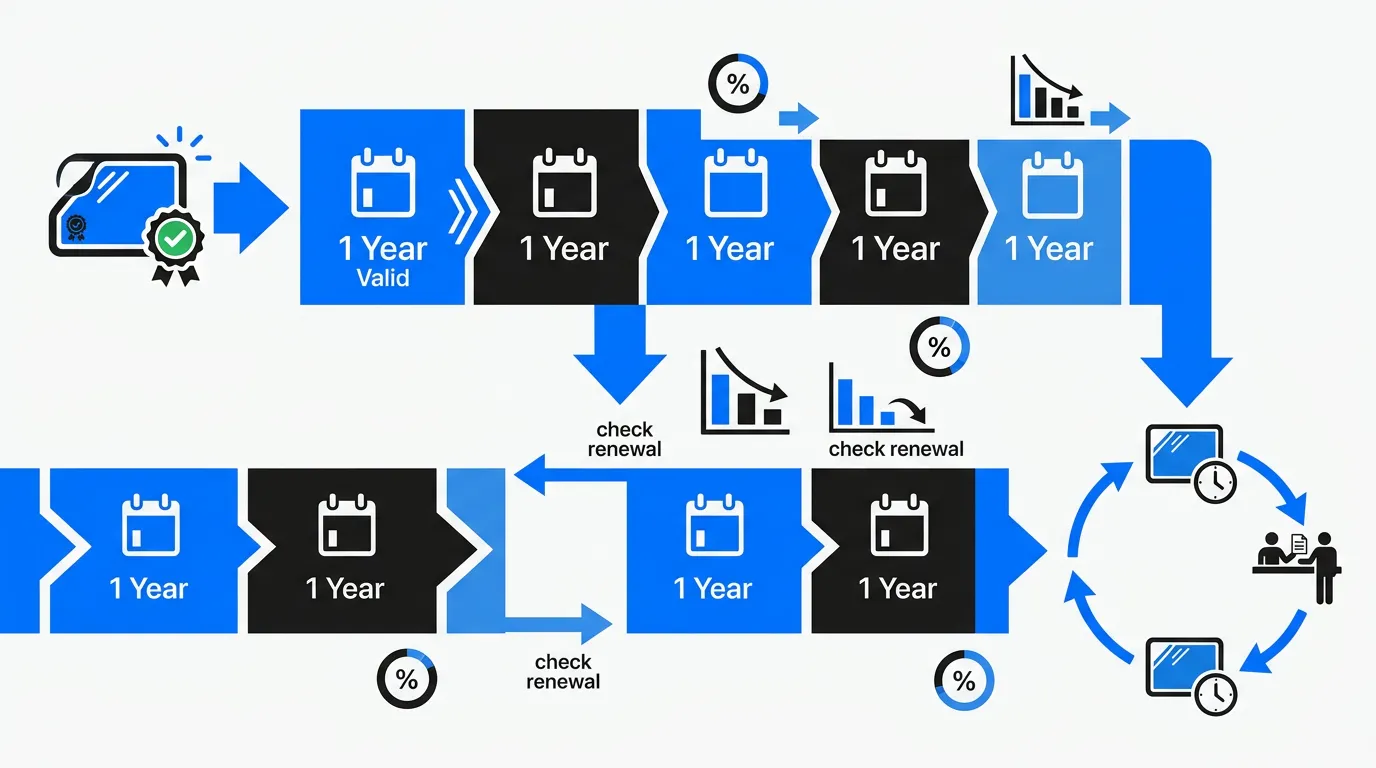
Some states mail a reminder before expiration, but many do not. Do not wait for a notice to arrive.
If you lost your certificate, contact your state DMV or medical exemption program office. They can tell you your status and how to get replacement paperwork. You can also read our state-by-state renewal guide to see how rules differ.
Step 2: Set Two Reminders
Set one calendar alert 90 days before your expiration date and a second at 30 days. The first alert tells you to start gathering documents.
The second tells you to submit.
In many states, an expired exemption cannot be renewed. You may have to start a new application, which can leave you without legal tint coverage while you wait.
Some states also reject a renewal that arrives too early, so read your state’s filing window.
Step 3: Read Your State’s Renewal Rules
Renewal rules vary widely. Some states accept an updated letter from your clinician. Others ask for a new medical evaluation or treat a renewal like a first application.
Start with your state’s official page. The New York DMV medical exemptions page, the Massachusetts Registry of Motor Vehicles waiver page, the Virginia DMV sunshading page, and the Georgia.gov exemption page show how different the requirements can be.

If your exemption comes from Texas, see how to renew your Texas exemption.
Step 4: Update Your Medical Documentation
Your medical letter carries the most weight in a renewal. Most states want it recent, on official letterhead, and clear that the condition is still active.
A strong letter usually includes:
-
Your diagnosis and, where your state asks for it, the diagnosis code.
-
A statement that the condition is ongoing and still calls for protection from light.
-
The clinician’s name, license number, and the date of the letter.
Conditions such as photophobia, lupus, albinism, and porphyria are common reasons for an exemption. A short-term problem, such as a temporary eye injury, usually does not support a renewal.
Which clinician you need depends on the condition. Eye conditions and skin conditions route to different specialists. The visit intake routes it for you.
If your treating clinician changed, the new clinician must review your history and write a fresh assessment. A new letter cannot simply copy the old one.
Our guide on how the first exemption process works explains what a full evaluation involves.
Step 5: Gather Your Supporting Documents
Most states also ask for a few records that match your application:
-
Your current driver’s license.
-
Your vehicle registration, with the vehicle identification number (VIN).
-
A copy of your existing exemption certificate.
-
The renewal form from your state, since renewal and first-time forms often differ.
Make copies before you send anything. If a state asks you to surrender the old certificate, you will still have a record.
If you changed cars, read about getting an exemption for a different vehicle before you submit.
Step 6: Submit to Your State
Follow the method your state offers. Depending on where you live, that may be an online portal, a mailed application, or a visit to a DMV office.

Keep proof that you submitted on time. Keep your current certificate until you hear back. Check your state’s rules to see if you can keep using your tint while the DMV reviews your file.
Step 7: Wait for the DMV Decision
The DMV reviews your paperwork and decides. Processing times differ by state and by method, so ask your state for its current range. A rejection is possible, and approval is never guaranteed.
If your renewal is rejected, read the reason on the notice. Fix what it names, then ask your state about the next step.
Common Renewal Mistakes
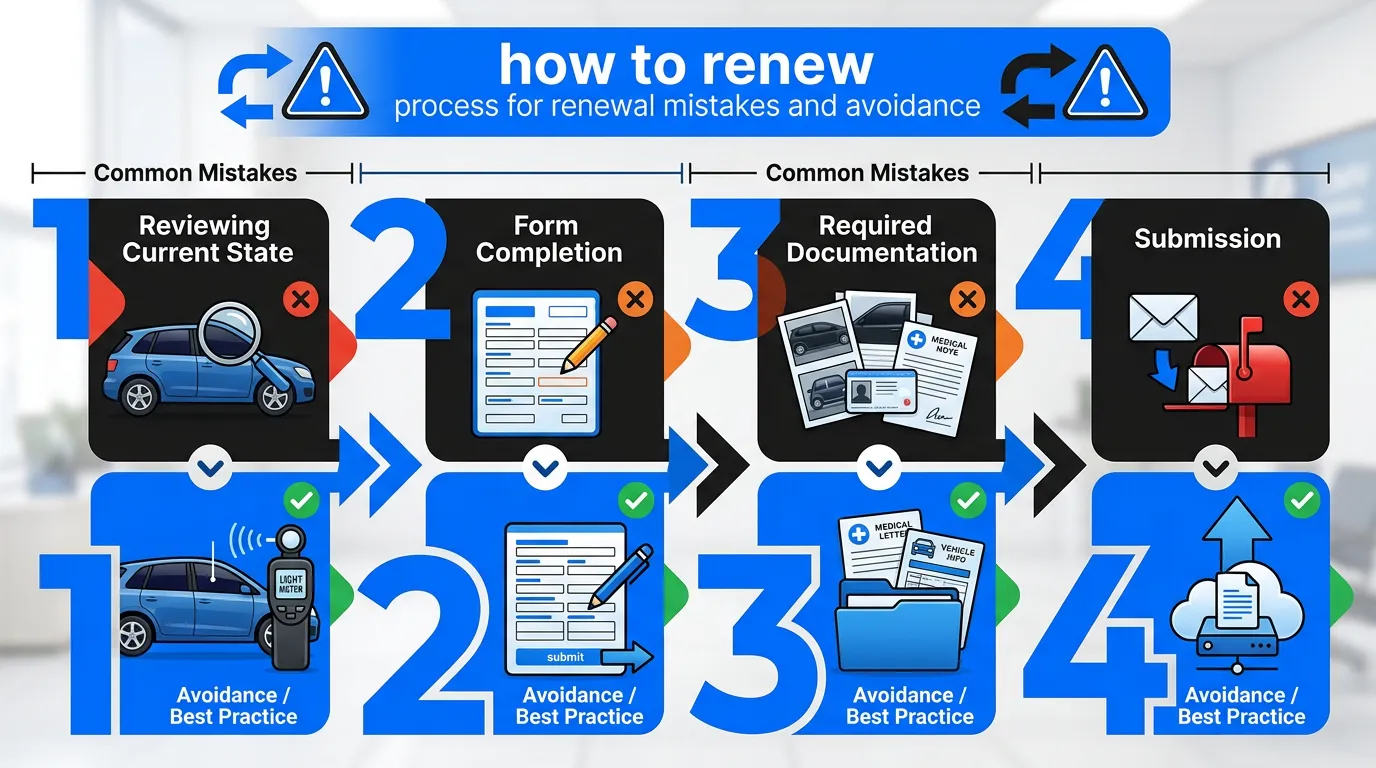
Small errors cause most delays. These are the ones to watch for.
-
An outdated letter. A letter that is too old for your state’s window can be rejected, even if your condition has not changed.
-
Old vehicle details. If you changed cars, the registration on file must match the new vehicle.
-
The wrong form. Renewal and first-time forms are often different documents.
-
Bad timing. Filing too early can be refused, and filing after expiration can force a new application.
-
No copies. Without copies, a lost application is hard to resubmit.
Driving in Another State
An exemption comes from one state. Do not assume another state will honor it. Each state decides for itself, and TintedMD cannot promise reciprocity.
If you register vehicles in more than one state, or you move, check the rules of each state. A permanent move usually means a new application in your new state.
What to Gather Before You Start
A short checklist saves time once your renewal window opens. Pull these items together before you contact your state or book a visit.
-
Your current certificate or permit, showing the expiration date.
-
Your vehicle registration and plate number.
-
Your driver license or state ID.
-
A list of your current eye or skin symptoms, and any treatment you have had since your last visit.
-
The name of your last clinician, if your state asks who signed the earlier letter.
Your state may ask for more or less. Treat this list as a starting point, then compare it with the official instructions for your state.
If Your Situation Changed
A renewal looks different when something in your life has moved since the last one.
You Changed Vehicles
Some states tie the exemption to one vehicle. If you bought or leased a new car, ask your state whether the old certificate carries over or whether you need to update the vehicle details on file.
You Moved to a New State
Your old exemption does not follow you automatically. Each state decides for itself whether to honor paperwork from somewhere else. TintedMD cannot promise that it will. Look up the rules for your new state before you drive with the old certificate, and plan to apply there if the state requires it.
Your Certificate Already Lapsed
Contact your state office first and ask what it will accept. Some states treat a lapsed exemption as a new application. Others allow a short grace period. The answer depends on the state, so ask before you assume.
Your Condition Changed
Tell your clinician about any change in symptoms at your visit. The letter should describe your condition as it is today, not as it was at your last renewal.
How Your Visit Fits Into Renewal
The medical visit is where your need gets documented. You answer intake questions about your condition. Intake then routes you to the right clinician. Eye conditions and skin conditions can lead to different specialists.
After the visit, you receive your documentation to bring to your state. From there, the DMV reviews it under its own rules. A clear, current letter helps the review go well, but it never settles the outcome. The DMV decides.
What TintedMD Documents vs What the DMV Decides
The split is simple. TintedMD handles the medical documentation. The DMV handles the decision.
| TintedMD documents | The DMV decides |
|---|---|
| Your medical need for window tint, based on your visit with a licensed clinician. | Whether it accepts your paperwork. |
| The clinical details your letter needs to state. | What darkness and limits it will honor. |
| A record you can bring to your state. | Whether to approve, reject, or ask for more. |
TintedMD does not install tint. A shop installs film, and the shop should follow the limits your state and your letter allow.
How to Start Your Renewal
Knowing how to renew a window tint exemption comes down to timing. Check your expiration date, then begin the medical visit before your window closes.
Start on the TintedMD welcome page and answer the intake questions. The intake routes you to the right clinician.
We document. The DMV decides.
Frequently Asked Questions
Does a tint exemption let me run any darkness?
No. A medical tint exemption does not automatically allow unlimited window tint darkness. Each state has specific rules regarding allowable tint levels, light transmission, and medical exemptions. Your exemption documentation must comply with applicable state requirements, and the DMV or relevant state authority determines what it will accept.
Do you install tint?
No. TintedMD provides medical evaluations and documentation for individuals who may need darker window tint due to qualifying health conditions. We do not manufacture or install window tint. Once you receive the appropriate medical documentation, you can work with a professional tint installation shop to ensure your vehicle complies with state regulations.
Will this work in another state?
Not necessarily. Medical window tint exemption laws vary by state, and an exemption issued in one state may not automatically be recognized in another. If you plan to drive across state lines or move to another state, review the applicable tint laws and exemption requirements before relying on your existing documentation.
What if the DMV rejects it?
The DMV or responsible state agency has the authority to approve or reject medical tint exemption paperwork. Even with documentation from a licensed clinician, approval is not guaranteed. If your application is rejected, review the reason provided, check whether additional documentation is required, and follow the state's correction or appeal process, if available.
Which clinician do I need?
The appropriate healthcare professional depends on your medical condition and your state's exemption requirements. For example, light-sensitive eye conditions may require an evaluation by an ophthalmologist or optometrist, while certain skin conditions may require documentation from a dermatologist or another qualified clinician. TintedMD's online intake process helps determine the appropriate evaluation pathway based on your condition and applicable state rules.
How long does it last?
The validity of a medical tint exemption depends on the state where it is issued. Some states provide exemptions with specific expiration dates, while others may have different renewal or documentation requirements. Check your exemption paperwork and your state's DMV guidelines to determine whether you need to renew your certification or submit updated medical documentation.
How do I start?
You can begin by visiting the [TintedMD online application](https://patient.tintedmd.com/tinted-window/welcome) and completing the initial intake process. You will provide information about your medical condition and the reason you need additional protection from sunlight. A qualified clinician reviews your information and determines whether medical documentation is appropriate. Final acceptance remains subject to state requirements.
Who reviews the article?
This article is reviewed by Dr. Matthew Reynolds to help ensure that the medical information is clear, relevant, and consistent with appropriate clinical guidance. The content is intended to educate readers about medical window tint exemptions and does not replace an individual medical evaluation or official state DMV requirements.

Meet the author
Anam Moin
I’m Anam Moin, a health-focused writer at TintedMD. I write about medical window tint exemptions, light-sensitive conditions, and state tint regulations, bringing together health and regulatory information in a reader-friendly way.
Get Your Medical Tint Exemption Online in Minutes
Check Your Eligibility