Pterygium and Window Tint Exemption
 by Nida Hammad
Last updated:
Medically reviewed by:
Rebecca Owens, MSW, LCS


Pterygium is a fleshy growth that develops on the eye’s surface. It affects thousands of drivers who spend hours behind the wheel exposed to UV rays streaming through vehicle windows. People call this condition surfer’s eye due to sun exposure. It causes light to hurt your eyes. This pain makes driving hard and unsafe. Standard window tints don’t always block enough UV light to prevent the growth from worsening. Many drivers don’t know they can qualify for a medical window tint exemption.
This guide explains what pterygium is and how it develops. It covers why the condition causes light sensitivity that affects driving. You’ll learn which symptoms make commutes hard. You’ll see how medical tint exemptions work. You’ll find out what your eye doctor checks. You’ll learn what the DMV needs to approve.
What Is Pterygium (Surfer’s Eye)?
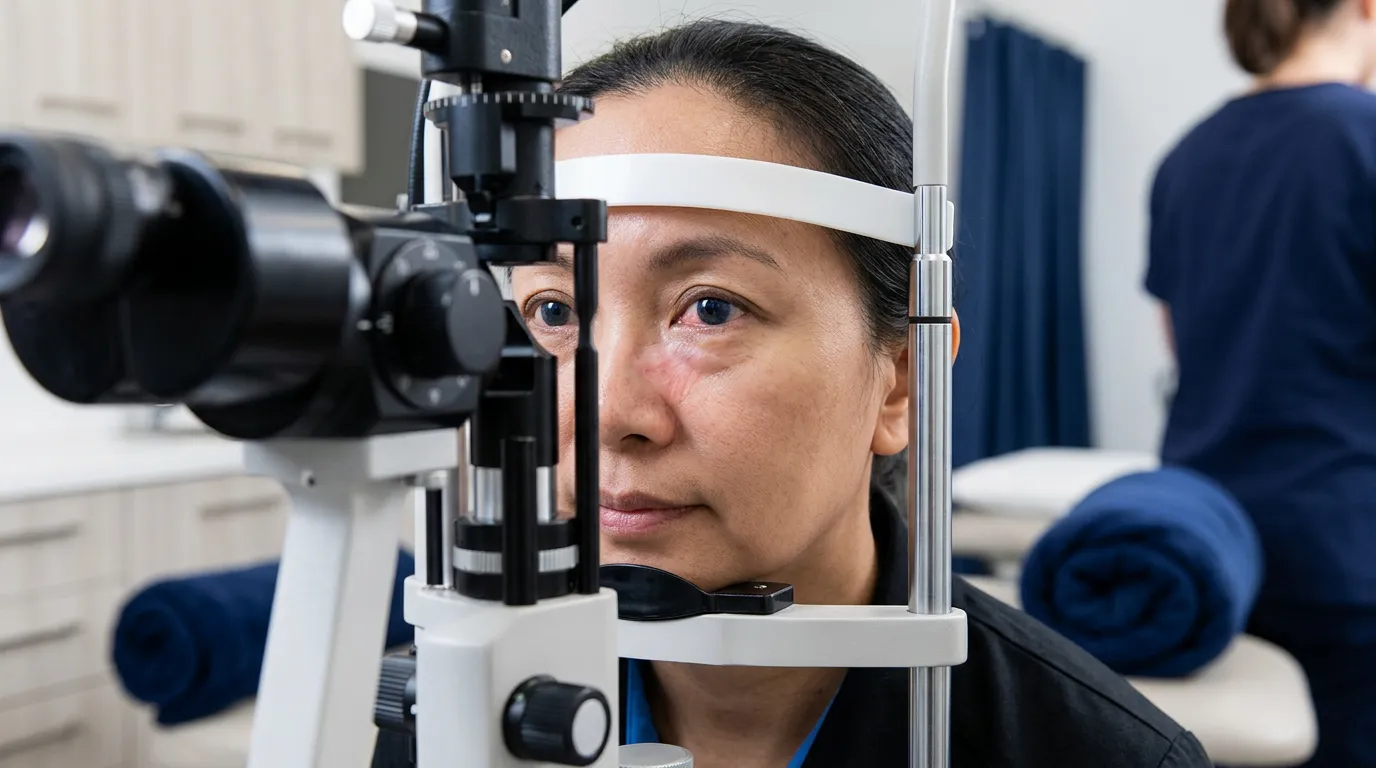
Pterygium is a benign growth of tissue on the conjunctiva that extends onto the cornea, typically appearing as a fleshy, wedge-shaped bump. This growth develops gradually over time and can affect one or both eyes.
Medical Definition and Causes
The condition results from chronic UV exposure, wind, dust, and dry conditions. These factors commonly affect people who spend hours behind the wheel, where UV rays penetrate standard vehicle windows.
The name “surfer’s eye” comes from its prevalence among people who spend extended time in bright, reflective environments. Driving exposes your eyes to similar conditions, especially during long commutes or highway travel.
Who Gets Pterygium
About 12% of the global population develops this condition, with higher rates in sunny climates and among outdoor workers. People aged 20-40 who spend time outdoors or driving without adequate eye protection face the greatest risk.
People near the equator face higher risk of pterygium. Areas with intense sunlight also increase the chance. Truck drivers face high pterygium rates from UV exposure. Delivery workers and sales pros who drive often do too. Vehicle windows let UV rays through to their eyes.
Pterygium vs Pinguecula
Pinguecula appears as a yellowish bump on the conjunctiva but stays confined to the white part of your eye. Pterygium grows beyond this boundary and extends onto the cornea itself.
Only pterygium can harm your vision. It does this by warping the corneal surface. Understanding how light sensitivity develops from eye conditions helps explain why pterygium causes more driving discomfort than pinguecula. The growth causes swelling in the eye. This swelling scatters light in odd ways. The scattered light creates glare. Glare makes daytime driving hard.
Pterygium and Light Sensitivity
Pterygium causes the eye’s surface to swell. This swelling creates odd light responses. These responses make the eye hurt in bright light. Inflamed tissue breaks the even corneal surface. This makes the eye too sensitive to bright light.
How UV Radiation Triggers Photophobia
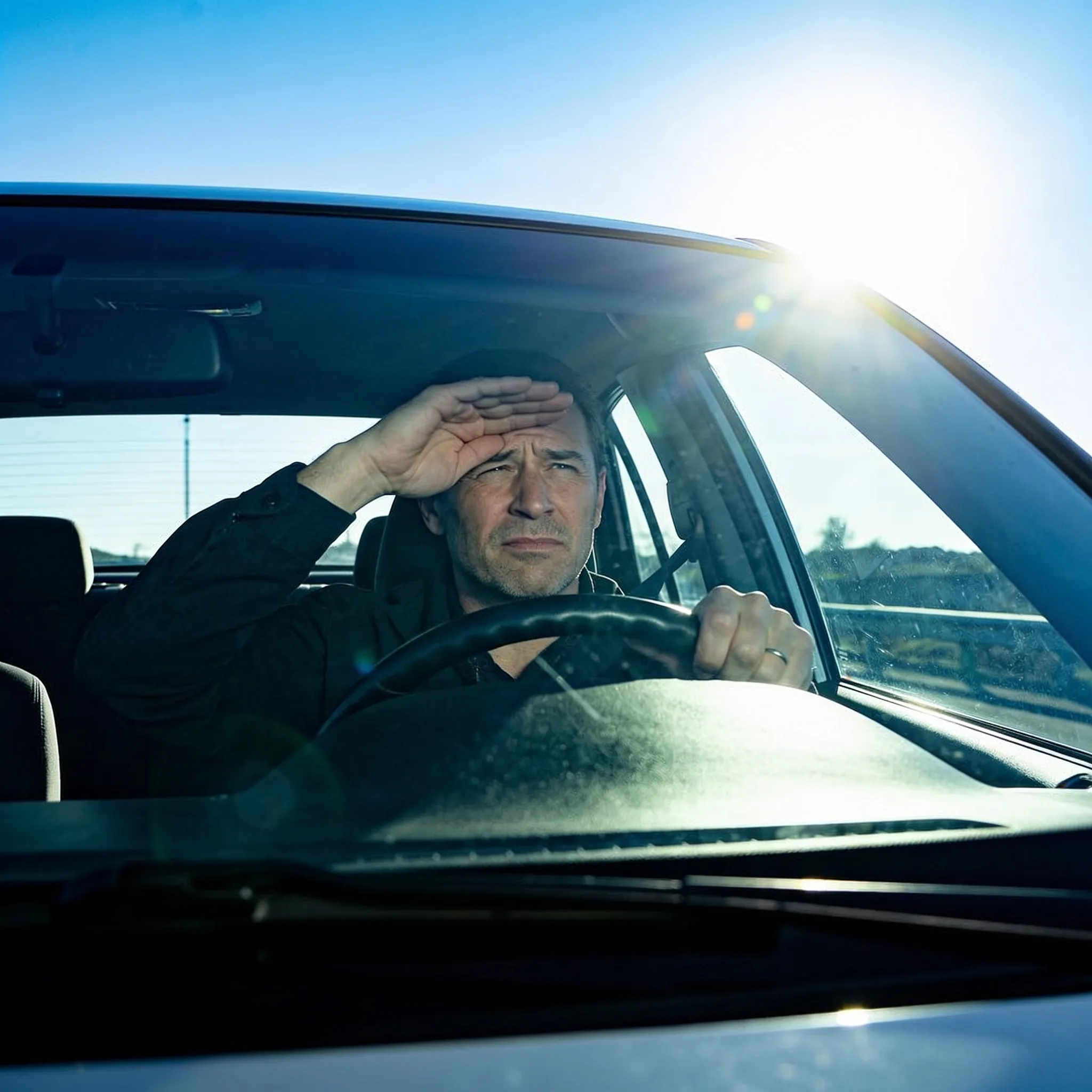
UV rays through car windows make the condition worse. This causes more pain and squinting while you drive. Standard factory tints block only 15-30% of UV rays, insufficient for managing photophobia symptoms.
At TintedMD, we help drivers with pterygium access medical window tints that block 99% of UV radiation. This directly addresses the light sensitivity that makes driving difficult.
Glare and Brightness Intolerance
The inflamed tissue scatters light in odd ways. This creates glare from oncoming headlights and sun. Scattered light makes routine driving painful. Dawn, dusk, and night driving hurt most.
Glare from windshields, chrome bumpers, and wet pavement becomes unbearable. Many drivers with pterygium report avoiding daytime driving entirely during peak sun hours.
Progressive Light Sensitivity Development
Pterygium growth makes light sensitivity worse. Daytime driving becomes hard without UV protection. The larger the growth, the more surface area exists to scatter incoming light.
Understanding state-by-state exemption laws helps drivers access darker tints legally. Medical exemptions allow 20-35% visible light transmission on front windows. Most states set standard limits at 50-70%.
Without proper UV protection, the cycle continues. More UV exposure leads to pterygium growth, which increases light sensitivity. This causes more squinting and eye strain during driving. For a deeper look, see inflammation on the eye’s surface.
Pterygium Symptoms That Can Affect Driving Comfort
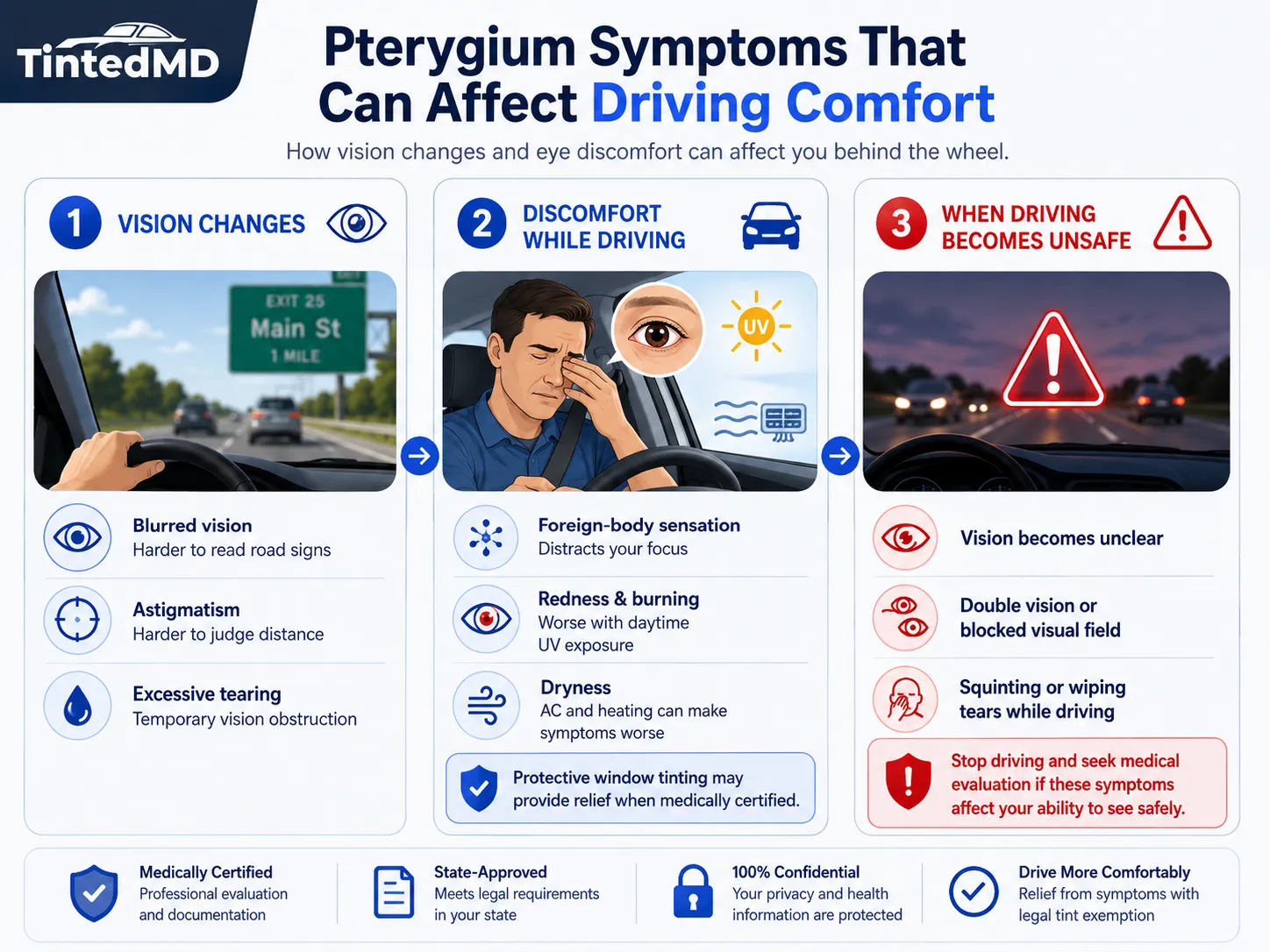
The growth creates several symptoms that directly impact your ability to drive safely and comfortably. Understanding these effects helps you recognize when medical intervention becomes necessary.
Vision Disturbances While Driving
Blurred vision occurs as the tissue distorts the corneal surface. This makes reading road signs or judging distances difficult.
The growth pulls on the cornea, causing astigmatism that affects depth perception. You may struggle to gauge how far away other vehicles are or when to brake.
Excessive tearing happens as your eye tries to flush out the irritation. This temporarily obscures your view, creating dangerous moments on the road.
Physical Discomfort Behind the Wheel
A persistent foreign body sensation creates constant distraction while you operate a vehicle. The feeling that something is stuck in your eye makes it hard to focus on traffic.
Redness, irritation, and burning worsen during daytime driving when UV exposure increases. Vehicle air conditioning worsens dry eye symptoms. Heating systems do the same. Both make discomfort worse.
Many drivers find relief through medical exemption certification for protective window tinting that blocks harmful UV rays.
When Symptoms Become Dangerous
You should stop driving when vision changes affect your ability to see clearly. Squinting from light sensitivity or wiping away tears while moving creates serious safety risks.
If the growth blocks part of your visual field or causes double vision, seek immediate medical evaluation. These symptoms indicate the tissue has progressed to a point where driving becomes hazardous to you and others on the road.
What a Window Tint Exemption Is and How It Applies to Pterygium
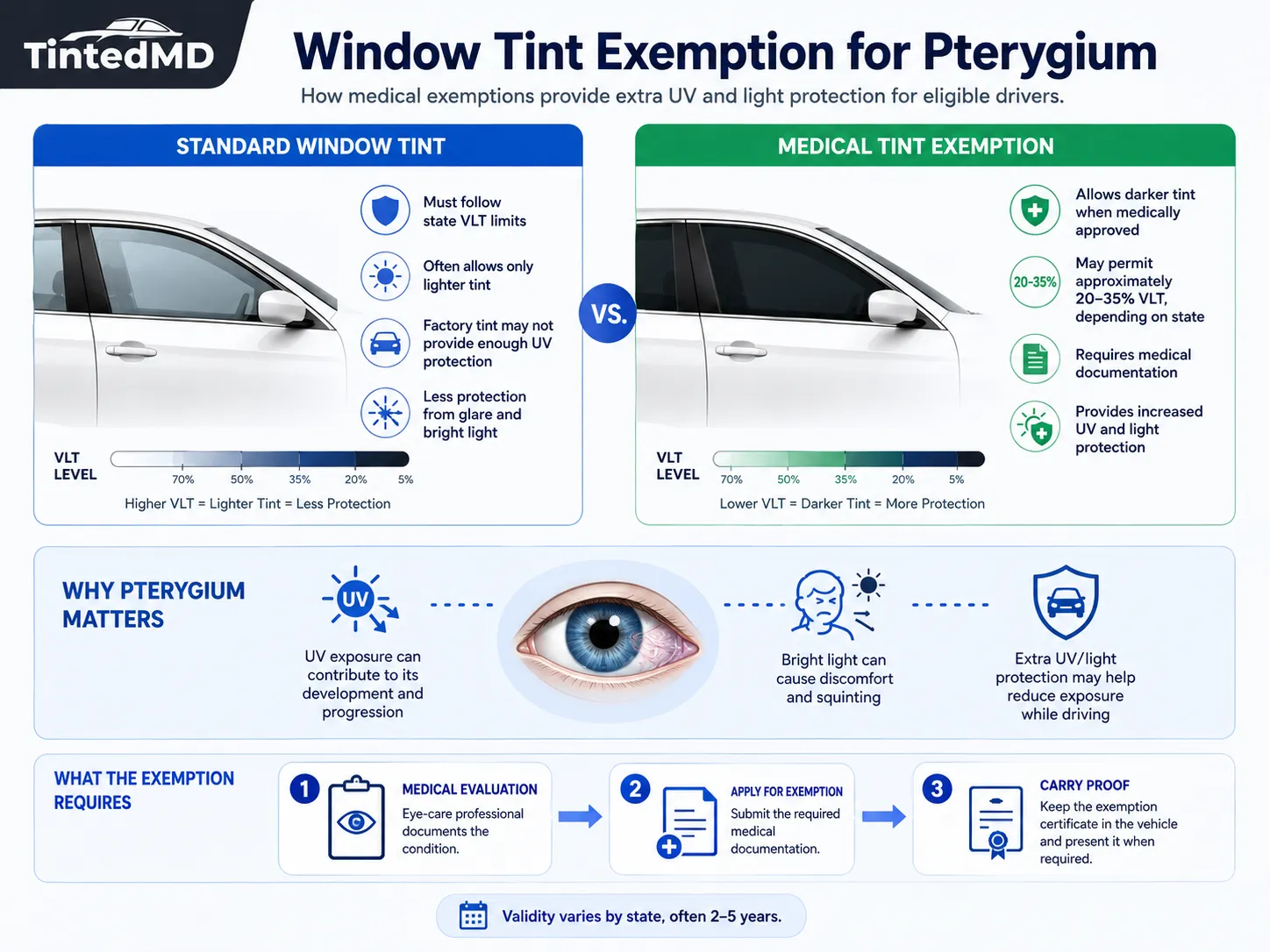
A window tint exemption lets drivers with medical conditions install darker tints. These tints exceed what state laws allow. Most states set strict limits on visible light transmission (VLT), typically requiring at least 70% VLT on front side windows. Medical exemptions let you use darker tints. You can go as dark as 20-35% VLT. This happens when a doctor says it’s needed.
Legal Framework for Medical Exemptions
State laws accept that some light-sensitive disorders need more UV block. Factory tints alone don’t give enough shield. A doctor can approve darker window tints. You submit proof from an eye care pro. This gives you legal permission to install them.
Exemptions typically remain valid for 2-5 years, depending on state requirements. Drivers must carry the exemption certificate in their vehicle at all times and present it during traffic stops to avoid citations.
Why Pterygium Qualifies
Pterygium counts as a medical condition that needs treatment. UV rays cause this growth and make it worse. Understanding which medical conditions qualify for window tint exemptions helps patients recognize that their documented photosensitivity makes them eligible for legal protection.
The condition harms your ability to drive well. Light makes your eyes hurt and causes squinting. This discomfort affects how you drive. Medical documentation establishes that UV protection through window tinting addresses these symptoms directly.
Exemption Benefits for UV Protection
Medical-grade window tints block up to 99% of harmful UV radiation, compared to the 15-30% blocked by standard factory tints. This level of protection reduces glare and light sensitivity that impair driving ability.
Darker tints ease symptoms right away. They cut UV exposure that causes swelling and pain. For drivers with pterygium, this shield makes daytime driving safer. It also makes driving more at ease. The shield stops the eye growth from getting worse.
What a Clinician Reviews for a Pterygium Tint Exemption
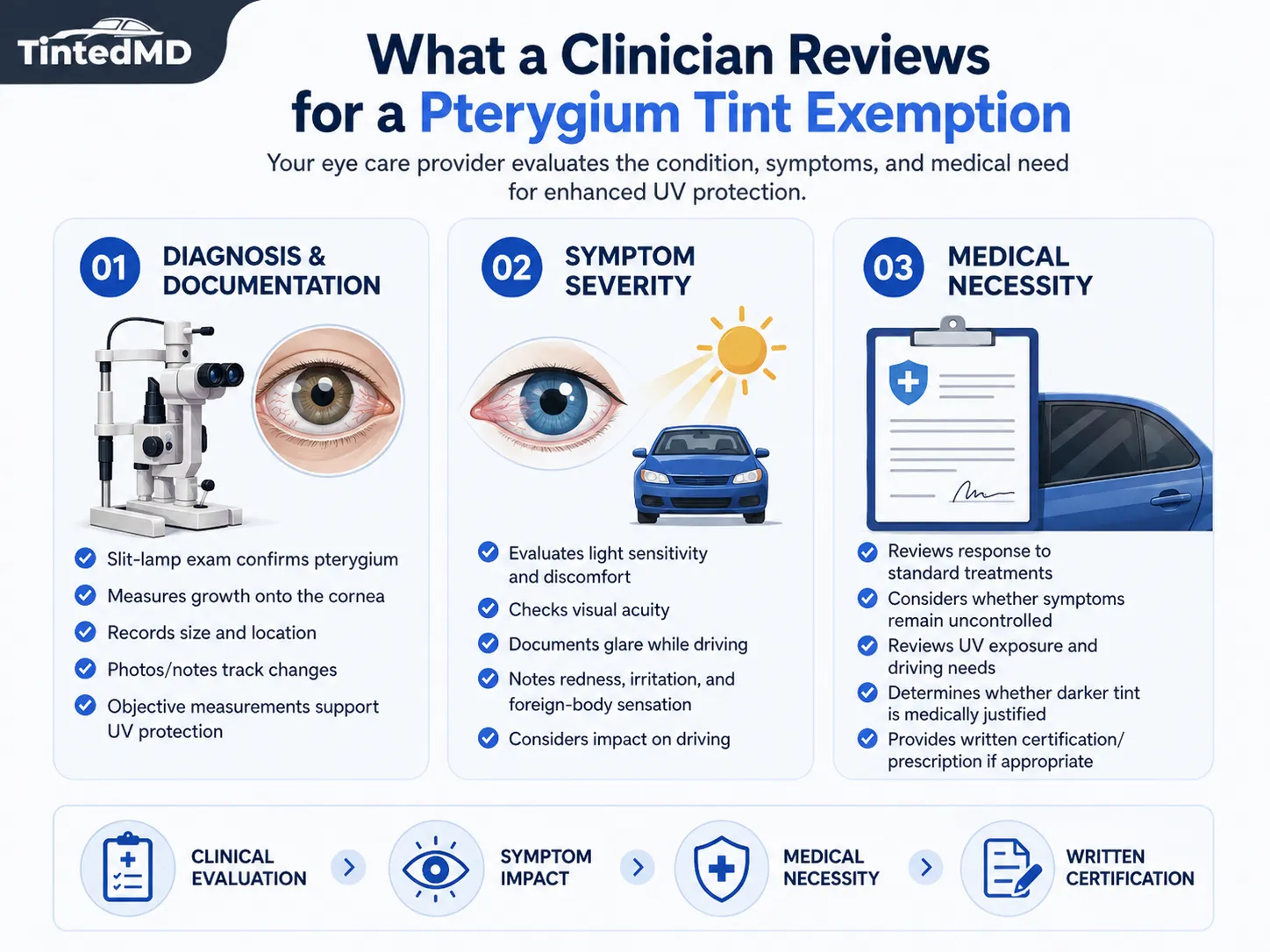
Getting a medical tint exemption requires thorough evaluation by an ophthalmologist or optometrist. The clinician checks your test results and symptom severity. They decide if you need darker window tints.
Diagnostic Criteria and Documentation
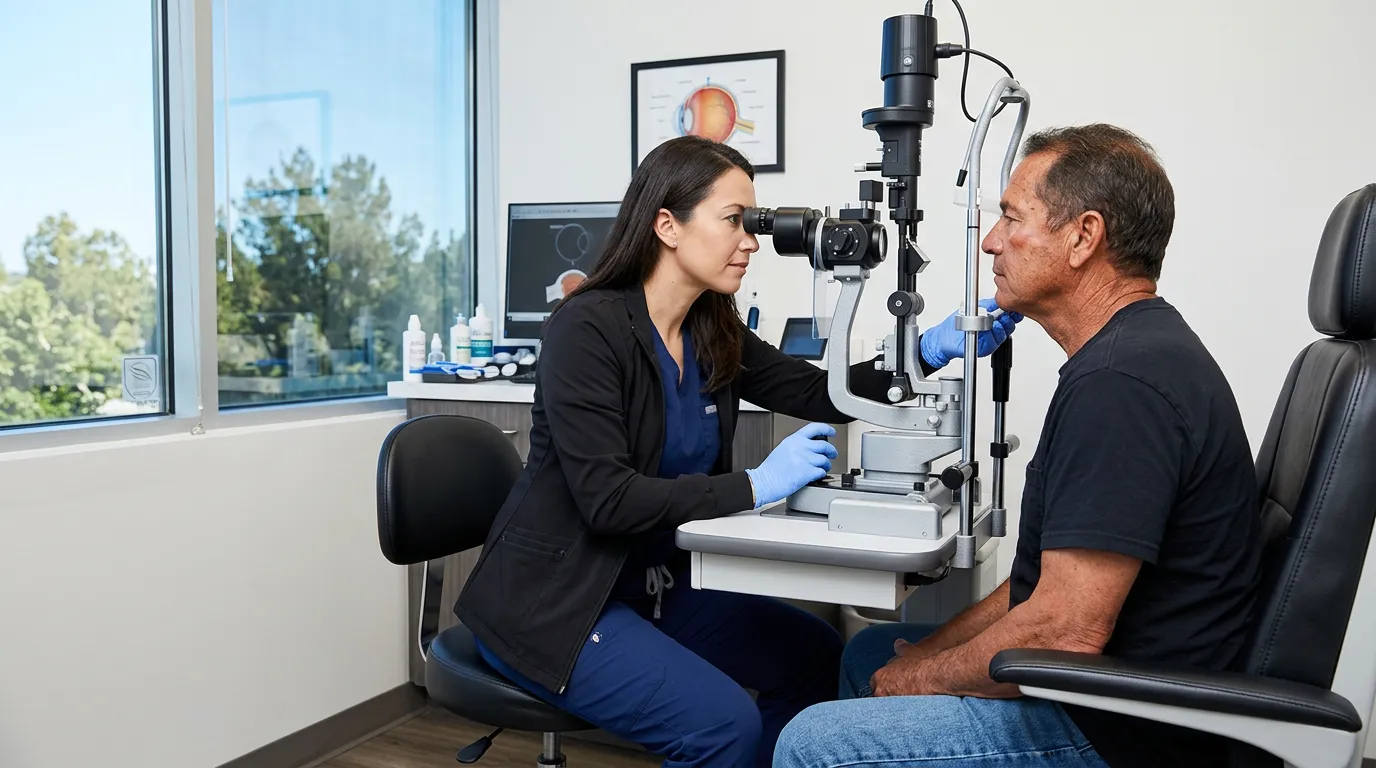
Your eye care provider uses a slit-lamp examination to confirm the diagnosis and measure the growth’s extent. This specialized microscope allows detailed viewing of the tissue extending onto your cornea.
The clinician records the size, location, and growth of the tissue. They use photos or written notes to track changes. These records establish a baseline and show whether the condition is worsening over time.
Medical records must include measurements of how far the tissue has grown onto the cornea. This objective data supports the need for enhanced UV protection.
Symptom Severity Assessment
Your doctor evaluates the specific symptoms affecting your daily life and driving ability. Doctors focus on how bad your light pain is. Light pain affects your driving comfort and safety.
The assessment includes visual acuity testing to document any changes in your vision. Clinicians also note functional impairments you experience while driving, such as difficulty with glare from oncoming headlights or sunlight.
Your provider documents the foreign body sensation, redness, and irritation you experience. These symptoms often worsen during vehicle operation, making them relevant to exemption approval.
Medical Necessity Determination
According to medical tint exemptions allow darker window tints than standard state laws when medically justified. Your clinician determines necessity by evaluating whether conservative treatments provide sufficient relief.
The evaluation includes your response to artificial tears, anti-inflammatory drops, and other standard therapies. If these treatments fail to control symptoms adequately, darker tints become medically necessary.
Your doctor considers your UV exposure history, occupation, and daily driving requirements. The final step involves providing written certification or a prescription letter stating that UV protection through window tinting is medically necessary for your condition.
What the DMV Still Decides on Pterygium Tint Exemptions
Even with a physician’s certification, the DMV retains final authority over whether your tint exemption gets approved. State motor vehicle departments verify medical paperwork, set tint darkness limits, and enforce compliance rules that can vary widely by location.
DMV Application Review Process
The DMV examines whether your medical documentation meets state requirements for format, content, and physician credentials. Your application must include complete vehicle information, accurate personal details, and payment of required fees.
Incomplete paperwork leads to denial, even when your diagnosis is valid. The DMV can reject applications if your doctor’s letter lacks specific details about how the condition affects your driving comfort or safety.
Tint Specifications and Limitations
State authorities determine allowable tint darkness levels, measured as visible light transmission (VLT) percentage. Most states permit 20-35% VLT on front side windows with a medical exemption, darker than the standard legal limit.
The DMV also decides which windows qualify for tinting. Some states restrict windshield tinting to the top 4-6 inches regardless of medical need, limiting UV protection where you need it most while driving.
Compliance and Enforcement
Once approved, the DMV issues an exemption certificate that must stay in your vehicle at all times. You’ll need to present this document during traffic stops to avoid citations for illegal tinting.
Renewal requirements vary by state. Some states require updated medical documentation every 2-3 years to maintain your exemption status. This means scheduling follow-up appointments with your eye care provider to confirm the condition persists.
Conclusion
Pterygium is more than a cosmetic concern. It’s a progressive condition that makes driving uncomfortable and potentially unsafe without proper UV protection. Medical evidence links UV exposure to pterygium growth. This supports the use of darker window tints as a legitimate treatment strategy, not just a comfort preference.
If you experience light sensitivity, glare, or discomfort while driving, schedule an appointment with an eye care professional. They can evaluate your symptoms and document the medical need for enhanced UV protection. Gather your medical records and be prepared to describe how your condition affects your daily driving. Once you have proper documentation, you’ll need to submit your application to the DMV with the required paperwork and fees.
TintedMD simplifies this process by connecting you with licensed physicians who understand the medical necessity of window tints for eye conditions. Get the UV protection your eyes need while driving legally and comfortably.
Frequently Asked Questions
What causes pterygium to develop in drivers?
UV rays streaming through vehicle windows cause pterygium. Standard factory tints block only 15-30% of UV radiation. This leaves drivers exposed during long commutes and highway travel. Chronic UV exposure combines with wind, dust, and dry conditions to trigger the growth. The tissue develops gradually over time on the conjunctiva. It then extends onto the cornea as a fleshy, wedge-shaped bump. People aged 20-40 who drive frequently face the greatest risk. Truck drivers, delivery workers, and sales professionals show higher rates because of sustained exposure.
How does pterygium cause light sensitivity while driving?
The growth creates inflammation on the eye's surface. This inflamed tissue disrupts the smooth corneal surface. Your eye becomes hypersensitive to brightness as a result. The tissue scatters light abnormally, creating glare from headlights and sunlight. This scattered light effect turns routine driving into a painful experience. Dawn, dusk, and night driving become particularly difficult. Glare from windshields, chrome bumpers, and wet pavement becomes unbearable. Many drivers report avoiding daytime travel because of the discomfort. The inflammation triggers abnormal light responses that make squinting constant.
Can pterygium affect vision enough to make driving unsafe?
Yes, pterygium can distort the corneal surface and affect vision. The growth extends beyond the white part of your eye onto the cornea itself. This creates visual distortion that makes driving uncomfortable and sometimes unsafe. Light sensitivity causes squinting and discomfort during routine commutes. Glare from oncoming traffic becomes a safety concern. The condition differs from pinguecula, which stays confined to the conjunctiva. Only pterygium grows onto the cornea and impacts vision directly. This distinction matters when applying for medical tint exemptions.
What percentage of people develop pterygium?
About 12% of the global population develops this condition. Rates are higher in sunny climates and among outdoor workers. People living near the equator or in areas with intense sunlight show higher prevalence. The condition affects one or both eyes over time. Those who spend extended time in bright, reflective environments face greater risk. Drivers experience similar conditions to surfers because UV rays penetrate standard vehicle windows. The name surfer's eye reflects its common occurrence among people with heavy sun exposure.
Why don't standard window tints prevent pterygium from worsening?
Factory tints block only 15-30% of UV rays. This level of protection is insufficient for managing photophobia symptoms. UV exposure through vehicle windows continues to aggravate the condition. The inflammation increases, causing more discomfort and squinting while driving. Medical window tints block 99% of UV radiation. This higher level of protection directly addresses the light sensitivity. Standard tints leave drivers exposed during long commutes. The inadequate UV blocking allows the growth to worsen over time. Many drivers don't know they can qualify for medical tint exemptions.
How does pterygium differ from pinguecula?
Pinguecula appears as a yellowish bump on the conjunctiva. It stays confined to the white part of your eye. Pterygium grows beyond this boundary and extends onto the cornea. This distinction matters because only pterygium can affect your vision. The growth distorts the corneal surface, causing visual problems. Pinguecula doesn't cross onto the cornea. Pterygium creates inflammation that scatters light abnormally. This produces glare and makes daytime driving uncomfortable. Only pterygium qualifies for medical tint exemptions because of its impact on vision and light sensitivity.
What makes pterygium worse for professional drivers?
Professional drivers spend hours behind the wheel exposed to UV rays. Truck drivers, delivery workers, and sales professionals show higher rates. Sustained UV exposure through vehicle windows aggravates the condition. Long commutes and highway travel increase risk. The chronic exposure combines with wind and dry conditions. Standard factory tints don't provide enough protection. The inflammation worsens with continued UV exposure. Light sensitivity makes daytime driving painful. Glare from traffic and reflective surfaces becomes unbearable. Many professional drivers need medical tint exemptions to continue working safely.
Is pterygium a dangerous or cancerous growth?
No, pterygium is a benign growth of tissue. It's not cancerous or life-threatening. The condition develops gradually over time on the conjunctiva. It extends onto the cornea as a fleshy, wedge-shaped bump. While not dangerous, it causes discomfort and vision problems. The inflammation creates light sensitivity that affects daily activities. Driving becomes uncomfortable and sometimes unsafe. The growth can worsen without proper UV protection. Medical window tints help manage symptoms by blocking 99% of UV radiation. Treatment focuses on preventing progression and managing discomfort.

Meet the author
Nida Hammad
I am a professional writer with over five years of experience creating clear, engaging, and well-researched content. I specialize in medical window tint exemptions and state compliance topics, helping readers understand tint laws and exemption requirements in simple, easy-to-follow language. Currently, I write for TintedMD, where I focus on producing accurate, trustworthy guides to help drivers navigate the medical tint exemption process with confidence.
Get Your Medical Tint Exemption Online in Minutes
Check Your Eligibility