
Vitiligo and Window Tint Exemption
 by Anam Moin
Last updated:
Medically reviewed by:
Dr. Matthew Reynolds, MD


Vitiligo causes patches of skin to lose pigment. Those patches have less natural sun protection. Many people notice this while driving.
A medical window tint exemption documents that need. Your state can then consider darker tint on your vehicle.
This page covers four steps: how vitiligo affects light sensitivity, what a tint exemption is, what the clinician reviews, and what the DMV still decides.
TintedMD documents the medical need. The DMV decides.
How Vitiligo Can Relate to Light Sensitivity
Vitiligo is an autoimmune condition. The immune system attacks melanocytes, the cells that make melanin, and white patches form where those cells are lost.
The NHS overview of vitiligo describes this process in plain terms. Melanin gives skin part of its natural protection from ultraviolet (UV) light, so depigmented patches have less of it.
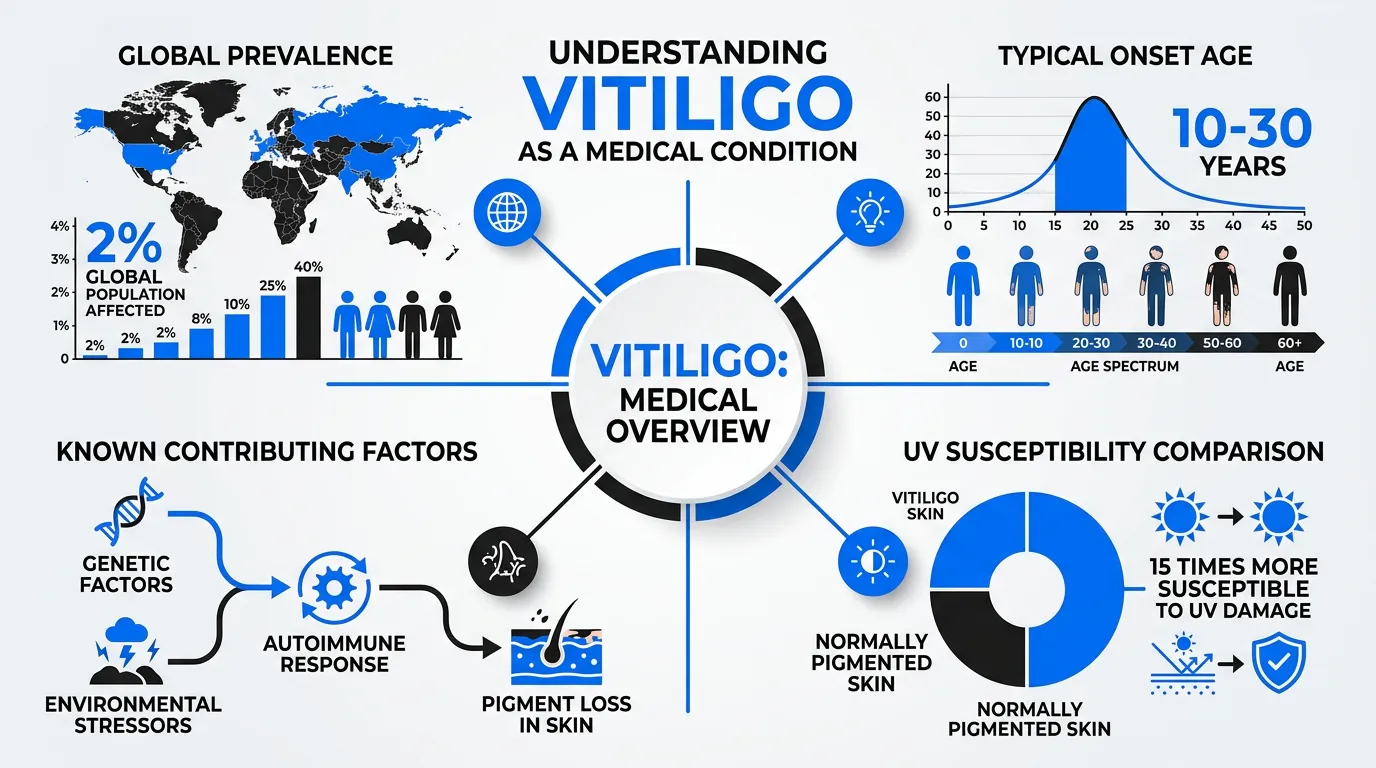
Many people with vitiligo report that affected skin burns faster in the sun. Skin injury, including sunburn, can also trigger new patches in some people. This response is called the Koebner phenomenon. For that reason, sun protection is a common part of vitiligo care, and the Vitiligo Center covers the topic in its overview of sun exposure and vitiligo.
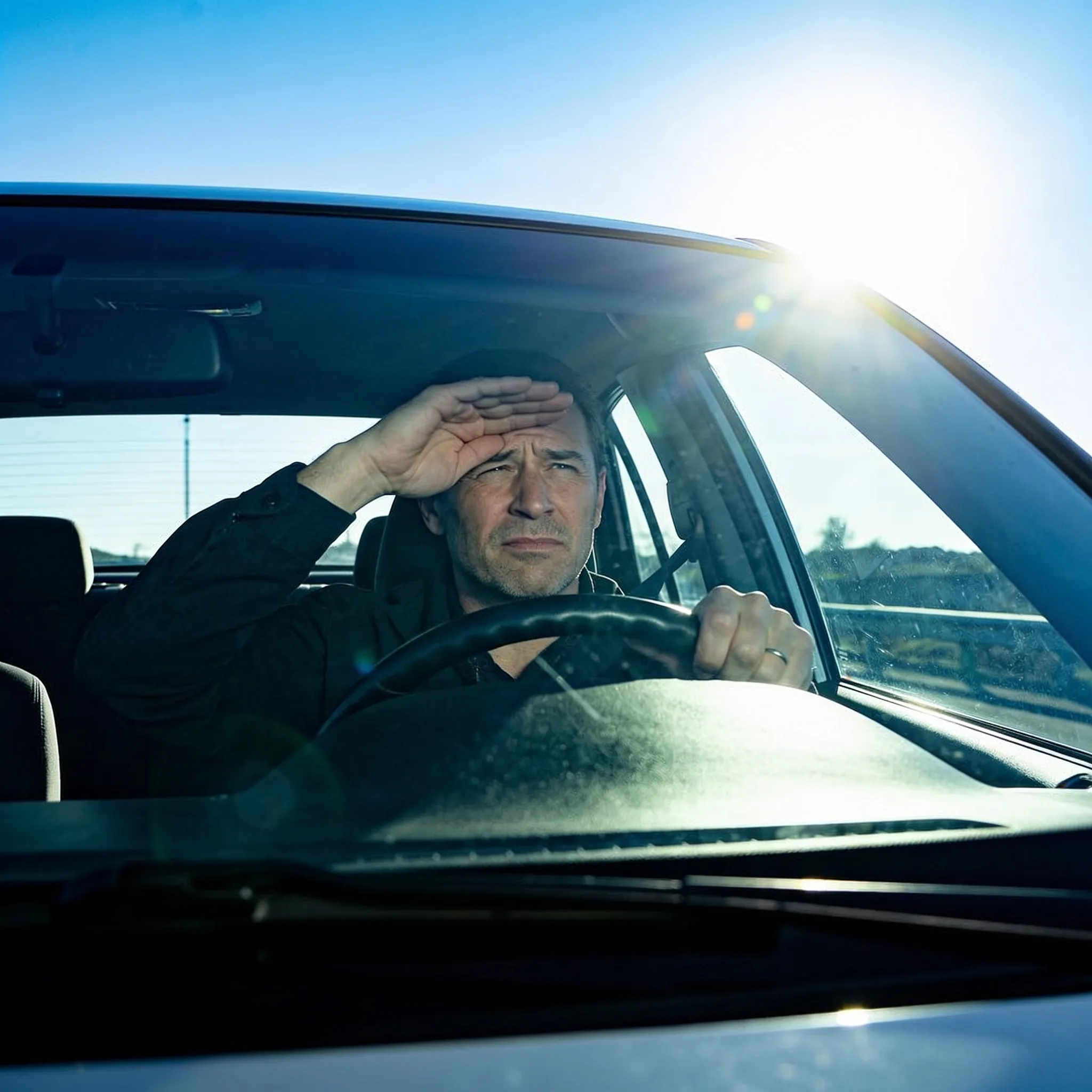
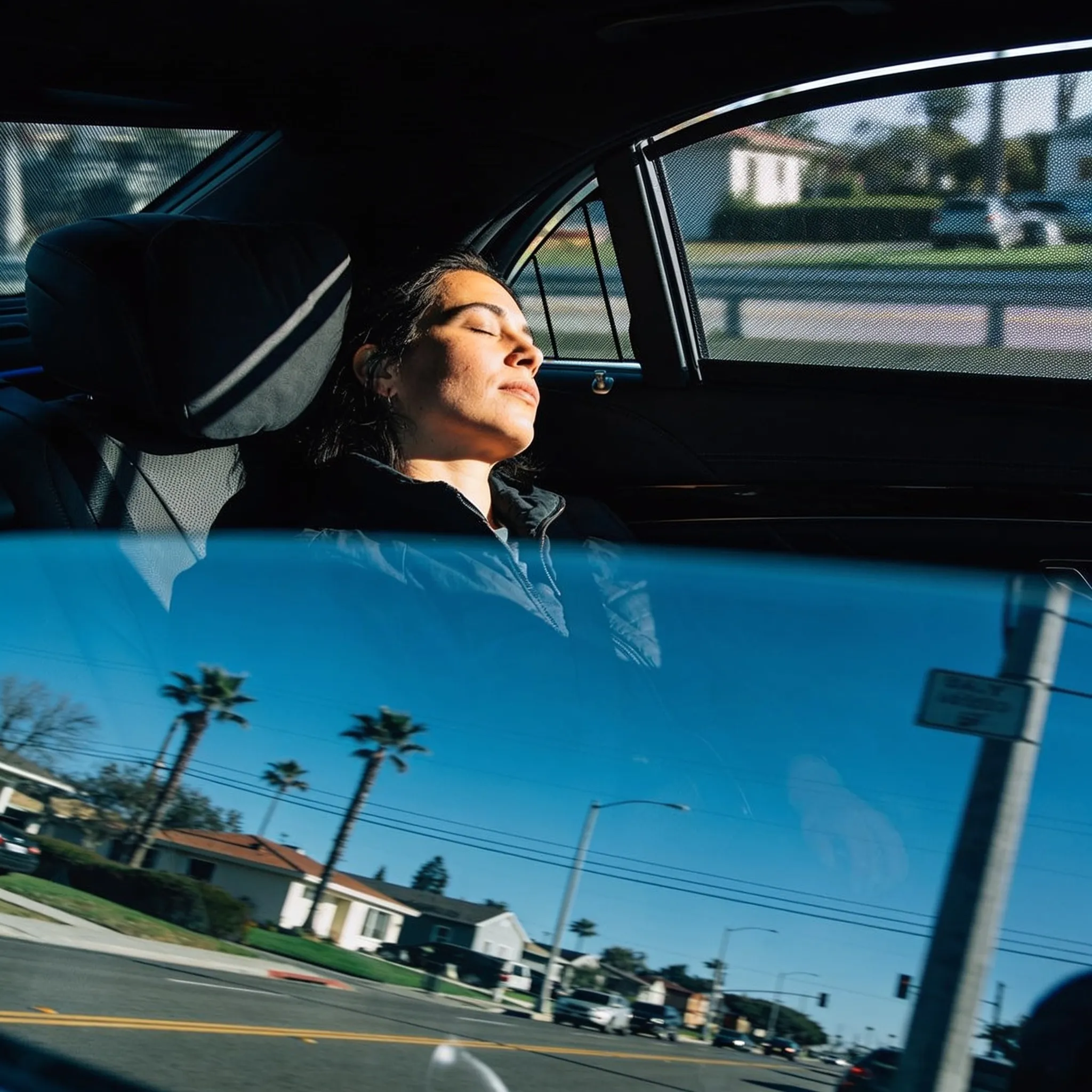
Driving adds a specific situation. You sit beside a window for long stretches, and the side of your face, your arm and your hand can take direct sun on every trip. Car glass blocks most UVB, but side windows often let much of the UVA pass through. Glass alone is not full protection.
Vitiligo is not the only condition that creates this problem. People with albinism and other light sensitivity conditions face a similar situation and may use the same exemption process. You can see the full list of medical conditions that qualify for a tint exemption.
What a Tint Exemption Is
A tint exemption is a medical document that supports a request for window tint darker than the standard legal limit. Most states cap how dark tint can be on the front side windows. A medical exemption asks your state to allow more. Rules differ by state.
Some states set a specific darkness level. Others let the clinician recommend one. A few states do not issue exemptions at all.

An exemption is not a license to run any darkness. The state sets limits, and the clinician’s letter sets limits too. It is also not an installation service. TintedMD documents the medical need. A shop installs the film.
Vitiligo is one of the medical conditions that may qualify for a window tint exemption. If you want the research background, see the medical science behind tint exemptions.
What the Clinician Reviews
A licensed clinician reviews your case before writing anything. The visit covers these points:
-
Your diagnosis and history, including how long you have had vitiligo and where the patches are.
-
Where you are exposed while driving, such as your face, arms and hands.
-
Photos of affected skin, when they help show location and extent.
-
Your symptoms in the sun, such as burning, pain or new patches after exposure.
-
Whether darker tint is a reasonable part of your sun protection.
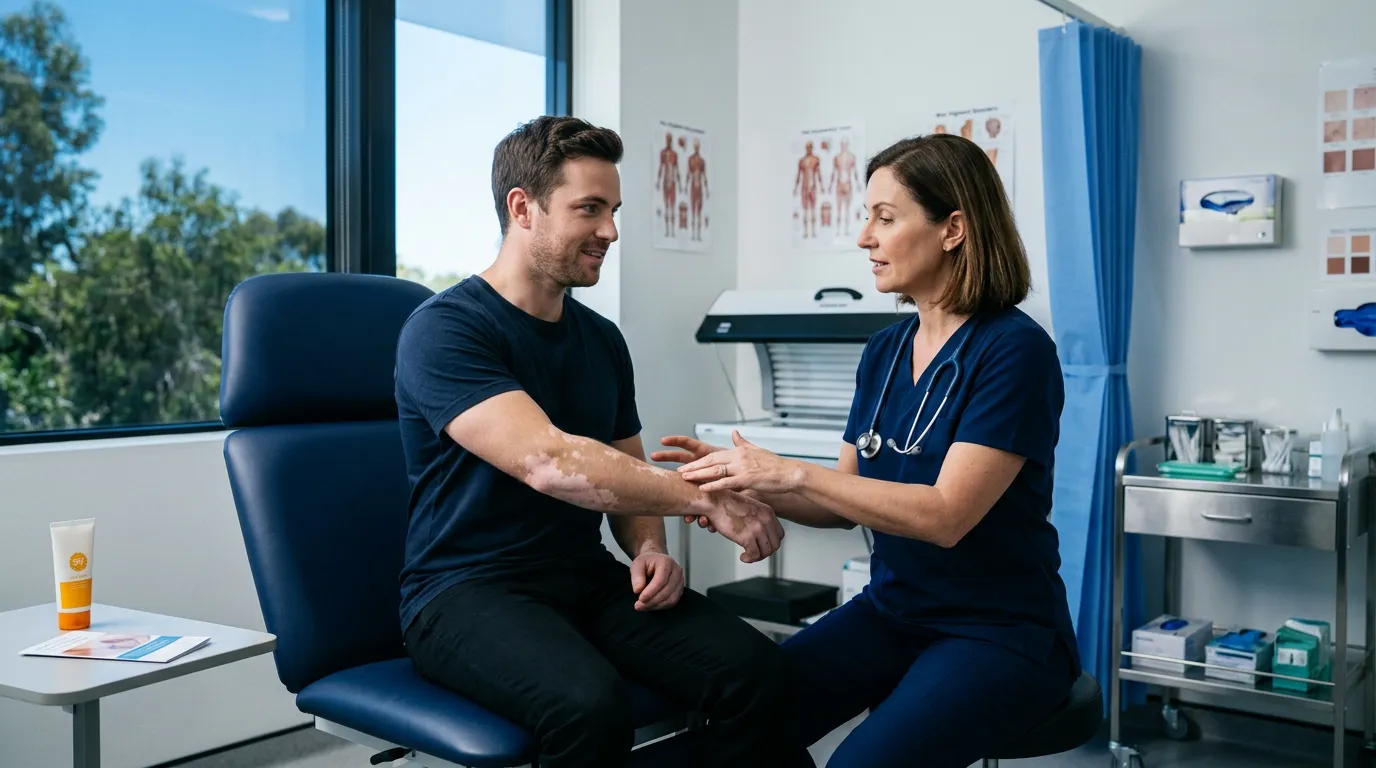
If the clinician finds the need is documented, the letter says so. Vitiligo has the ICD-10 code L80, which clinicians use to identify the diagnosis. The letter explains why standard tint does not meet your needs. It does not promise any outcome from the state.
Which clinician you see depends on the condition. Eye conditions and skin conditions can call for different clinicians. Vitiligo is a skin condition, but your situation may include other factors, so the visit intake routes your case.
The clinical guidelines for vitiligo describe how clinicians diagnose and manage the condition.
What the DMV Still Decides
After the clinician documents the need, your paperwork goes through your state’s process.
The DMV, or the agency that handles tint in your state, decides what it will honor. It can accept the paperwork, ask for changes or reject it. TintedMD does not control that decision, and no one can guarantee approval.
Here is how the process runs from start to finish:
-
You start at the welcome page and answer the intake questions.
-
The intake routes you to the right clinician.
-
The clinician reviews your case and, if the need is documented, writes the letter.
-
Your paperwork goes to the DMV under your state’s rules. Some states use their own forms, as in the Georgia exemption process.
-
The DMV decides what it will honor, including how dark your tint can be.
-
A tint shop installs film within the limit your state allows.
Wait for your state’s decision before you book installation. Some states also require you to keep your paperwork in the vehicle, so check the rules where you drive.
Exemption length is a state matter. Some states set a renewal schedule, and there is no national expiry. If you move or drive in another state, do not assume your paperwork carries over. Each state decides for itself.
Common Reasons Paperwork Gets Sent Back
Most delays come from gaps in the file, not from the condition. Watch for these:
-
A letter that does not say why standard tint is not enough for you.
-
Photos that are unclear or do not show where the patches are.
-
A missing state form or a form filled out in the wrong place.
-
A request for darker tint than your state allows for medical use.
A rejection is possible even with complete paperwork. If it happens, read the reason the DMV gives and ask what your state allows next.
How to Prepare Before Your Visit
A little preparation makes the clinician’s review faster and gives the DMV a cleaner file. Gather these items before you start:
-
The date you were diagnosed and the name of any clinician who treats your vitiligo.
-
A list of the areas where patches sit, with a note on which ones face the window when you drive.
-
Clear, well-lit photos of those areas, taken without filters.
-
A short description of what happens after sun exposure, such as burning, pain or new patches.
-
Your vehicle details and the state where it is registered.
Think about your normal routes and drive times, too. A long commute in the morning or late afternoon puts low, direct sun on one side of your body. The clinician can use those details to explain why standard tint does not meet your needs.
Working With a Tint Shop After Approval
Once your state has made its decision, you can book installation. Take your paperwork with you and tell the shop which tint level your state allows for medical use. Many shops know the local rules, but the limit on your paperwork is the one that counts.
Ask the shop to put the film’s rating and the installation date in writing. Keep that record with your exemption documents. If an officer stops you, you can show both the medical paperwork and proof that the film matches the approved level.
Tint helps, but it does not replace other sun habits. Many people with vitiligo also use sunscreen on exposed skin, wear sleeves or gloves on long drives and follow their dermatologist’s advice. Tint is one layer of protection, and your own clinician can tell you what fits your care plan.
How to Start
Begin at the welcome page. The intake walks you through the first steps and routes you to the right clinician. Start your visit with TintedMD.
We document. The DMV decides.
Frequently Asked Questions
What is vitiligo and how does it affect skin protection?
Vitiligo is an autoimmune disorder where your immune system attacks melanocytes. These cells produce melanin pigment in your skin. When they're destroyed, white patches form that lack any natural UV protection. The condition affects 0.5-2% of people worldwide. Depigmented skin has zero melanin defense. This makes it 10-15 times more vulnerable to UV damage than normal skin. Without this protective barrier, white patches burn fast and face accelerated cellular damage from UV radiation.
Does a tint exemption let me run any darkness?
No. A medical tint exemption does not automatically allow unlimited window tint darkness. Each state has specific rules regarding permissible tint levels and visible light transmission. Your medical documentation must meet the applicable state requirements, and the DMV or relevant state authority determines what tint levels are permitted under your exemption.
Do you install tint?
No. TintedMD provides medical evaluations and documentation for individuals who may need darker window tint due to qualifying medical conditions. We do not install window tint or modify vehicles. Once you have the required documentation and any necessary state approval, a professional tint installation shop can help you select film that complies with the applicable regulations.
Will this work in another state?
Not necessarily. Medical window tint exemption laws vary by state, and an exemption issued in one state may not be recognized in another. If you frequently travel across state lines or plan to relocate, check the tint regulations in the states where you will be driving. Having valid medical documentation does not automatically guarantee acceptance outside your home state.
What if the DMV rejects it?
The DMV or responsible state agency can reject a medical tint exemption application if it does not meet the state's requirements. Even with supporting documentation from a licensed clinician, approval is not guaranteed. If your application is denied, review the reason for rejection and determine whether you can provide additional documentation, correct the application, or request reconsideration under the state's procedures.
Which clinician do I need?
The appropriate clinician depends on your medical condition and the requirements of your state. For example, certain light-sensitive eye conditions may require an evaluation by an ophthalmologist or optometrist, while skin conditions involving sunlight sensitivity may require a dermatologist or another qualified healthcare professional. TintedMD's online intake process helps identify the appropriate evaluation pathway based on your medical needs.
How do I start?
You can start by visiting the [TintedMD online application](https://patient.tintedmd.com/tinted-window/welcome) and completing the initial medical intake. You will provide information about your condition and why you need additional protection from sunlight. A qualified clinician reviews your information and determines whether medical tint exemption documentation is appropriate. State approval, where required, is handled separately.
Who reviews the article?
This article is reviewed by Dr. Matthew Reynolds to help ensure the medical information is accurate, clear, and relevant to readers seeking medical window tint exemptions. The content provides general educational guidance and does not replace a personalized medical evaluation or official state regulations.

Meet the author
Anam Moin
I’m Anam Moin, a health-focused writer at TintedMD. I write about medical window tint exemptions, light-sensitive conditions, and state tint regulations, bringing together health and regulatory information in a reader-friendly way.
Get Your Medical Tint Exemption Online in Minutes
Check Your Eligibility