

Albinism & Light Sensitivity : Window Tint Exemptions as a Solution
 by Nida Hammad
 Last updated:
Medically reviewed by:
Dr. Matthew Reynolds, MD


Albinism & light sensitivity are deeply connected. For individuals living with albinism, the absence of melanin in the skin, hair, and eyes creates an extreme vulnerability to sunlight and ultraviolet (UV) radiation. This is not a minor inconvenience. It is a daily medical reality that affects vision, skin health, and quality of life in profound ways. Understanding how albinism drives light sensitivity and what protective measures, including medical window tint exemptions, can help is essential for anyone affected by this condition.
Understanding Albinism & Light Sensitivity: The Medical Connection

Albinism is a genetic condition caused by mutations that impair or eliminate the production of melanin. Melanin is the pigment that gives color to skin, hair, and eyes, but its role extends far beyond appearance. Melanin absorbs and disperses UV radiation, acting as a natural shield against sun damage. When melanin is absent or significantly reduced, as in individuals with albinism, the body loses this critical protection.
The relationship between albinism and light sensitivity is therefore rooted in biology. Without adequate melanin in the eyes, structures such as the iris and retina cannot filter light properly. This leads to photophobia, a condition in which even ordinary light levels cause significant pain, discomfort, and visual impairment. Research has documented the extent of visual and photosensitivity challenges in individuals with albinism, confirming that these are serious medical concerns requiring professional management.
There are two primary types of albinism that clinicians recognize:
Oculocutaneous Albinism (OCA): This is the most common form and affects the eyes, skin, and hair. It spans multiple subtypes ranging from a complete absence of pigmentation to partial pigmentation. All subtypes involve meaningful vulnerability to UV radiation and light-related eye damage.
Ocular Albinism (OA): This form primarily affects the eyes, leaving skin and hair pigmentation relatively normal. However, individuals with OA still experience nystagmus (involuntary eye movement), reduced visual acuity, and significant photophobia.
How Albinism & Light Sensitivity Damage the Eyes and Skin
The Eye Complications of Albinism & Light Sensitivity
The eyes of a person with albinism lack the melanin necessary to absorb excess light. This results in a cascade of visual problems. The iris, which in a normally pigmented person appears colored because of melanin, appears light blue, gray, or even translucent in individuals with albinism. Light enters the eye not just through the pupil but through the iris itself, overwhelming the retina and causing constant visual overstimulation.
Common eye conditions associated with albinism and light sensitivity include nystagmus, strabismus, foveal hypoplasia (underdevelopment of the central part of the retina), severe refractive errors, and reduced depth perception. Over time, without adequate protection, cumulative UV exposure can accelerate retinal damage and increase the risk of conditions like glaucoma. A 2022 study provides further clinical evidence of how UV exposure compounds the eye complications already caused by albinism.
Skin Risks Associated with Albinism & Light Sensitivity
On the skin side, the consequences of albinism and light sensitivity are equally serious. Normal skin produces eumelanin in response to UV exposure, darkening to protect DNA in skin cells from radiation damage. In individuals with albinism, this response is absent or severely limited. Even brief sun exposure can cause painful sunburns, and chronic exposure without protection accelerates cellular DNA damage.
This dramatically elevates the risk of skin cancers, including basal cell carcinoma, squamous cell carcinoma, and melanoma. In some global populations where albinism is more prevalent, skin cancer is one of the leading causes of premature death among affected individuals. This is not a distant or abstract risk. It is an urgent, daily concern that makes UV protection a medical priority rather than a lifestyle preference.
Concerned about UV exposure with albinism? Find out if you qualify for a medical window tint exemption and take the first step toward daily protection.
Why Vehicle Travel Is a High-Risk Environment for People with Albinism & Light Sensitivity
Most people do not think of sitting in a car as a sun exposure event. For someone with albinism, however, a routine commute or road trip can mean prolonged direct exposure to UV rays streaming through standard automotive glass. Standard vehicle windows, while providing some UV filtering, are not sufficient for individuals whose skin and eyes have no natural defense against radiation.
Front side windows in most vehicles allow a significant proportion of UVA radiation to pass through. UVA is the form of UV radiation most responsible for premature skin aging and DNA damage, and it penetrates glass far more efficiently than UVB. For a person with albinism spending an hour driving, this translates into meaningful cumulative UV damage that adds up over months and years.
Beyond UV concerns, the intensity of visible light during driving can be disabling for someone with photophobia. Glare from the road, reflections off other vehicles, and bright sunlight coming through the windshield and side windows can cause squinting, eye pain, tearing, and reduced visibility. These effects do not just cause discomfort. They represent a genuine road safety hazard.
Medical Window Tint Exemptions: A Practical Solution for Albinism & Light Sensitivity
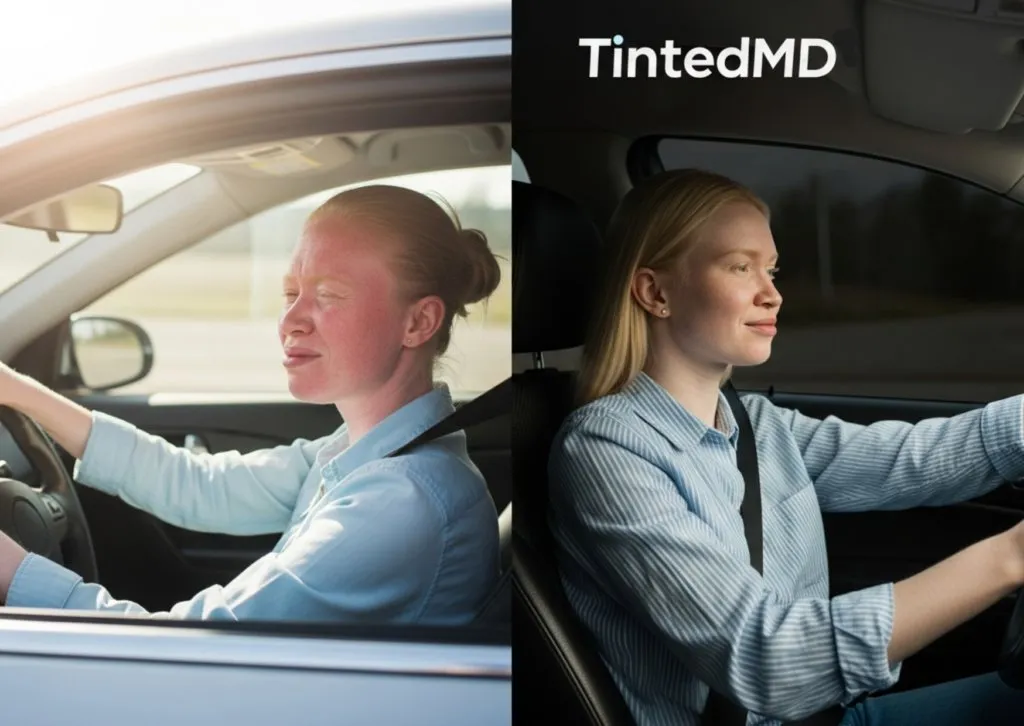
What a Medical Window Tint Exemption Allows
In most jurisdictions, vehicle window tinting is regulated by law, with limits set on how dark tinting can be measured by visible light transmission (VLT). Lower VLT percentages mean darker tinting. Standard legal limits are set with general road safety and law enforcement visibility in mind, not with the medical needs of individuals with photosensitive conditions.
A medical window tint exemption allows an individual with a qualifying medical condition, such as albinism, to install window tinting darker than standard legal limits. This provides enhanced UV filtration and visible light reduction that cannot be achieved within standard regulations. The exemption is not cosmetic. It is a recognized medical accommodation that reflects the genuine health needs of the individual.
How to Understand Tinting Laws Before Applying
Before applying for a medical window tint exemption, it is important to understand the regulations specific to your location. Resources like TintedMD provide a helpful overview of window tinting laws and exemption processes. While specific rules differ by jurisdiction, the general process follows a consistent pattern: obtain a medical diagnosis and documentation, submit an application with supporting physician certification, receive approval from the relevant authority, and then proceed with professional installation of compliant tinting film.
For individuals with albinism, this process is well-supported by medical evidence. The condition is widely recognized as conferring genuine photosensitivity that creates a medical necessity for enhanced UV and light protection in vehicles.
The Documentation You Will Need
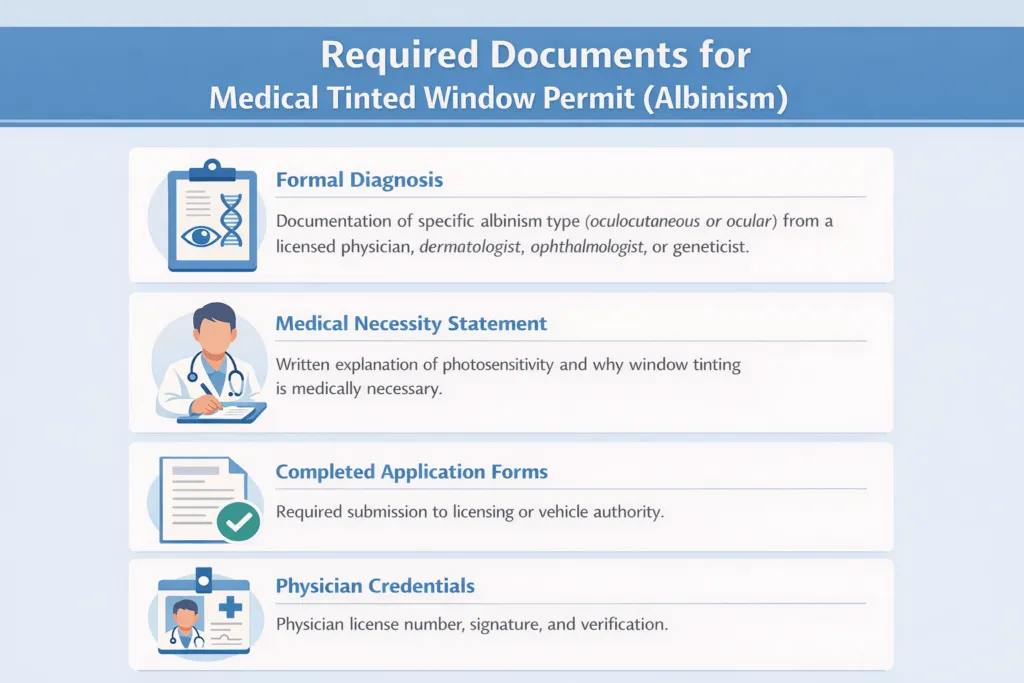
To obtain a medical window tint exemption based on albinism, you will typically need the following:
Formal diagnosis: Documentation of your specific type of albinism (oculocutaneous or ocular) from a licensed physician, dermatologist, ophthalmologist, or geneticist.
Medical necessity statement: A written statement from your healthcare provider explaining the photosensitivity associated with your condition and why window tinting is medically necessary.
Completed application forms: Many jurisdictions require submission of specific forms to the relevant licensing or vehicle authority.
Physician credentials: The certifying physician’s license information and signature must typically be included.
Online platforms such as TintedMD have simplified this process considerably. Rather than navigating the documentation requirements alone, individuals can connect with licensed healthcare professionals experienced in writing tint exemption certifications. You can review the full range of medical conditions that qualify for window tint exemptions to understand how albinism fits within the broader landscape of qualifying diagnoses.
Ready to get your medical window tint exemption? TintedMD connects you with licensed physicians who understand the documentation requirements. Visit Medical window tint exemption to start your application today.
Choosing the Right Tinting Film for Albinism & Light Sensitivity
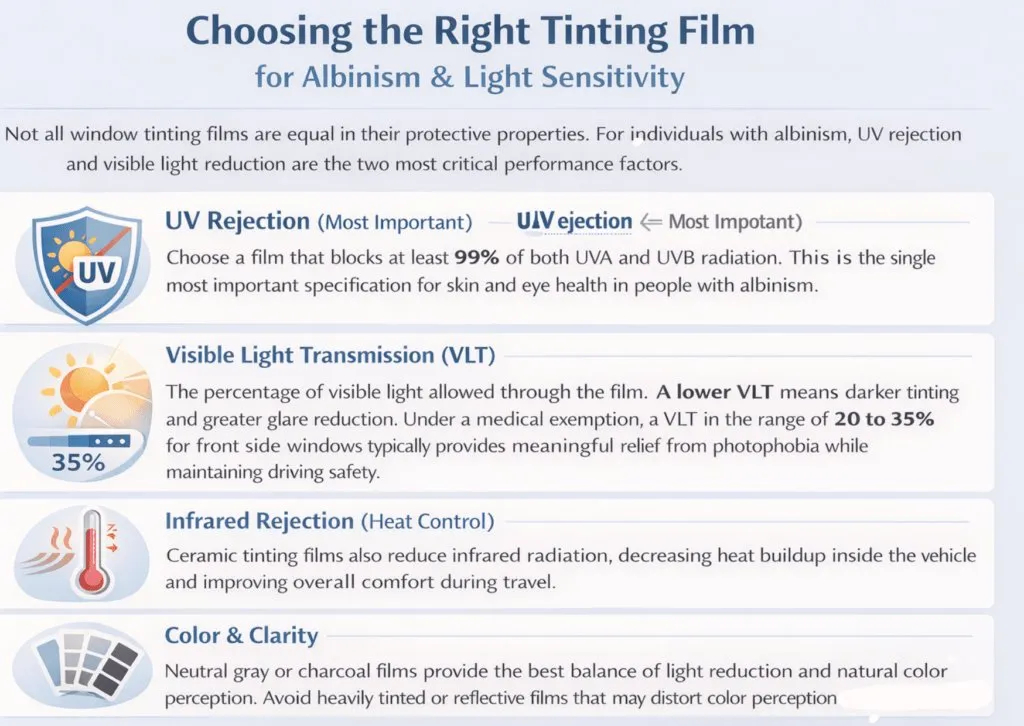
Not all window tinting films are equal in their protective properties. For individuals with albinism, UV rejection and visible light reduction are the two most critical performance factors.
UV Rejection: Choose a film that blocks at least 99% of both UVA and UVB radiation. This is the single most important specification for skin and eye health in people with albinism.
Visible Light Transmission (VLT): The percentage of visible light allowed through the film. A lower VLT means darker tinting and greater glare reduction. Under a medical exemption, a VLT in the range of 20 to 35% for front side windows typically provides meaningful relief from photophobia while maintaining driving safety.
Infrared Rejection: Ceramic tinting films also reduce infrared radiation, decreasing heat buildup inside the vehicle and improving overall comfort during travel.
Color and Clarity: Neutral gray or charcoal films provide the best balance of light reduction and natural color perception. Avoid heavily tinted or reflective films that may distort color perception or create additional glare.
A Comprehensive Protection Strategy Beyond Window Tinting
Window tinting is an important layer of protection, but it functions best as part of a broader strategy for managing albinism and light sensitivity safely.
Daily sunscreen: Apply a broad-spectrum sunscreen with SPF 30 or higher every day, including on cloudy days. Reapply every two hours during extended outdoor activity.
Protective clothing: Clothing with ultraviolet protection factor (UPF) ratings of 50 or higher provides a measurable shield for exposed skin. Long sleeves, wide-brimmed hats, and sun-protective garments significantly reduce cumulative UV dose.
UV-blocking eyewear: Sunglasses that block 100% of UVA and UVB radiation, particularly wraparound styles that block peripheral light entry, are essential for outdoor use.
Schedule outdoor activities wisely: UV radiation is most intense between 10 AM and 4 PM. Planning outdoor activities outside these hours reduces UV exposure substantially.
Regular dermatology and ophthalmology check-ups: Early detection of skin changes or eye deterioration allows for timely intervention. Dermatology examinations every six to twelve months and regular eye exams are standard care recommendations for individuals with albinism.
Living Well with Albinism & Light Sensitivity
The challenges of albinism and light sensitivity are real and significant, but they are also manageable with the right tools, accommodations, and medical support. Window tint exemptions represent exactly the kind of practical, evidence-based accommodation that can transform everyday activities like driving from painful and risky into safe and comfortable experiences.
Modern resources have made it easier than ever to access these protections. Telemedicine platforms specializing in medical exemptions, improved tinting film technology, and growing awareness among healthcare providers all contribute to better outcomes for people with albinism. The key is taking action, gathering proper documentation, and working with qualified professionals who understand the specific needs this condition creates.
Whether you are managing your own albinism or supporting a family member, the combination of a medical window tint exemption, comprehensive sun protection, and regular medical monitoring creates the strongest possible foundation for daily health and safety.
Frequently Asked Questions
Does albinism automatically qualify a person for a medical window tint exemption?
Albinism is widely recognized as a qualifying medical condition for window tint exemptions in most jurisdictions, but the exemption is not automatic. Individuals must obtain formal medical documentation from a licensed healthcare provider confirming the diagnosis and certifying the medical necessity for enhanced window tinting. The application must then be submitted to and approved by the appropriate authority in your jurisdiction before any non-standard tinting is legally installed.
What type of doctor should certify an albinism-related tint exemption?
Dermatologists are ideal for documenting photosensitivity and elevated skin cancer risk. Ophthalmologists are best placed to certify visual impairment and photophobia related to albinism. Primary care physicians can also provide documentation if they are familiar with the patient's condition. The key requirement is that the certifying provider is licensed to practice medicine in the relevant jurisdiction and has examined the patient.
How dark can window tinting be under a medical exemption for albinism?
The allowable tinting darkness under a medical exemption varies by jurisdiction. Many regions permit front side window tinting in the range of 20 to 35% visible light transmission under a medical exemption, which is significantly darker than standard legal limits. The certifying physician may specify recommended tinting levels based on the patient's clinical needs, and the relevant authority will confirm what is permissible.
Will a window tint exemption granted in one country or region be valid elsewhere during travel?
Window tint exemptions are jurisdiction-specific and may not be automatically recognized when traveling to different countries or regions. If you regularly travel across borders, it is advisable to research the tinting laws of those jurisdictions and carry your medical documentation when driving. In some cases, individuals with albinism carry their full medical records to present to law enforcement if questioned about non-standard tinting during travel.
How long does a medical window tint exemption last?
Validity periods vary significantly by jurisdiction. Some authorities issue permanent exemptions, recognizing that albinism is a lifelong genetic condition. Others require renewal every one to five years, typically accompanied by updated medical documentation. When renewal is required, a physician must recertify that the condition persists and that window tinting remains medically necessary.
Is window tinting alone sufficient protection for someone with albinism?
Window tinting provides important UV and glare protection during vehicle travel, but it should not be the sole protective measure for individuals with albinism. A comprehensive approach includes daily broad-spectrum sunscreen, UV-protective clothing, UV-blocking sunglasses, avoidance of peak UV hours, and regular dermatology and ophthalmology check-ups. Window tinting is one essential layer in a multi-layered strategy, particularly valuable because it provides continuous, passive protection whenever the individual is in a vehicle.

Meet the author
Nida Hammad
I am a professional writer with over five years of experience creating clear, engaging, and well-researched content. I specialize in medical window tint exemptions and state compliance topics, helping readers understand tint laws and exemption requirements in simple, easy-to-follow language. Currently, I write for TintedMD, where I focus on producing accurate, trustworthy guides to help drivers navigate the medical tint exemption process with confidence.
Get Your Medical Tint Exemption Online in Minutes
Check Your Eligibility