Legal Medical Reasons for Dark Tint: Which Conditions Qualify for a Window Tint Exemption (All 50 States)
 by Nida Hammad
 Last updated:
Medically reviewed by:
Dr. Matthew Reynolds, MD


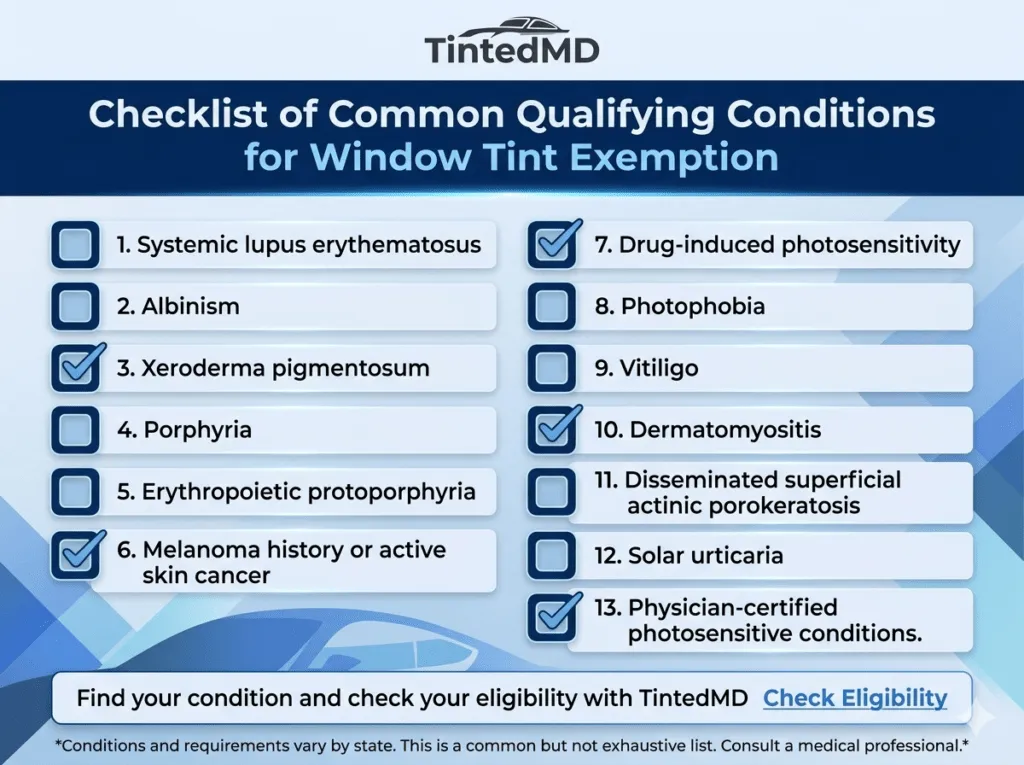
The legal medical reasons to have dark tint are: lupus, albinism, xeroderma pigmentosum, porphyria, photophobia, melanoma history, drug-induced photosensitivity, vitiligo, dermatomyositis, and solar urticaria. Any condition that makes UV or bright light medically dangerous may qualify if a licensed physician certifies the need. Over 45 states recognize these conditions for darker-than-legal window tint.
Most people think window tint is only for style or privacy. However, for millions of Americans, it is much more important than that. For people with certain medical conditions, bright sunlight coming through car windows can cause serious health problems. It may lead to painful skin flare-ups, damage the eyes, increase headaches, or trigger strong immune system reactions. Even short time in direct sunlight can make daily travel difficult for some people.
Because of these health risks, most U.S. states offer a medical window tint exemption program. These programs allow people with qualifying medical conditions to use darker window tint than normal state law allows. The main goal is to protect drivers and passengers who need less exposure to sunlight, UV rays, and bright visible light while traveling in a vehicle.
This guide explains the medical conditions that may qualify for a window tint exemption and how the application process works. It also covers the different tint rules and limits in each state. Whether you have lupus, albinism, a history of melanoma, severe light sensitivity, or another related condition, this guide will help you better understand your legal options and what steps you may need to take in your state.
If you need the certification completed quickly, TintedMD connects you with board-certified physicians who specialize in medical tint evaluations and can deliver your signed exemption documentation in 24 to 48 hours. If your condition is on the qualifying list, checking your eligibility takes under two minutes online, no clinic visit required.
What Is a Medical Window Tint Exemption?
A medical window tint exemption is a special legal permission that allows a person to use darker window tint on a vehicle than normal state law allows. This exemption is made for people who have certain medical conditions that make sunlight or bright light harmful to their health. In many cases, the exemption can be used by the vehicle owner or by a person who regularly rides in the vehicle, such as a family member with a qualifying condition.
Window tint laws are based on something called VLT, which stands for Visible Light Transmission. VLT measures how much light can pass through a car window. A higher VLT percentage means more light enters the vehicle, so the tint is lighter. A lower VLT percentage means less light passes through, so the tint is darker. For example, a 50% VLT tint is lighter than a 20% VLT tint.
Most states have standard tint laws that require front side windows to allow around 25% to 35% of light through the glass. Some states also have rules for rear side windows and back windows. However, drivers with approved medical conditions may be allowed to use much darker tint. In some states, medical exemptions can allow tint as dark as 10% VLT or even lower on certain windows if a doctor confirms the medical need.
It is important to understand that the exemption usually stays with the vehicle, not with the driver. This means the approved tint is connected to that specific car. If the vehicle is sold to another person, the new owner may have to remove the darker tint unless they also qualify for a medical exemption in that state.
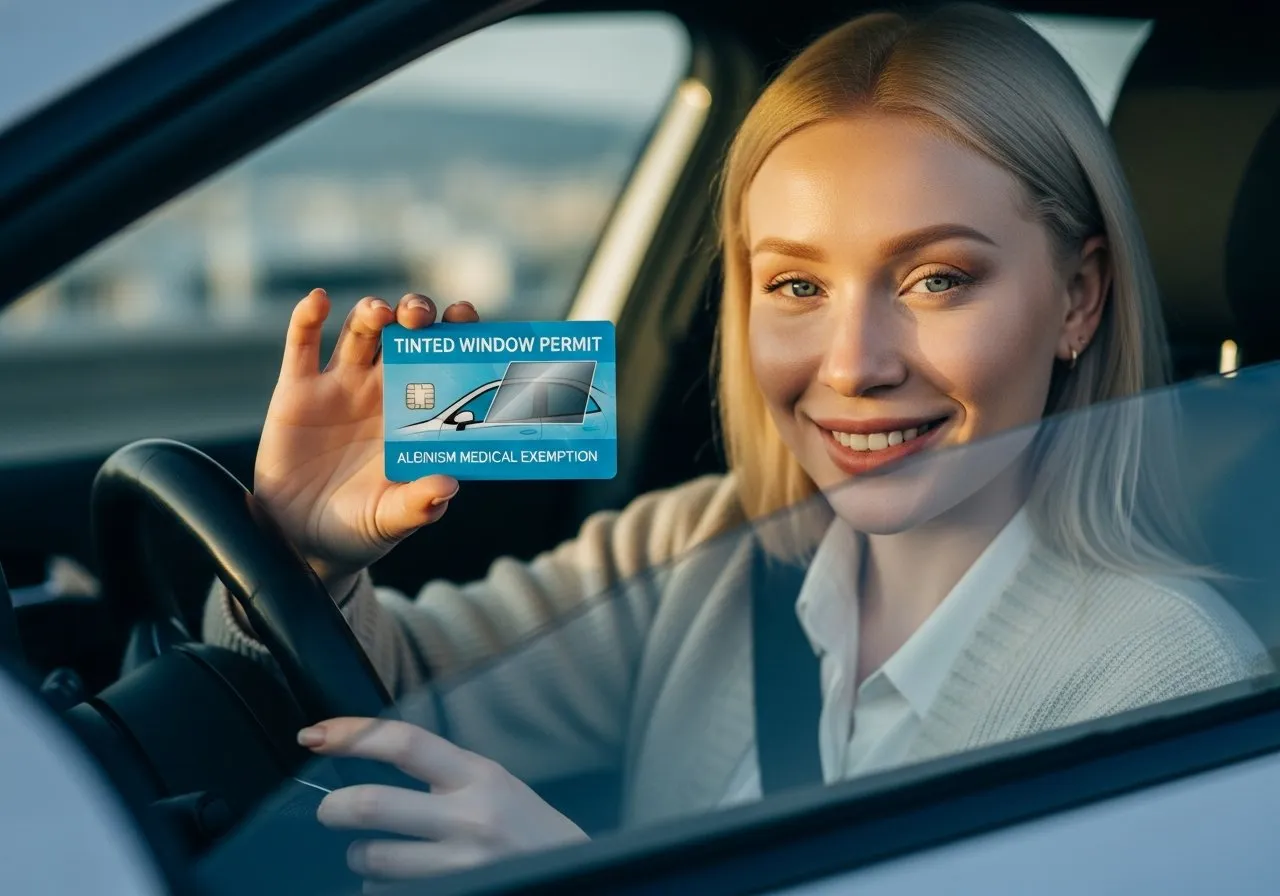
Most states require medical proof before approving darker tint. This often includes a signed letter, medical form, or certificate from a licensed doctor, dermatologist, or eye specialist. Some states issue an official DMV permit, while others only require the driver to keep the doctor’s letter inside the vehicle. A few states also require a special sticker or decal to be placed on the car window to show that the tint is legally approved.
Learning what type of documents your state requires is one of the most important first steps. Having the correct paperwork can help you avoid fines, legal problems, or orders to remove the tint later.
Medical Conditions That Qualify for a Window Tint Exemption
Each U.S. state has its own rules for medical window tint exemptions. However, some medical conditions are accepted in almost every state because they are strongly linked to light sensitivity and sun-related health problems. Other conditions may still qualify if a licensed doctor explains why darker window tint is medically necessary for the patient. Below are the most commonly recognized qualifying conditions across the United States.
- Systemic Lupus Erythematosus (SLE)
Lupus is one of the most common conditions approved for medical window tint exemptions. Lupus is an autoimmune disease, which means the body’s immune system attacks healthy tissues by mistake. Many people with lupus are very sensitive to sunlight and UV rays.
The Lupus Foundation of America reports that between 40% and 70% of people with lupus find that UV exposure worsens their symptoms. This may cause skin rashes, joint pain, tiredness, headaches, and full-body flare-ups.
Because regular car glass does not block all UV rays, darker medical tint can help reduce harmful light exposure and protect people with lupus while traveling.
- Albinism
People with albinism have little or no melanin in their skin, hair, and eyes. Melanin is the natural pigment that helps protect the body from UV rays.
Without enough melanin, sunlight can quickly damage the skin and eyes. Even short car rides in bright sunlight may cause painful sunburns, eye strain, or long-term skin damage. People with albinism also have a higher risk of skin cancer.
Since the medical need is clear, many states automatically accept albinism as a qualifying condition for darker window tint.
- Xeroderma Pigmentosum (XP)
Xeroderma Pigmentosum, also called XP, is a rare but serious genetic disorder documented in the NIH Genetic and Rare Diseases (GARD) database. People with XP can develop severe skin damage after very small amounts of sun exposure.
For someone with XP, regular sunlight can greatly increase the risk of skin cancer and other serious skin problems. Because of this, avoiding UV light is an important part of daily life.
Medical window tint is often considered necessary protection for people with XP, and most states with exemption programs allow it for this condition.
- Porphyria (Erythropoietic Protoporphyria)
Porphyria is a group of rare conditions that can make the skin extremely sensitive to sunlight. One type, called erythropoietic protoporphyria (EPP), can cause severe burning pain, swelling, and redness within minutes of sun exposure.
Since UV rays can pass through normal car windows, sitting inside a vehicle in sunlight may still cause painful reactions. Darker medical tint helps lower UV exposure and can make travel safer and more comfortable for people with porphyria.
- Melanoma and Skin Cancer History
People who have had melanoma or other forms of skin cancer are often advised to avoid too much sunlight and UV exposure. After treatment, some patients become more sensitive to light than before.
Doctors may recommend darker window tint as part of long-term skin protection. Many states accept a history of skin cancer if a doctor confirms that extra UV protection is medically necessary.
- Drug-Induced Photosensitivity
Some medicines can make the skin much more sensitive to sunlight. This is called drug-induced photosensitivity.
Common medicines linked to this problem include certain antibiotics, antifungal drugs, chemotherapy medicines, water pills, and some mental health medications. People taking these medicines may develop painful rashes, burns, or skin reactions after being in the sun.
In some states, long-term medicine-related light sensitivity can qualify for a medical tint exemption if a doctor confirms the condition.
- Photophobia
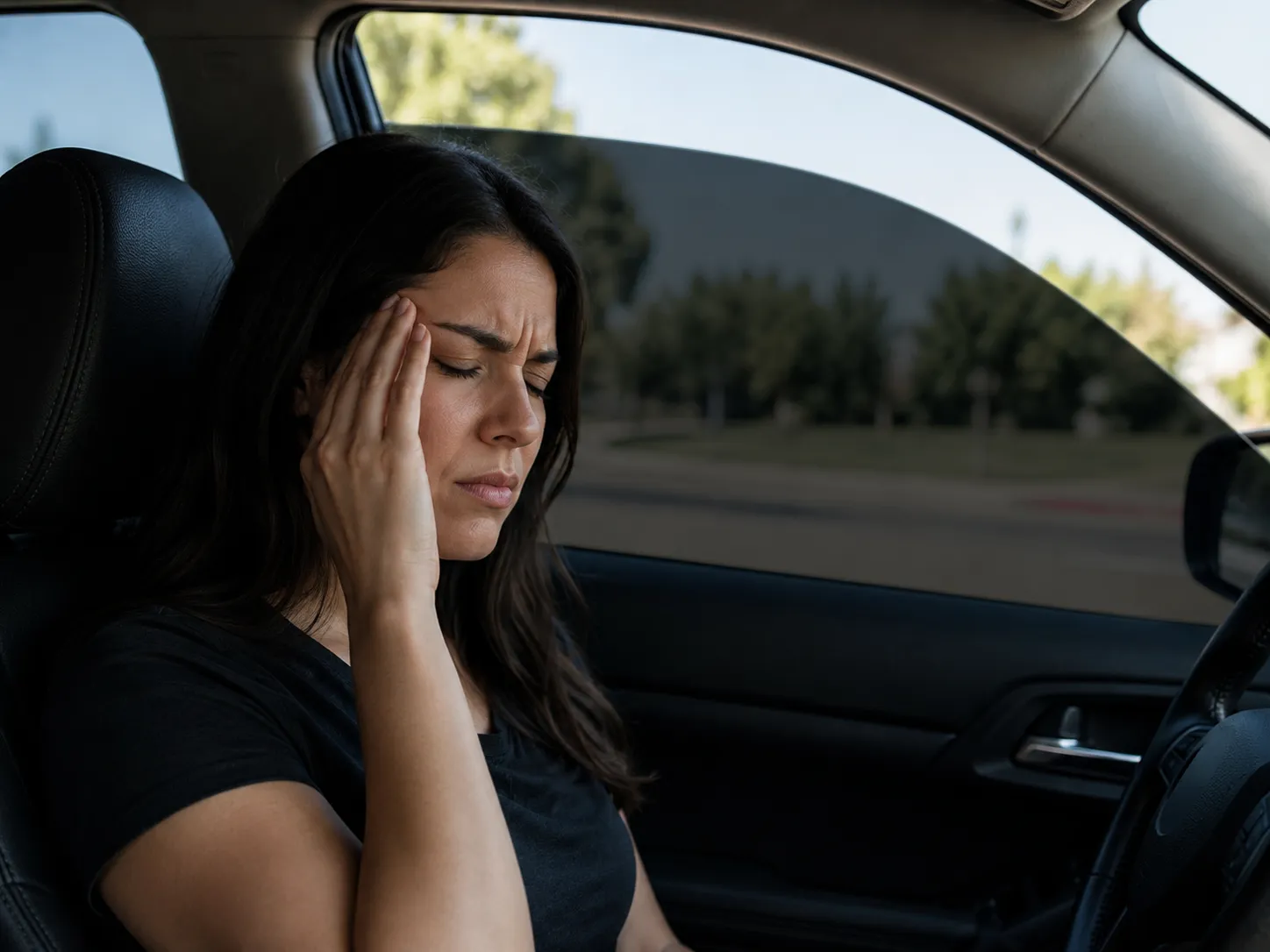
Photophobia means extreme sensitivity to bright light. It is more serious than simply disliking sunlight. Bright light may cause strong headaches, eye pain, blurry vision, or trouble seeing clearly.
Photophobia is often linked to migraines, eye diseases, brain injuries, or nerve problems. For some people, driving in bright sunlight can become difficult and unsafe.
Medical window tint can help reduce glare and light exposure, making driving more comfortable and safer for people with this condition..
- Vitiligo
Vitiligo is a skin condition that causes some areas of skin to lose color. These lighter areas have less natural protection from UV rays.
Because of this, the skin may burn more easily in sunlight and may face a higher risk of long-term sun damage. Some states include vitiligo as a qualifying condition for medical window tint exemptions.
- Dermatomyositis
Dermatomyositis is a disease that affects the muscles and skin. Many people with this condition are highly sensitive to sunlight.
UV exposure can make symptoms worse and may trigger skin rashes or muscle weakness. Because sunlight can increase health problems, some states allow people with dermatomyositis to apply for darker medical window tint.
- Disseminated Superficial Actinic Porokeratosis (DSAP)
DSAP is an inherited skin condition that causes rough or damaged spots on the skin after sun exposure. Sunlight can make the condition worse over time.
Some states recognize DSAP as a qualifying condition because limiting UV exposure is an important part of managing the disease.
- Solar Urticaria
Solar urticaria is a rare sunlight allergy. In this condition, sunlight can quickly cause itching, hives, swelling, or painful skin reactions. Symptoms may appear within minutes of UV exposure.
For some people, reactions can become severe and affect daily activities, including driving. Darker medical tint may help lower sunlight exposure and reduce the chance of painful reactions while inside a vehicle.
- Other Conditions Accepted with Physician Attestation
Many states also allow medical window tint exemptions for health conditions that are not specifically listed in state law. In these cases, a licensed doctor must explain that the patient needs extra protection from sunlight and UV rays for medical reasons.
This type of approval is often called physician attestation. It simply means that a doctor signs a letter or medical form confirming that darker window tint is medically necessary for the patient’s health and safety.
Some of the conditions that may qualify under these flexible rules include:
-
Severe eczema that becomes worse with sunlight
-
Rosacea with strong UV sensitivity
-
Sarcoidosis
-
Cockayne syndrome
-
Bloom syndrome
-
Certain connective tissue disorders
Even if your condition is not directly listed in your state’s medical tint law, you may still qualify. In states with flexible exemption rules, a detailed letter from a licensed physician explaining the medical need for UV protection is often enough to support your application.
How the Exemption Process Works
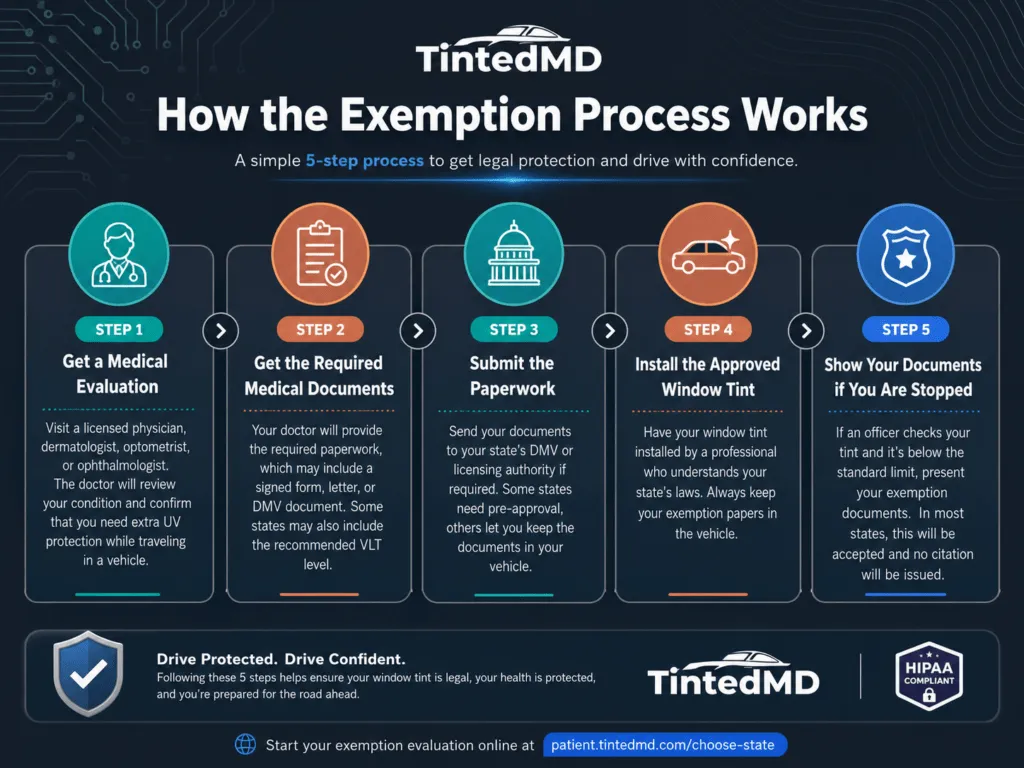
The process for getting a medical window tint exemption is similar in most U.S. states, although the exact rules and paperwork may be different. In general, there are a few important steps you need to follow to get legal approval for darker window tint.
Step 1: Get a Medical Evaluation
First, you need to visit a licensed medical professional. This may be a doctor, dermatologist, eye doctor, optometrist, or ophthalmologist, depending on your state’s rules.
TintedMD’s online medical window tint exemption service connects you with a state-licensed physician who understands your state’s specific documentation requirements and completes your certification within 24 to 48 hours, without requiring an in-person appointment.
During the appointment, explain your medical condition and how sunlight or UV rays affect your health while driving or riding in a vehicle. The medical provider must confirm that regular protection methods, such as sunglasses, sun visors, or standard window tint, are not enough to protect you properly.
Step 2: Get the Required Medical Documents
After the evaluation, the doctor may provide official paperwork showing that you qualify for a medical tint exemption.
The required documents are different in each state. Some states require:
-
A signed medical application form
-
A letter written on the doctor’s official letterhead
-
A completed DMV form
-
A statement explaining the recommended tint darkness level
In some states, the doctor must also mention the exact VLT percentage that is medically necessary for the patient.
Step 3: Submit the Paperwork
Next, you may need to send the documents to your state’s DMV or vehicle licensing office.
Some states require approval before you install darker tint on the vehicle. Other states allow you to keep the doctor’s letter inside the vehicle as proof of your exemption. A few states issue official permits, stickers, decals, or exemption cards for approved drivers.
Because every state is different, it is important to carefully check your local rules before installing the tint.
Step 4: Install the Approved Window Tint
Once your exemption is approved, you can have the darker tint installed on your vehicle. It is best to work with a professional tint installer who understands your state’s medical tint laws and legal limits.
You should always keep your exemption paperwork inside the vehicle. This helps prove that your tint is legal if questions ever come up during a traffic stop.
Step 5: Show Your Documents if You Are Stopped
Police officers sometimes test window tint to check if it follows state law. If your tint is darker than the normal legal limit, the officer may ask for proof of your medical exemption.
In most cases, showing your approved documents or permit is enough to explain why the darker tint is legal. This often helps drivers avoid fines or tint violation tickets.
If getting to a physician’s office is difficult, TintedMD makes the entire evaluation process available online. You can start your medical exemption evaluation at TintedMD from any device, without leaving home.
State-by-State Breakdown: Medical Conditions and Laws That Qualify for Window Tint Exemption
The table below covers all 50 U.S. states and Washington D.C. It summarizes qualifying conditions, exemption availability and validity. For the most current requirements, always verify directly with your state’s DMV.
| State | Exemption Available | Qualifying Medical Conditions | Validity / Renewal |
|---|---|---|---|
| Alabama | Yes | Any condition requiring sun shielding; light-sensitive porphyria specifically named in statute (Section 32-5C-4) and receives the broadest scope | Not specified |
| Alaska | Yes | Any condition requiring shielding from direct rays of the sun; driver or frequent passenger both eligible | Annual renewal |
| Arizona | Yes | Any medical condition requiring sun shielding | 3 years |
| Arkansas | Yes | Any condition attested by physician that requires sun shielding | 3 years |
| California | Yes | Lupus erythematosus, xeroderma pigmentosum, porphyria, albinism, photophobia, melanoma (existing or family history), dermatitis/eczema; any condition where UV worsens health per physician | Physician-determined; indefinite for permanent conditions, time-limited for temporary |
| Colorado | No | No exemptions permitted under Colorado Revised Statutes 42-4-227 | N/A |
| Connecticut | Yes | Any physician-certified condition that requires tint below the standard 32% VLT threshold | Not specified |
| Delaware | Yes | Any physician-certified condition | Not specified |
| Florida | Yes | Lupus, dermatomyositis, albinism, total or facial vitiligo, xeroderma pigmentosum, or other autoimmune disease or medical condition (Florida Statute 316.29545) | No expiration |
| Georgia | Yes | Any condition requiring special shielding from sun, per licensed physician or optometrist | Not specified |
| Hawaii | No | No medical exemptions permitted; standard-level tint available without exemption | N/A |
| Idaho | Yes | Any physician-certified condition (Idaho Code Title 49, Ch. 9, §49-944(4)) | Not specified |
| Illinois | Yes | Systemic or discoid lupus erythematosus, disseminated superficial actinic porokeratosis (DSAP), light sensitivity as a result of traumatic brain injury (TBI), albinism; other conditions also permitted administratively (e.g. xeroderma pigmentosum accepted by IL SOS) | 4 years |
| Indiana | Yes | Any condition certified by licensed Indiana physician or optometrist (IC 9-19-19-4) | Annual renewal |
| Iowa | No | Since July 4, 2012, Iowa no longer permits new darker-tint exemptions; pre-2012 exemptions grandfathered if DOT form #432020 signed before that date is still carried | Not specified (grandfathered only) |
| Kansas | No | No exemptions permitted — no laws or regulations allow special tint for medical reasons | N/A |
| Kentucky | No | Kentucky law does NOT allow medical exemptions (Kentucky Revised Statutes §189.110) | N/A |
| Louisiana | Yes | ICD-9-CM conditions: albinism, lupus, porphyria, photophobia, solar urticaria, and other WHO-classified conditions | 3-year review cycle |
| Maine | Yes | Any physician-certified condition | Not specified |
| Maryland | Yes | Any physician-certified condition requiring sun shielding | Not specified |
| Massachusetts | Yes | Any physician-certified condition | Not specified |
| Michigan | Yes | Light sensitivity or photosensitivity | Not specified |
| Minnesota | Yes | Any physician-certified condition | Not specified |
| Mississippi | Yes | Any physician-certified condition | Not specified |
| Missouri | Yes | Any physician-certified condition | Not specified |
| Montana | Yes | Any physician-certified condition | Not specified |
| Nebraska | No | No medical exemptions specified in Nebraska statutes | N/A |
| Nevada | Yes | Any physician-certified condition | Not specified |
| New Hampshire | Yes | Extreme intolerance to light, allergic reactions to sun, melanoma, lupus, porphyria, or any condition aggravated by sun exposure | 2 years |
| New Jersey | Yes | Ophthalmic or dermatological photosensitivity, chronic actinic dermatitis, photosensitive eczema, skin cancers with associated chronic actinic dermatitis diagnosis | 4 years |
| New Mexico | Yes | Any physician-certified condition | Not specified |
| New York | Yes | Severe drug photosensitivity (prolonged treatment), photophobia (ophthalmic or neurological), porphyria, xeroderma pigmentosum, any severe photosensitivity condition requiring medical shielding from sun | Not specified |
| North Carolina | Yes | Any physician-certified condition causing photosensitivity to visible light | Up to 5 years |
| North Dakota | No | North Dakota no longer allows medical exemptions for window tint | N/A |
| Ohio | No | State law does not specify medical exemptions | N/A |
| Oklahoma | Yes | Any physician-certified condition (per Oklahoma Statutes Title 47, §12-405) | Not specified |
| Oregon | Yes | Any physician-certified condition | Not specified |
| Pennsylvania | Yes | Any physician-certified condition; only colorless materials permitted | Not specified |
| Rhode Island | Yes | Any physician-certified condition | Not specified |
| South Carolina | Yes | Lupus, solar urticaria, albinism, xeroderma pigmentosum, other conditions | Not specified |
| South Dakota | Yes | Any person with a medical condition adversely affected by ultraviolet light | 2 years |
| Tennessee | Yes | Any physician-certified condition | Not specified |
| Texas | Yes | Any condition requiring protection beyond 25% VLT on front windows | Not specified |
| Utah | No | Utah Code Title 41, Chapter 6a, Section 1635 contains no provision for medical exemptions; any case-by-case UHP consideration is unofficial and uncodified | N/A |
| Vermont | Yes | Any condition certified by licensed physician or optometrist | 4 years (temporary conditions); indefinite (permanent/stable conditions) |
| Virginia | Yes | Any condition requiring sun shielding, certified by physician, physician’s assistant, nurse practitioner, ophthalmologist, or optometrist | Not specified |
| Washington | Yes | Any physician-certified condition | Not specified |
| Washington D.C. | Yes | Any condition requiring protection from sunlight or bright lights | Not specified |
| West Virginia | Yes | Any physician-certified condition | Not specified |
| Wisconsin | Yes | Any physician-certified condition (temporary or permanent) | Not specified |
| Wyoming | Yes | Any condition requiring shielding from sun, per physician or optometrist | Not specified |
States With No Medical Exemption: What to Do
- If you live in Colorado, Kansas, or another state with strict tint laws, your options for medical window tint may be limited. Some states do not offer full medical tint exemption programs.
For states where exemptions are available, the process and documentation requirements vary significantly; for example, the California window tint exemption guide details the exact VLT limits, accepted conditions under California law, and how to submit documentation to the California DMV.
-
Even without a medical exemption, you still have some ways to protect yourself from sunlight and UV exposure while traveling in a vehicle.
-
Clear UV-blocking window film is legal in all states because it does not make the windows much darker. These films can still block most harmful UV rays that may trigger photosensitive medical conditions.
-
Clear UV film is often recommended for people who live in states without medical tint exemptions because it provides extra protection while still following state law.
-
Before installing any UV-blocking film, check with your local DMV or licensing office to make sure the product is legal for your windshield and front side windows.
-
UV-protective sunglasses and special eyewear can also help reduce glare, eye strain, headaches, and light sensitivity while driving or riding in a vehicle.
-
For serious conditions such as lupus or Xeroderma Pigmentosum (XP), sunglasses alone are usually not enough because UV rays can still reach exposed skin through normal car windows.
-
Choosing the right type of vehicle may also help. In many states, rear windows can legally have darker factory tint than front windows.
-
SUVs, vans, and some larger vehicles often come with factory-installed privacy glass in the rear, which may provide better sunlight protection for passengers.
-
If your medical condition is very severe, you may want to speak with a healthcare attorney or disability rights organization. They may help you understand whether additional protections are available under the Americans with Disabilities Act (ADA).
The Science Behind Sun Sensitivity and Vehicle Windows
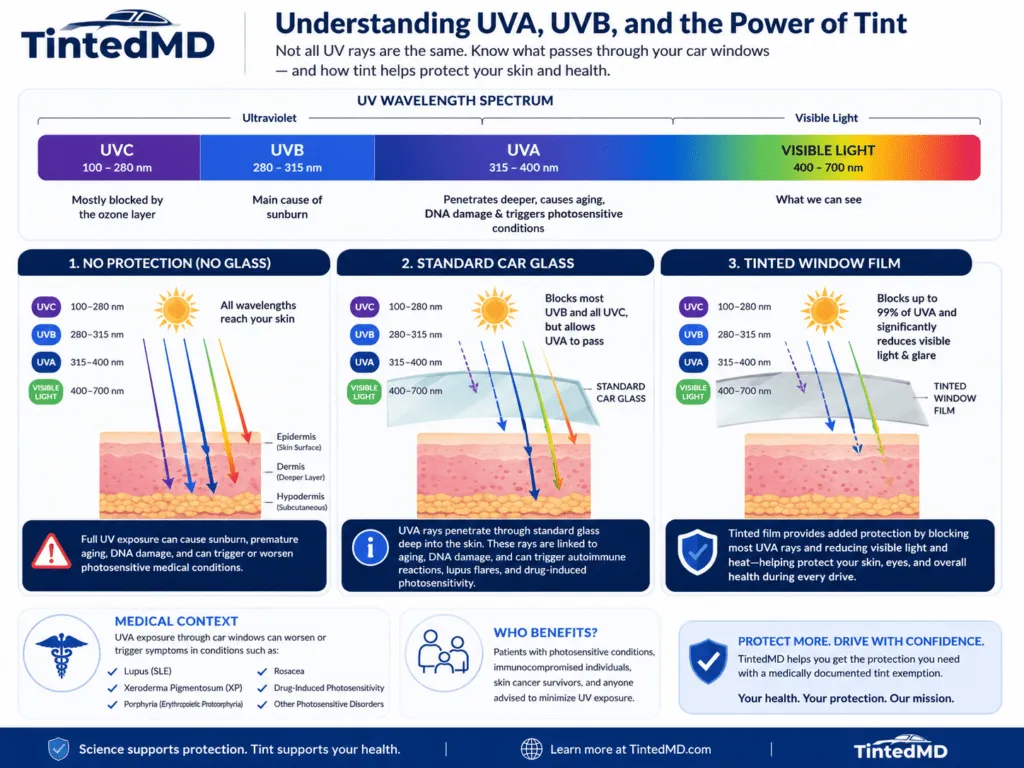
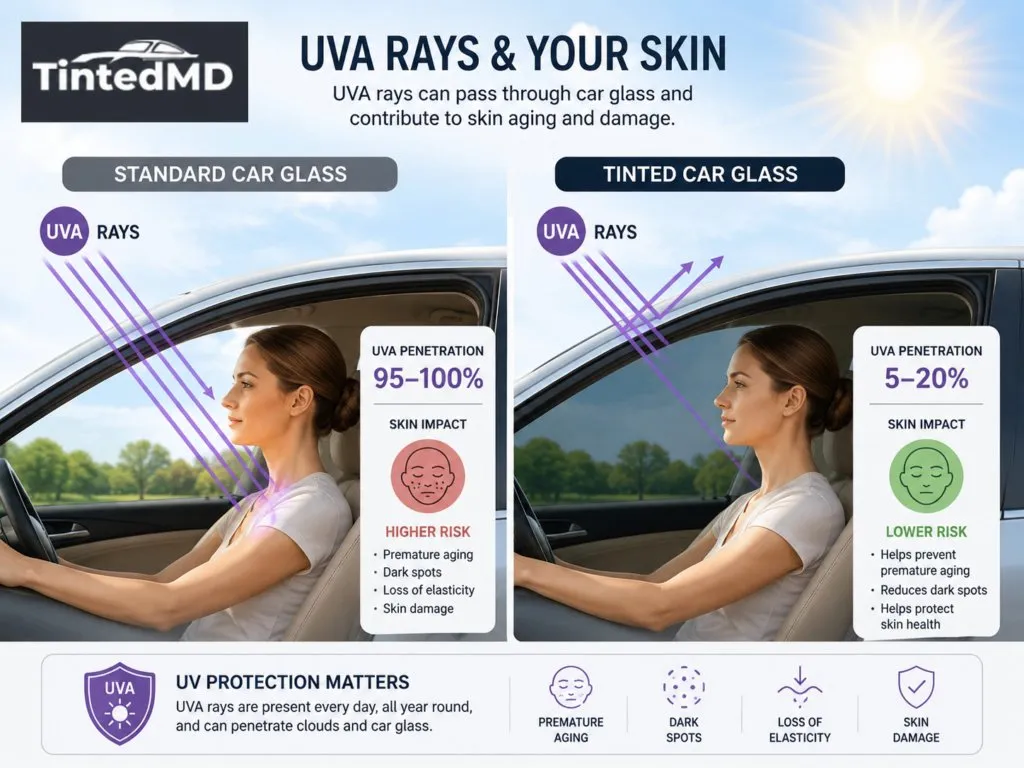
Standard car windows can block most UVB rays, which are the rays mainly responsible for causing sunburn. However, normal vehicle glass still allows a large amount of UVA rays to pass through. UVA rays are different because they can go deeper into the skin and may cause serious problems for people with certain medical conditions.
For many people with photosensitive disorders, UVA exposure inside a vehicle can still trigger painful symptoms even when the windows are closed. These rays may lead to skin damage, rashes, eye discomfort, fatigue, headaches, and immune system reactions. People with lupus are especially sensitive to UVA rays because sunlight exposure can trigger disease flare-ups and make symptoms much worse.
UVA radiation is also a major cause of drug-induced photosensitivity. This happens when certain medicines make the skin much more sensitive to sunlight. Some antibiotics, chemotherapy drugs, antifungal medicines, and other medications can increase the risk of painful skin reactions after even short exposure to sunlight through car windows.
The NIH StatPearls database notes that UVA penetrates “deeper into the skin and through window glass,” making it especially relevant for people with photosensitivity and systemic autoimmune conditions. Studies found that darker tinted windows help reduce harmful light exposure and improve comfort for people with photosensitive medical conditions. Researchers also noted that people with lupus have long supported medical window tint laws because regular car windows do not block enough of the UVA rays that trigger their symptoms.
Medical experts also explain that UVA rays can travel deeper into the skin and easily pass through standard window glass. Because of this, doctors often recommend darker medical window tint instead of depending only on sunscreen, hats, or sunglasses. While those methods may help, they usually do not provide enough protection by themselves during long periods inside a vehicle.
For people with erythropoietic protoporphyria (EPP), the risk can be even more serious. EPP is a rare condition that causes severe pain and skin reactions after sunlight exposure. In some cases, just a few minutes of UV exposure through regular car windows can trigger burning pain, swelling, and discomfort. For these patients, darker window tint is not simply about comfort or appearance. It is an important medical protection that can help them travel more safely and reduce painful reactions during everyday activities.
Who Can Sign Your Medical Exemption Documentation?
The type of medical professional who can sign a medical window tint exemption form depends on your state’s laws. However, most states accept documents from several types of licensed healthcare providers.
These may include:
-
Licensed medical doctors (MDs)
-
Doctors of osteopathic medicine (DOs)
-
Naturopathic medical doctors (NMDs) in states where they are legally licensed
-
Licensed optometrists for eye conditions and light sensitivity problems
-
Ophthalmologists, who are medical eye specialists
-
Dermatologists for skin conditions related to sunlight or UV sensitivity
Some states clearly list which medical providers are allowed to approve medical tint exemptions. For example, Arizona accepts forms signed by MDs, DOs, NMDs, and ophthalmologists through Arizona Department of Transportation’s Medical Review Program. Texas accepts documentation from licensed physicians and licensed optometrists.
For medical conditions that affect more than one part of the body, choosing the right doctor is important. For example, lupus can affect the skin, eyes, joints, and immune system. In these cases, a rheumatologist, dermatologist, or primary care doctor who regularly manages your condition is often the best person to complete the paperwork.
In most states, the medical documents must include important details about your condition and your need for extra UV protection. The paperwork usually needs to state:
-
Your medical diagnosis
-
Why your condition requires extra protection from sunlight or UV rays beyond normal legal tint limits
-
The recommended tint darkness level, also called the VLT percentage, if your state requires it
-
An expiration date for the exemption, if state law requires renewals
Making sure your documents are complete and correctly filled out is very important. Missing information may delay approval or cause problems if you are stopped by law enforcement later.
Common Mistakes That Delay or Void Your Exemption
Getting the documentation right at first time saves much time and frustration. These are the most common errors that cause applications to be rejected despite of a valid condition.
- Missing the VLT Percentage
Getting your medical tint documents correct the first time can save a lot of time, stress, and extra paperwork. One of the most common mistakes is not including the required VLT percentage in the doctor’s letter or application.
Some states, such as Minnesota and Nebraska, require the medical provider to clearly state the minimum VLT percentage the patient needs for medical protection. A simple note saying that “darker tint is recommended” may not be enough for approval.
Because of this, it is important to make sure your paperwork includes the exact tint level required by your state’s law.
- Expired Documentation
Another common problem is expired medical exemption paperwork. Some states require drivers to renew their exemption regularly to keep it valid.
For example:
-
Indiana requires renewal every year
-
Alabama also requires yearly renewal
-
Illinois requires renewal every four years
If your documents have expired, your exemption may no longer be accepted during a traffic stop, vehicle inspection, or tint check. Keeping track of renewal dates is very important so your protection stays active and legal.
- Wrong Vehicle
In many states, a medical tint exemption is connected to a specific vehicle instead of the driver. This means the approval may only apply to the car listed on the paperwork.
If you start driving a different vehicle, the exemption may not automatically move with you. Some states allow exemptions for any vehicle you regularly travel in, while others connect the exemption to the vehicle’s VIN number, which is the car’s official identification number.
Before using darker tint on another vehicle, always check your state’s rules to avoid possible fines or legal problems.
- No Documentation in the Vehicle
Your medical exemption only helps you if you can show proof when asked by law enforcement. One of the most common reasons people still receive tint tickets is because they leave the paperwork at home.
You should always keep your exemption letter, permit, or medical form inside the vehicle. If an officer checks your tint level during a traffic stop, showing the correct documents can help prove that your darker tint is legally approved.
Without the paperwork, you may still receive a citation and later have to explain the situation in traffic court.
- Installing Tint Before Receiving Pre-Approval
Some states require official approval before you install darker medical tint on your vehicle. This rule is very important because installing tint too early can still lead to fines.
States such as New York, North Carolina, Maryland, and Pennsylvania often require drivers to receive DMV approval first. If you install darker tint before the exemption is officially approved, you could receive a ticket even if you later qualify for the program.
To avoid problems, always check your state’s process carefully and wait for approval if pre-authorization is required.
What Happens at a Traffic Stop With Exemption Tint?
Police officers cannot know if your darker window tint is medically approved just by looking at your car. During a traffic stop, they may use a special tool called a tint meter to measure the VLT level of your windows. This device checks how much light can pass through the glass.
If the tint is darker than the normal legal limit, the officer will usually ask why the vehicle has darker tint. This is the time when you should show your medical exemption documents.
Depending on your state, this may include:
-
A signed doctor’s letter
-
A DMV-issued medical tint permit
-
An exemption card
-
Other official medical paperwork
In most states, if your documents are valid and properly completed, the officer will usually accept the exemption and may give only a warning or take no action at all.
Some states use official decals or stickers instead of only paperwork. These decals are placed on the vehicle and help officers quickly see that the tint is legally approved for medical reasons. States such as Virginia and West Virginia use these types of decals as proof of a valid exemption.
Sometimes, drivers may still receive a tint citation even when they have legal medical approval. If this happens, the problem is usually solved by showing the exemption documents in traffic court. In many cases, the court will dismiss the ticket after confirming that the medical exemption is valid and up to date.
Telehealth and the Modern Path to Exemption Documentation
You do not need to visit a doctor’s office in person anymore to get a window tint exemption letter. Online telehealth services for medical tint evaluations can connect you with a licensed doctor in your state. The doctor can review your medical history and current condition online and prepare state-approved documents within 24 to 48 hours.
This is important for two reasons. First, people with serious light-sensitive conditions may have trouble going to in-person appointments. In hot and sunny areas, even a short walk from a parking lot to a building can cause pain or make their condition worse. Second, many regular doctors may not know the exact wording or VLT rules that the DMV needs in a tint exemption letter.
Services like TintedMD are made for this exact purpose. Doctors who understand your state’s tint exemption rules review your case, confirm if you qualify, and provide documents that meet state legal requirements. For many people, this process is not only easier but also necessary for their health and safety.
Special Cases: Passengers, Children, and Multi-Vehicle Households
Most states allow a medical window tint exemption for vehicles that are regularly used by the person with the medical condition, even if that person does not own the vehicle. This is important for people with serious light sensitivity who are usually driven by a family member.
For example, Louisiana law allows the exemption to apply to the vehicle owner, the owner’s spouse, or a family member of the person with the medical condition. Alabama law also allows exemptions for people who are regular passengers, not only for vehicle owners.
For children with qualifying conditions like Albinism or Xeroderma Pigmentosum, the exemption can usually be used for the family vehicle. Rhode Island law, for example, allows the exemption to be issued to the vehicle owner or the legal guardian of a person who needs UV protection.
If your household has more than one vehicle, you may need a separate exemption document for each one. State rules are different. Some states connect the exemption to a specific vehicle VIN, while others allow one doctor’s letter to cover multiple vehicles
Conclusion
A medical window tint exemption is not a loophole or a shortcut. It is a real and legal process approved by a licensed physician for people who genuinely need less UV light and brightness while traveling in a vehicle.
Many different medical conditions can qualify for this exemption. These include conditions such as Lupus, Albinism, Xeroderma Pigmentosum, Porphyria, drug-induced photosensitivity, and Photophobia. In all of these cases, medical research supports the need for reduced light exposure, and many health organizations recognize how serious these conditions can be.
More than 45 states in the U.S. allow some form of medical window tint exemption. While the exact rules can differ from state to state, the process usually starts with a physician reviewing your condition and ends with official documents that you must keep in your vehicle. It is important to get the correct paperwork in the required format before installing window tint.
For people living with photosensitivity, this is not just a comfort issue. It can make daily travel safer and much more manageable. See if your condition qualifies in Texas and start your evaluation today.
Frequently Asked Questions
What are the legal medical reasons to have dark tint?
The most widely recognized legal medical reasons for dark tint are: systemic lupus erythematosus, albinism, xeroderma pigmentosum, porphyria, photophobia, melanoma or skin cancer history, drug-induced photosensitivity, vitiligo, dermatomyositis, and solar urticaria. Any condition that causes documented UV or bright light sensitivity may qualify with a licensed physician's certification, depending on your state's exemption program. Colorado, Kansas, Kentucky, and Iowa (new applications) do not offer exemptions regardless of condition.
Can I get an exemption for a condition not listed in my state's law?
Many states still allow exemptions even if your condition is not written in the law. A doctor can sometimes approve it if your condition is similar to others that are listed. Some states are flexible and let the physician decide based on medical need. You should talk to the doctor who is doing your evaluation and explain your situation clearly.
What should my doctor's letter say?
At a minimum, the letter should have your full name and sometimes your vehicle details, like the VIN number. It should clearly state your medical condition. It must explain why you need extra protection from UV light that normal window tint cannot provide. If your state requires it, the doctor should also recommend a specific tint level (VLT). The letter must include the doctor’s license number and signature. Some states also require a special official form to be filled out.
Does a medical exemption for window tint expire?
It depends on the state. In some states like Alabama and Indiana, you must renew it every year. Illinois requires renewal every four years. In Arizona, it is valid for three years. Florida gives certificates that do not expire. Texas does not set a fixed expiry date, but it is still important to keep your documents updated. Always check the rules in your own state..
Can I use my exemption if I travel to another state?
Your exemption only applies in the state where it was issued. If you drive in another state, you must follow that state’s tint laws. Having your medical papers with you can help explain your situation if needed, and some officers may accept them, but you are not legally protected in another state.

Meet the author
Nida Hammad
I am a professional writer with over five years of experience creating clear, engaging, and well-researched content. I specialize in medical window tint exemptions and state compliance topics, helping readers understand tint laws and exemption requirements in simple, easy-to-follow language. Currently, I write for TintedMD, where I focus on producing accurate, trustworthy guides to help drivers navigate the medical tint exemption process with confidence.
Get Your Medical Tint Exemption Online in Minutes
Check Your Eligibility