Rosacea
 by Sahar Mustafa
Last updated:
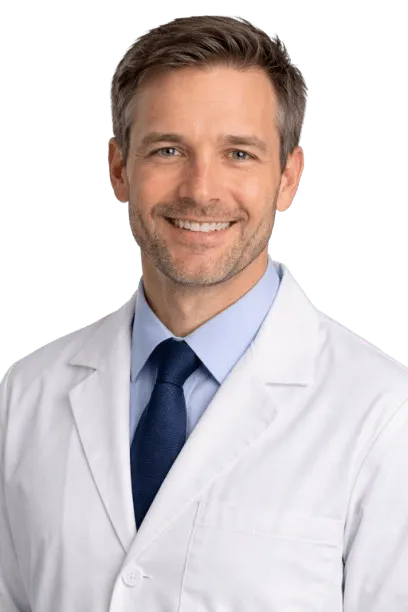
Medically reviewed by:
Dr. Matthew Reynolds, MD


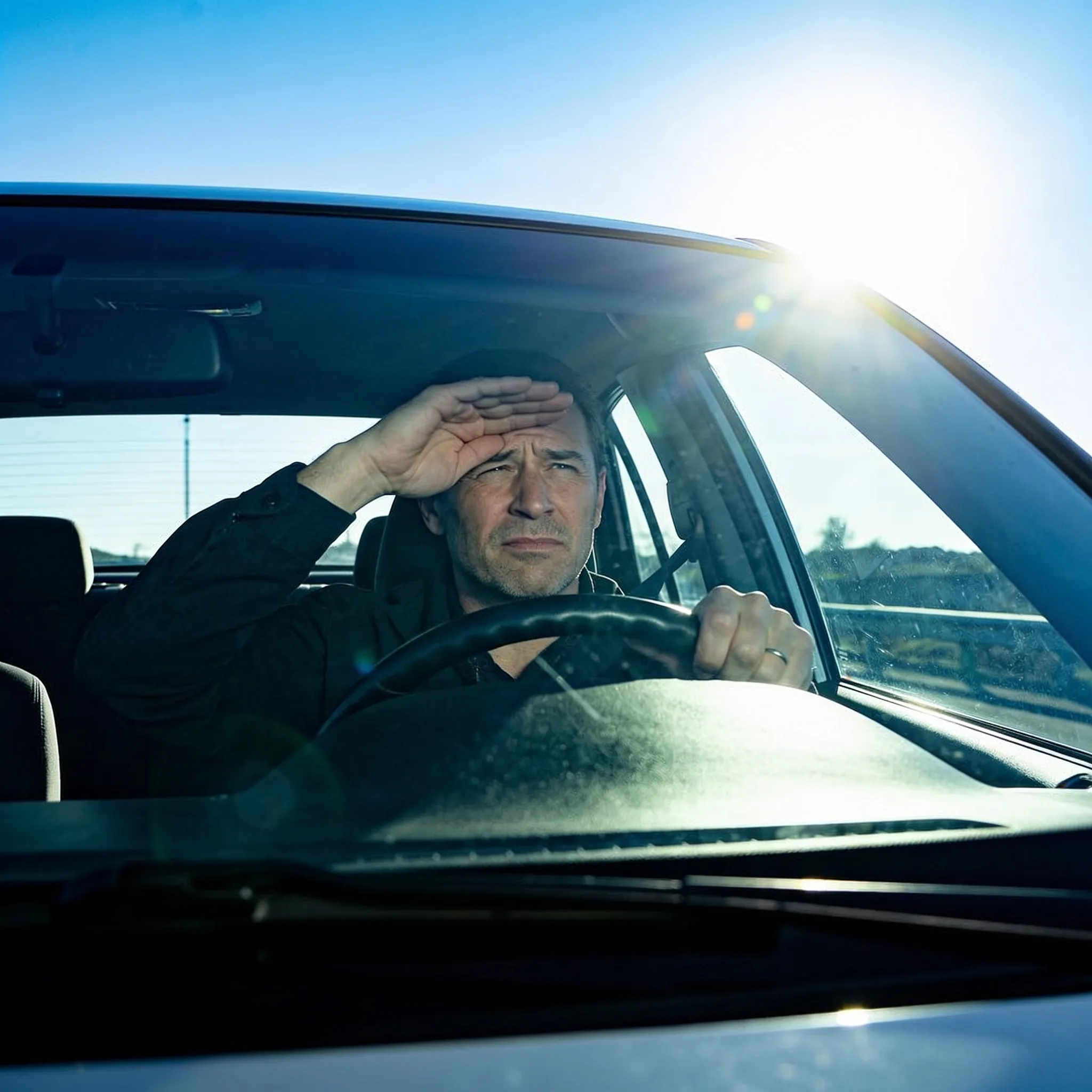
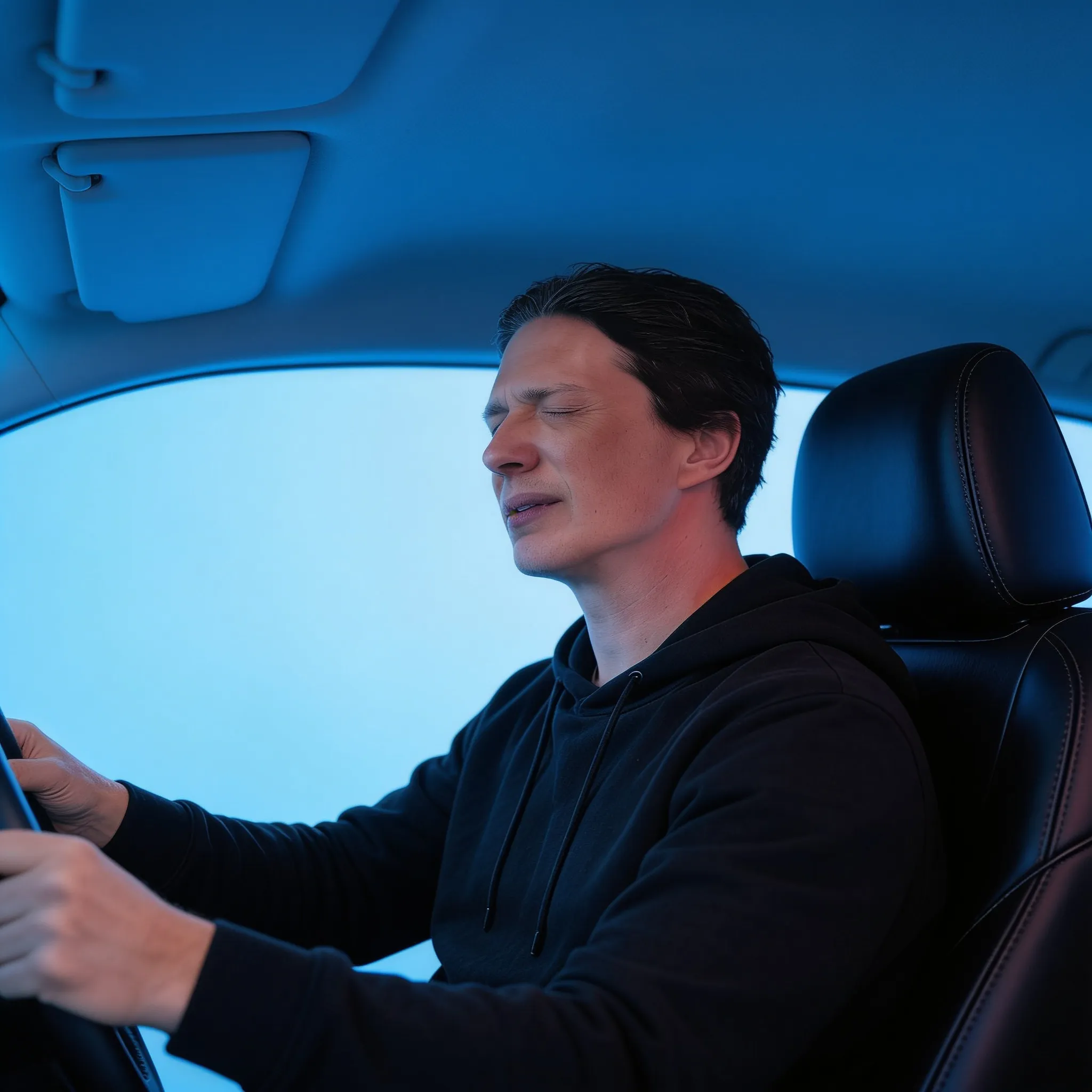
Rosacea affects more than 16 million Americans. It causes persistent facial redness and visible blood vessels. It also brings extreme sensitivity to sunlight, which can make routine driving unbearable. For people with this chronic skin condition, UV rays through car windows trigger painful flare-ups. These rays make symptoms worse. They turn needed trips into stress and discomfort.
This guide explains how rosacea qualifies for medical window tint exemptions across all 50 states. It covers the science behind UV sensitivity in rosacea patients. It also explains the legal process for obtaining darker tints that provide medical-grade protection. You’ll learn about the connection between sun exposure and symptom worsening. You’ll also discover what documentation your state requires. Finally, you’ll see how medical-grade window films block the UV radiation that triggers your flare-ups.
Understanding Rosacea: Causes, Symptoms, and Diagnosis
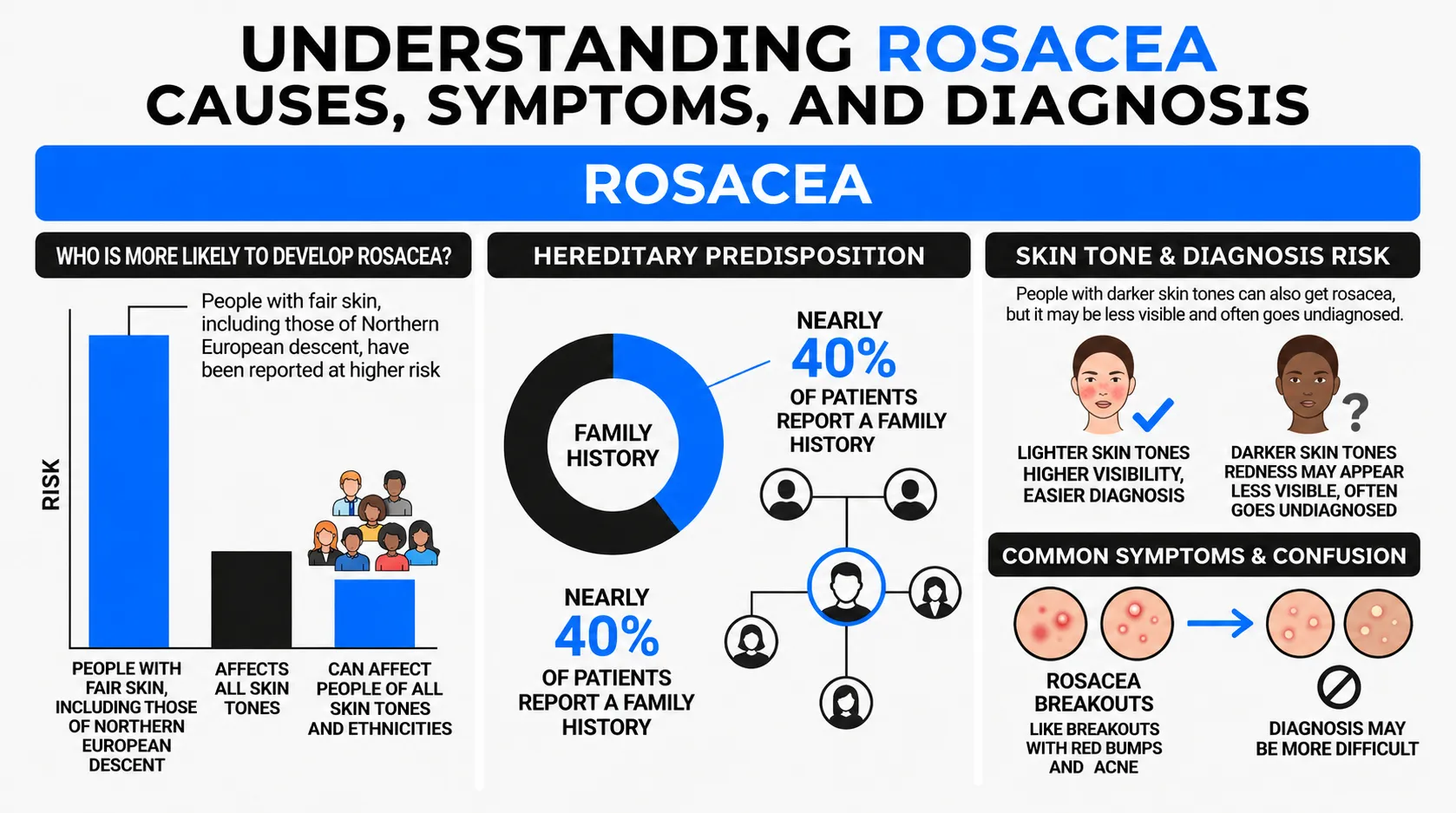
Rosacea is a chronic inflammatory skin condition affecting about 5% of the global population. It appears most often in fair-skinned people of Northern European descent, though anyone can develop it.
Women receive rosacea diagnoses three times more often than men. Men, however, tend to have more severe symptoms, particularly thickening of facial skin.
Genes play a part. Studies show 30-40% of patients have a family history of rosacea, which suggests inherited risk helps decide who develops it.
What Is Rosacea and Who Does It Affect?
The condition typically begins after age 30 and gets worse without treatment. Facial flushing and persistent redness gather on the cheeks, nose, forehead, and chin.
Fair-skinned people face higher risk, but rosacea affects all skin tones. It often goes undiagnosed in people with darker skin because redness is harder to see.
The Four Subtypes of Rosacea
Doctors sort rosacea into four subtypes based on symptoms. Erythematotelangiectatic rosacea causes persistent facial redness and visible blood vessels.
Papulopustular rosacea produces acne-like breakouts with red bumps and pus-filled lesions. People often mistake it for acne, but the two need different treatments.
Phymatous rosacea thickens the skin, especially on the nose, a condition called rhinophyma. Ocular rosacea affects the eyes, causing irritation, dryness, and redness.
Many patients have symptoms from more than one subtype at once. Knowing the medical conditions that qualify can help you understand the exemption process.
How Doctors Diagnose Rosacea
Doctors diagnose rosacea by examining the skin and eyes and reviewing the patient’s medical history. The National Institute of Arthritis and Musculoskeletal and Skin Diseases notes that there is no specific test for rosacea.
Doctors look for facial flushing, persistent redness, visible blood vessels, and inflammatory lesions. No single test confirms rosacea, so physicians review symptom patterns and medical history.
Early diagnosis matters because untreated rosacea leads to permanent skin changes. Anyone with facial redness lasting more than three months should see a dermatologist.
The Connection Between UV Exposure and Rosacea Flare-Ups
Sunlight is the most frequently reported trigger for symptom worsening. National Rosacea Society surveys show it affects 81% of patients. UV radiation triggers inflammation in skin cells. This sets off a chain of responses that intensify facial redness, burning, and visible blood vessels.
Why Sunlight Triggers Rosacea Symptoms
UV exposure activates inflammatory pathways in photosensitive skin. When ultraviolet rays enter the skin, they damage cell structures and prompt the release of inflammatory mediators.
These responses make blood vessels dilate and show more clearly. The result is the flushing and persistent redness that mark an active flare-up.
UV Radiation and Skin Inflammation
UVA rays are especially harmful because they reach deeper skin layers, where inflammation begins. These longer wavelengths reach the dermis. There, they worsen the blood vessel instability already present in affected skin.
Photosensitive conditions like lupus require UV protection. Rosacea also calls for limited exposure to keep symptoms in check. Many patients find that TintedMD helps them get the medical documentation they need for protective window tinting.
The Cumulative Effect of Daily Sun Exposure
Brief exposures during routine activities add up through the day and steadily worsen symptoms. Driving carries a hidden risk because UVA rays pass through standard vehicle windows and reach your skin even on short commutes.
Studies show that steady UV protection reduces flare-up frequency by up to 60% in patients. That is why medical professionals recommend sun avoidance strategies, such as protective window films for vehicles. Read the full breakdown in UV radiation triggers inflammation.
Common Rosacea Triggers Beyond Sun Exposure
UV radiation is the best-known trigger, but many daily factors can provoke flare-ups just as strongly. Knowing these triggers helps you build a complete management plan.
Environmental and Lifestyle Triggers
Hot drinks, spicy foods, and warm rooms cause vasodilation. This widening of blood vessels deepens facial redness and discomfort. Your blood vessels widen as temperatures change. More blood reaches the skin surface and creates the typical flush.
Wind, cold weather, and humidity changes weaken the skin barrier, so affected skin reacts more easily to other triggers. This explains why symptoms often worsen as seasons change.
Temperature Extremes and Weather Conditions
Sudden temperature shifts pose a special challenge. Moving from air-conditioned spaces to summer heat, or from a warm room to winter cold, can trigger flushing at once. TintedMD helps many patients manage vehicle-related temperature triggers through protective window tinting.
Dietary and Emotional Factors
Alcohol, hot drinks, spicy foods, and other personal triggers can worsen rosacea symptoms. The National Institute of Arthritis and Musculoskeletal and Skin Diseases lists alcohol, hot baths, spicy foods, and hot foods or drinks among common triggers. This is especially true of red wine. Other common dietary triggers include hot drinks, chocolate, and histamine-rich foods.
Stress and strong emotions trigger neurogenic inflammation through the release of neuropeptides. This worsens symptoms even without outside triggers. Your nervous system and your skin are closely linked. That is why medical science behind window tint exemptions considers both physical and psychological stressors.
Skincare products with alcohol, fragrances, or harsh ingredients can cause immediate flare-ups. They can also worsen baseline symptoms. Always patch-test new products before full application.
Medical Complications and Quality of Life Impact
Physical Health Consequences of Untreated Rosacea
Without proper treatment, the condition can lead to permanent skin changes that resist therapy. Some patients develop rhinophyma, which is nose enlargement and tissue thickening. It often requires surgery.
Persistent telangiectasia, or visible blood vessels, becomes irreversible as the condition advances. These changes are more than cosmetic. They signal ongoing inflammation and vascular damage.
Ocular involvement affects up to 58% of patients, causing eye irritation, dryness, and burning. Left unmanaged, eye problems can progress to vision loss, so early recognition and treatment protect eye health. Conditions such as albinism and light sensitivity show how photosensitive conditions shape daily life.
Psychological and Social Effects
Research shows 90% of patients report lower self-confidence due to visible facial symptoms. Unpredictable flare-ups create anxiety about social situations and public appearances.
During active flare-ups, 41% of patients avoid public interactions entirely. This withdrawal can lead to isolation and harm relationships and mental health over time.
Occupational and Daily Living Challenges
Work-related challenges affect 70% of patients, including missed workdays and reduced productivity. Facial symptoms during big meetings or presentations add professional stress to the physical discomfort.
Driving becomes especially hard when UV exposure through windows triggers symptoms right away. This limits mobility and independence, since even short trips can provoke flare-ups that last for hours or days.
How Rosacea Qualifies for Medical Window Tint Exemptions
Rosacea qualifies as a photosensitive condition under medical exemption laws in all 50 states. This lets patients install darker window tints than standard legal limits permit.
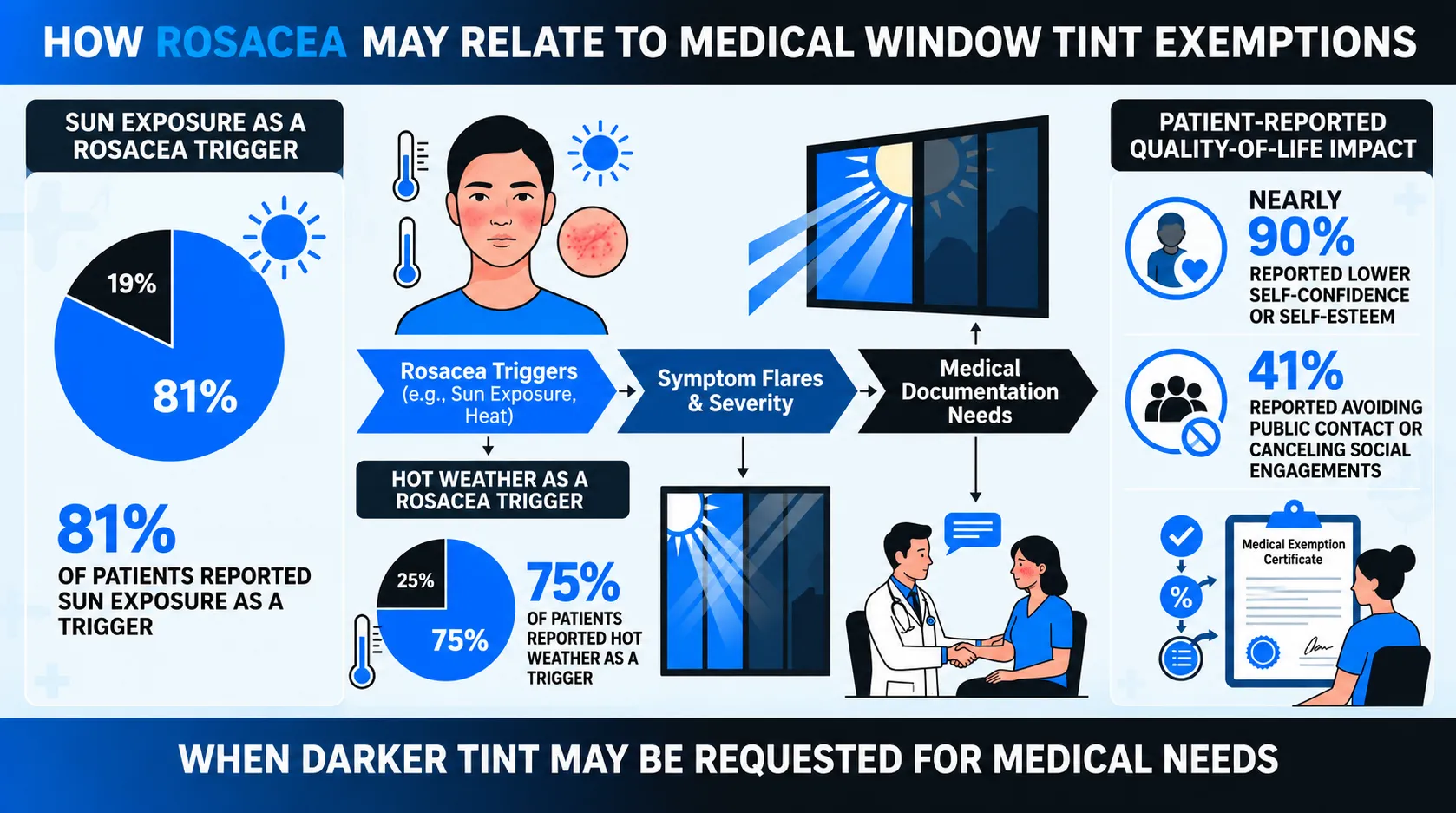
The exemption recognizes that UV exposure through vehicle windows triggers flare-ups. That makes darker tints a medical intervention, not a cosmetic preference.
Medical Necessity Criteria for Tint Exemptions
The medical documentation must explain the condition and the medical need for the exemption. Requirements differ by state, including the provider information and forms you may need to submit.
Medical tint limits vary by state. For example, Arizona’s standard front-side window requirement is 33% light transmission, with a ±3% tolerance, while its medical exemption allows an approved applicant to reduce light transmission through the side or rear windows.
Documentation Requirements from Healthcare Providers
The exemption process requires a prescription or medical certification letter from your physician. This letter must state your diagnosis, confirm photosensitivity, and recommend the tint darkness you need.
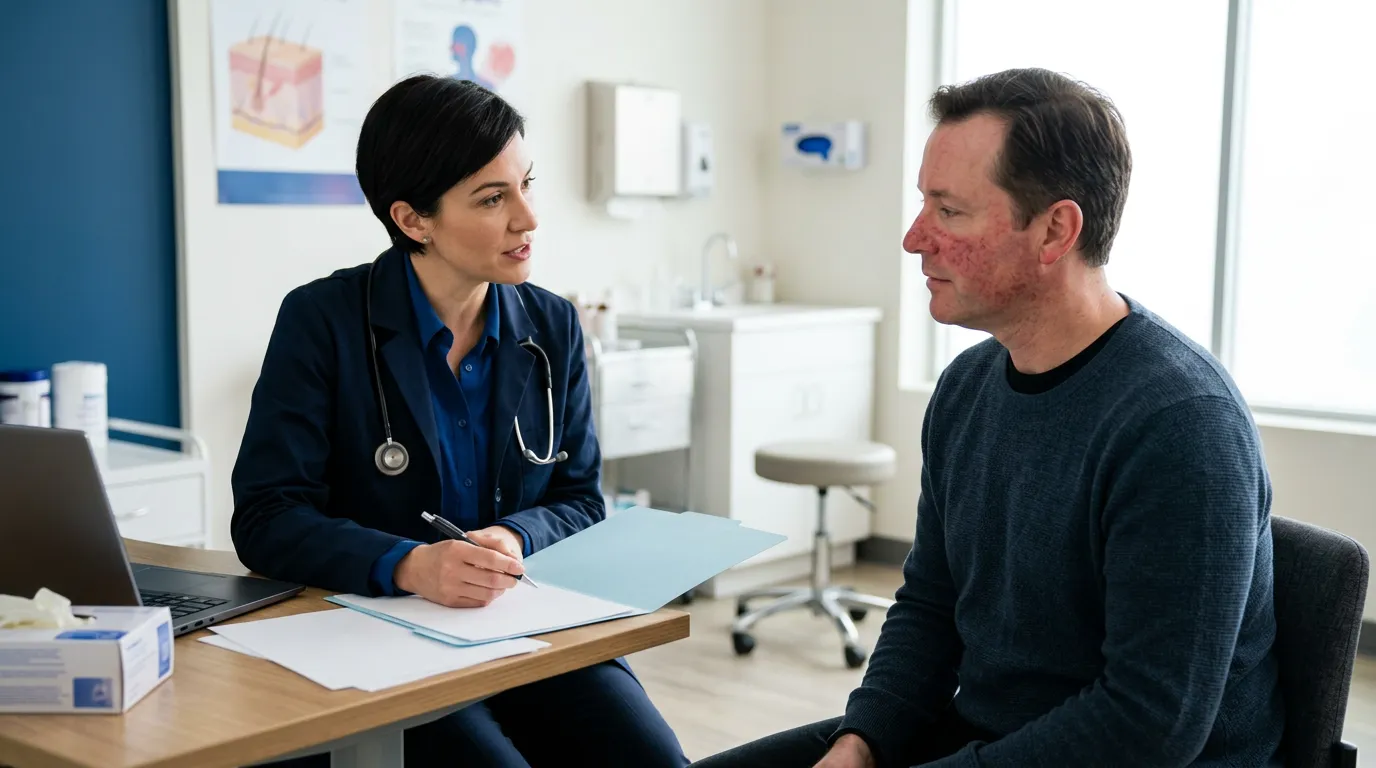
Your doctor should explain how driving conditions trigger your symptoms and why standard window protection falls short.
State-by-State Qualification Standards
Most states require annual or biennial renewal of medical tint exemptions. Some states offer permanent exemptions for chronic conditions, since rosacea needs ongoing management.
Each state’s DMV sets the allowed darkness percentage. The DMV also decides which windows you can tint. Your medical exemption sets the rules for tinting. Rules vary, so check your local regulations before installation.
What the DMV Still Decides: State Requirements and Approval Process
Rosacea qualifies for medical window tint exemptions nationwide. Still, your state’s Department of Motor Vehicles sets the exact tint darkness you can legally apply. This creates variation across states that directly affects your level of protection.
State-Specific Tint Level Regulations
Medical tint limits vary by state. For example, Connecticut allows a medical exemption when tint measures between 32% and 20% light transmission, while Maryland’s medical exemption allows vehicles to fall below its standard 35% light-transmission requirement.
Window coverage rules also vary. Some states approve tinting on all windows, including windshields. Others limit exemptions to side and rear windows only. So identical medical needs receive different levels of protection based solely on your registration address.
Required Documentation for DMV Approval
Most states require three core documents: a physician’s letter on official letterhead, medical records confirming your diagnosis, and a completed state exemption application. Your doctor’s letter must explain how UV exposure worsens your symptoms. It must also say why window tinting helps during driving.
Processing times range from immediate issuance to 30-day reviews. Some states require in-person checks of your medical documents before approval.
Understanding DMV Approval and Rejection Criteria
Common reasons for rejection include incomplete medical documentation, tint levels darker than state maximums, and no proof of medical need tied to driving. Reading how exemption FAQs address common application issues helps you avoid these pitfalls.
Approved exemptions result in a certificate or sticker that must stay in your vehicle at all times. You’ll show it during traffic stops or vehicle inspections to prove your legal compliance.
The Science of Window Tinting for Rosacea Protection
Quality window films can reduce UV exposure inside a vehicle. For example, 3M’s Crystalline automotive window film is rated to block up to 99.9% of UV light, although performance varies by film and installation. That targets the main environmental factor behind symptoms in 81% of patients.
How Medical-Grade Window Tints Block UV Radiation
Ceramic and carbon-based tints use advanced materials that absorb and reflect UV radiation before it passes through vehicle windows. These films keep their protective properties over time. Dyed tints, by contrast, fade and lose effectiveness.
The films contain tiny particles that scatter UV wavelengths and let visible light pass. This covers UVA rays, which standard glass blocks poorly. UVA rays reach deep skin layers and trigger inflammation there.
Visible Light Transmission and Symptom Management
Visible light transmission (VLT) measures tint darkness. Lower percentages mean darker films. According to the New York DMV exemption requirements, medical tints typically range from 20-35% VLT, compared to the standard 70% legal limit.
Darker tints address several triggers at once by cutting both UV exposure and visible light. This dual protection helps prevent the heat-induced vasodilation that causes facial flushing during driving.
Comparing Tint Types for Medical Applications
Carbon-based tints reject heat well and do not interfere with GPS, radio, or mobile device signals. Ceramic films give the highest UV protection and clarity but cost more than standard options.
Studies show that consistent use of UV-protective window tinting reduces flare-up frequency and severity in vehicle occupants. The films keep visibility safe for driving while protecting you during daily commutes.
Conclusion
Rosacea affects millions of drivers who face daily UV exposure through car windows. Medical window tint exemptions offer a practical fix backed by science and law. UV rays trigger flare-ups in most patients. Protective window tinting can reduce symptom frequency by up to 60%.
Do you have facial flushing, burning, or redness while driving? Talk with your dermatologist about a medical tint exemption. Your doctor can check your symptoms, note how UV exposure affects you, and write the medical certification your state requires. With that paperwork in hand, you can legally install darker tints that block harmful rays and still let you see the road clearly.
TintedMD guides you through every step of the exemption process, from your state’s rules to the medical documentation you need. Get started today to protect your skin and drive more comfortably. Check your eligibility!
Frequently Asked Questions
Does a rosacea tint exemption let me run any darkness?
No. A medical exemption does not automatically allow any tint darkness you choose. The state determines which windows may be covered and the permitted visible light transmission (VLT) level. Your medical documentation supports the request, but the approved tint limits come from the applicable state requirements.
Does TintedMD install window tint?
No. TintedMD helps document the medical need for a tint exemption. A professional window tint shop installs the film after you receive the documentation or approval required by your state. The installer should follow the exact window coverage and tint limits allowed under your exemption.
Will a rosacea tint exemption work if I drive in another state?
Not necessarily. Medical tint exemptions are governed by state law, and an exemption issued in one state may not provide the same authorization when you drive or move to another state. If you regularly travel across state lines, check the tint and exemption requirements that apply where you will be driving.
What if the DMV rejects my medical tint exemption request?
A DMV or other state agency can reject an application if the documentation does not meet its requirements or the requested tint falls outside the permitted limits. A medical recommendation does not guarantee approval. If your application is rejected, review the state's reason for rejection and follow its correction or appeal process.
Which clinician do I need for a rosacea tint exemption?
A dermatologist may be appropriate to evaluate rosacea symptoms and document whether light or sun exposure affects your condition. The provider who can complete the required documentation depends on the state's rules, so confirm which licensed provider your state accepts before submitting an application.
How long does a rosacea tint exemption last?
There is no single national expiration period for medical tint exemptions. Some states issue exemptions for a defined period and may require renewal, while other programs have different validity rules. Check the requirements of the state that issued your exemption to determine how long it remains valid and whether renewal is required.
How do I start a medical tint exemption request for rosacea?
Start by reviewing your state's medical tint exemption requirements and discussing your symptoms with an appropriate clinician. The clinician can document your condition and medical need when appropriate. You can then complete the state-required application or documentation. TintedMD can help with the medical documentation process. We document. The DMV decides.
Who reviews this rosacea and window tint exemption article?
This article is medically reviewed by Dr. Matthew Reynolds, MD. The review helps ensure that the medical information presented about rosacea, light sensitivity, and the documentation process is appropriate for patient education. Medical and tint-exemption requirements can change, so follow your state's current requirements when applying.

Meet the author
Sahar Mustafa
Hi, I'm Sahar, and I write for TintedMD. My work focuses on medical window tint exemptions, qualifying health conditions, state-specific tint rules, and the documentation that may be required from a licensed provider. I want readers to know what an exemption may cover, what their state expects, and what questions they should ask before relying on their documentation.
Get Your Medical Tint Exemption Online in Minutes
Check Your Eligibility