Migraines
 by Areeba Imran
 Last updated:
Medically reviewed by:
Dr. Matthew Reynolds, MD


Window Tint Exemption for Migraines
If you’re one of the 39 million Americans dealing with migraines, you know how brutal bright light can be while driving. That intense sunlight streaming through your windshield can turn a quick trip to the store into a migraine nightmare. A window tint exemption for migraines can help. This exemption lets you get darker windows when a doctor confirms you need them to manage light sensitivity.
This guide walks you through getting a medical exemption for window tint if light sensitivity from migraines affects your driving. You’ll learn what specific documentation your doctor must provide, how your state handles these requests, and what tint level will work with your light-management routine. We also explain which conditions qualify, step through the application process, and show you how to stay within your state’s rules.
Inside, you’ll discover what happens in your brain during a migraine and why light makes it worse. You’ll also find out what forms your doctor needs to fill out and what your specific state requires. By the end, you’ll know if a window tint exemption for migraines is right for you and the steps to get one.
Can You Get a Window Tint Exemption for Migraines?
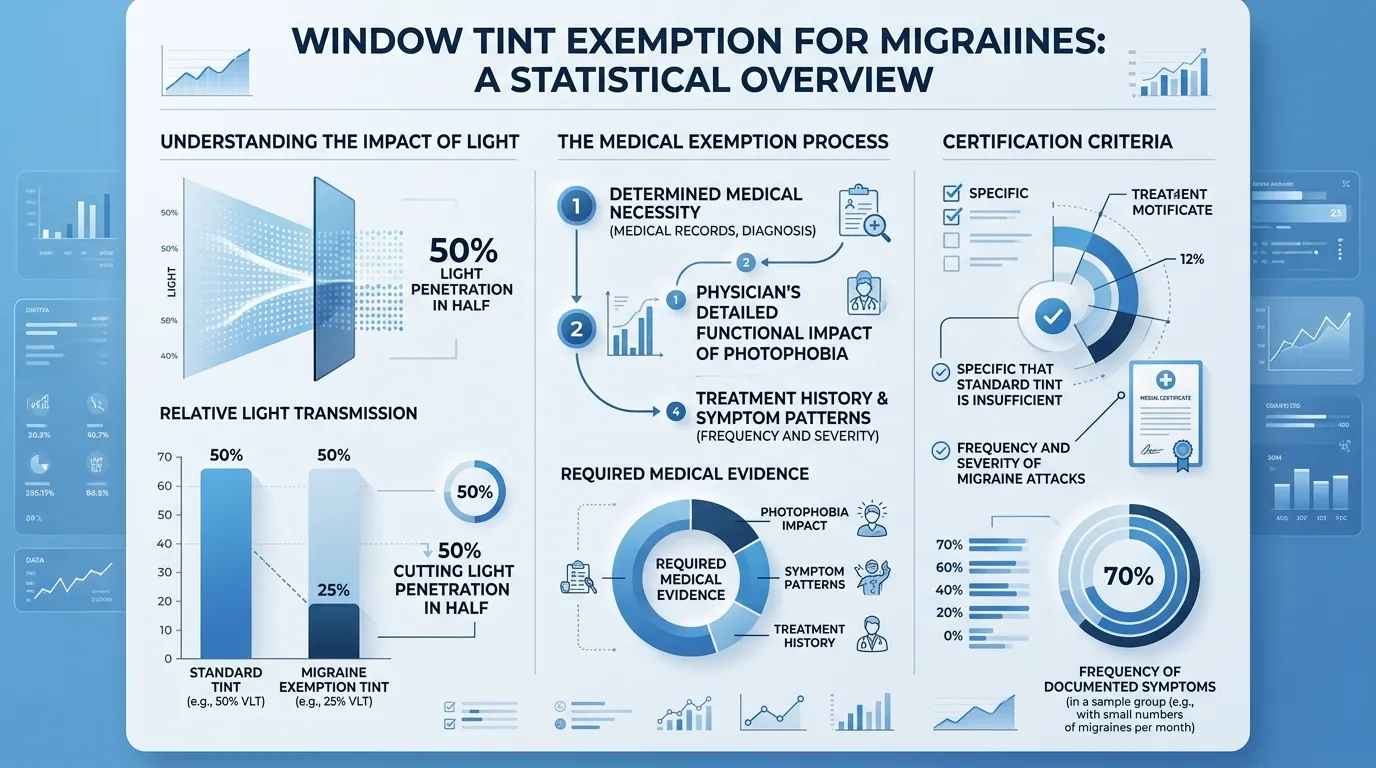
Yes, you can get a window tint exemption for migraines if a licensed physician determines medical necessity. Eligibility varies by state.
Why Migraines Involving Light Sensitivity May Support an Exemption
Migraines with photophobia warrant exemptions. Bright light and glare trigger severe headaches or worsen symptoms. Sunlight through car windows often causes pain, nausea, and vision problems. These symptoms make driving unsafe and uncomfortable.
Photophobia affects about 80% of people during migraine attacks. For those with severe light sensitivity, standard tinting at 35% VLT isn’t enough. Medical exemptions allow 20-25% VLT, cutting light penetration in half and providing the protection needed to drive safely.
Migraines with light sensitivity rank among the most common conditions approved for tint exemptions. Your doctor must show that bright light directly triggers or worsens your headaches, and that standard tinting won’t provide enough protection.
The Role of Physician-Determined Medical Necessity

Your physician must go beyond just confirming you have migraines. They need to certify that light sensitivity directly impacts your ability to drive safely and that standard tinting won’t solve the problem. Your doctor will document specific incidents where light triggered attacks and explain how darker windows would help.
According to the New York DMV’s medical exemption guidelines, physicians must detail the functional impact of photophobia. Your medical records should show treatment history and symptom patterns. The certification needs to specify that standard tinting isn’t enough for your needs.
Doctors consider several factors when determining necessity:
-
Frequency and severity of migraine attacks
-
Degree of light sensitivity during episodes
-
Impact on driving ability and safety
-
Previous treatments tried and their effectiveness
-
How light exposure triggers or worsens symptoms
State-Specific Eligibility Requirements
Each state sets its own rules for medical exemptions. Some states have clear programs that recognize photophobia-related conditions. Others maintain stricter policies or offer no exemption program at all. You need to check your state’s specific requirements before applying.
Common requirements across states include:
-
Completed physician certification form or letter
-
Specific diagnosis and symptom documentation
-
Recommended tint darkness levels
-
Application submission to DMV or similar agency
-
Renewal periods ranging from one to five years
Common symptoms include nausea and visual disturbances called aura. Many people also experience sensitivity to sound. Extreme sensitivity to light occurs in most cases. These symptoms make normal activities nearly impossible during an attack.
Migraines stem from changes in brain activity. Blood vessels in the brain expand and contract abnormally. Nerve pathways become hyperactive. This creates the intense pain and sensory sensitivity that define the condition.
What Is Photophobia?
Photophobia means abnormal sensitivity to light. It causes discomfort or pain when exposed to normal lighting. This isn’t just a preference for dimmer rooms. It’s a genuine physical response that can worsen neurological symptoms.
About 80-90% of migraine sufferers experience photophobia during migraine attacks. The condition makes even moderate indoor lighting feel unbearable. Bright sunlight becomes especially painful. Many people must retreat to dark rooms during episodes.
However, photophobia can have other causes. Eye conditions like corneal abrasions or uveitis trigger light sensitivity. Certain medications increase photosensitivity. Other neurological disorders also produce this symptom. Tinted MD helps patients document photophobia for medical exemptions when migraines are the underlying cause.
Why Bright Light Can Trigger or Worsen Migraine Symptoms
Bright sunlight and glare can trigger migraine attacks in susceptible people. The medical research on light sensitivity and migraines shows that intense light activates pain pathways in the brain. High-contrast environments strain the visual system. Flickering lights overstimulate sensitive nerve cells.
During an attack, light makes existing pain worse. The brain’s pain-processing centers become hyperactive. Normal light levels feel like stabbing sensations. This forces many people to avoid driving or outdoor activities entirely.
Individual triggers vary significantly. Not everyone with migraines reacts to the same light conditions. Some people tolerate overcast days but struggle with direct sun. Others find fluorescent lighting particularly problematic. The level of light reduction needed differs from person to person.
This variation explains why window tint exemptions matter. Standard vehicle glass doesn’t block enough light for many migraine sufferers. Darker tinting reduces glare and brightness to manageable levels. This allows people to drive safely without triggering attacks or worsening symptoms.
How Light Exposure Can Affect People With Migraines
Migraine sufferers face unique challenges when exposed to bright light. The condition creates heightened sensitivity that goes beyond normal discomfort. This sensitivity can disrupt daily activities and make routine tasks feel overwhelming.
Light exposure affects work environments, outdoor activities, and vehicle travel. Bright office lighting can trigger symptoms during the workday. Outdoor sunlight creates additional challenges for those who need to be outside. Vehicle travel presents particular difficulties due to the amount of light that enters through windows.
According to the American Migraine Foundation, photophobia affects approximately 80-90% of people during migraine attacks. This widespread impact shows why environmental accommodations matter for those with chronic migraine conditions.
Migraine-Related Photophobia While Driving
Driving creates specific light exposure challenges for migraine sufferers. Vehicle windows allow significant light penetration that can trigger symptoms. Standard automotive glass blocks some UV radiation but not enough to protect sensitive individuals.
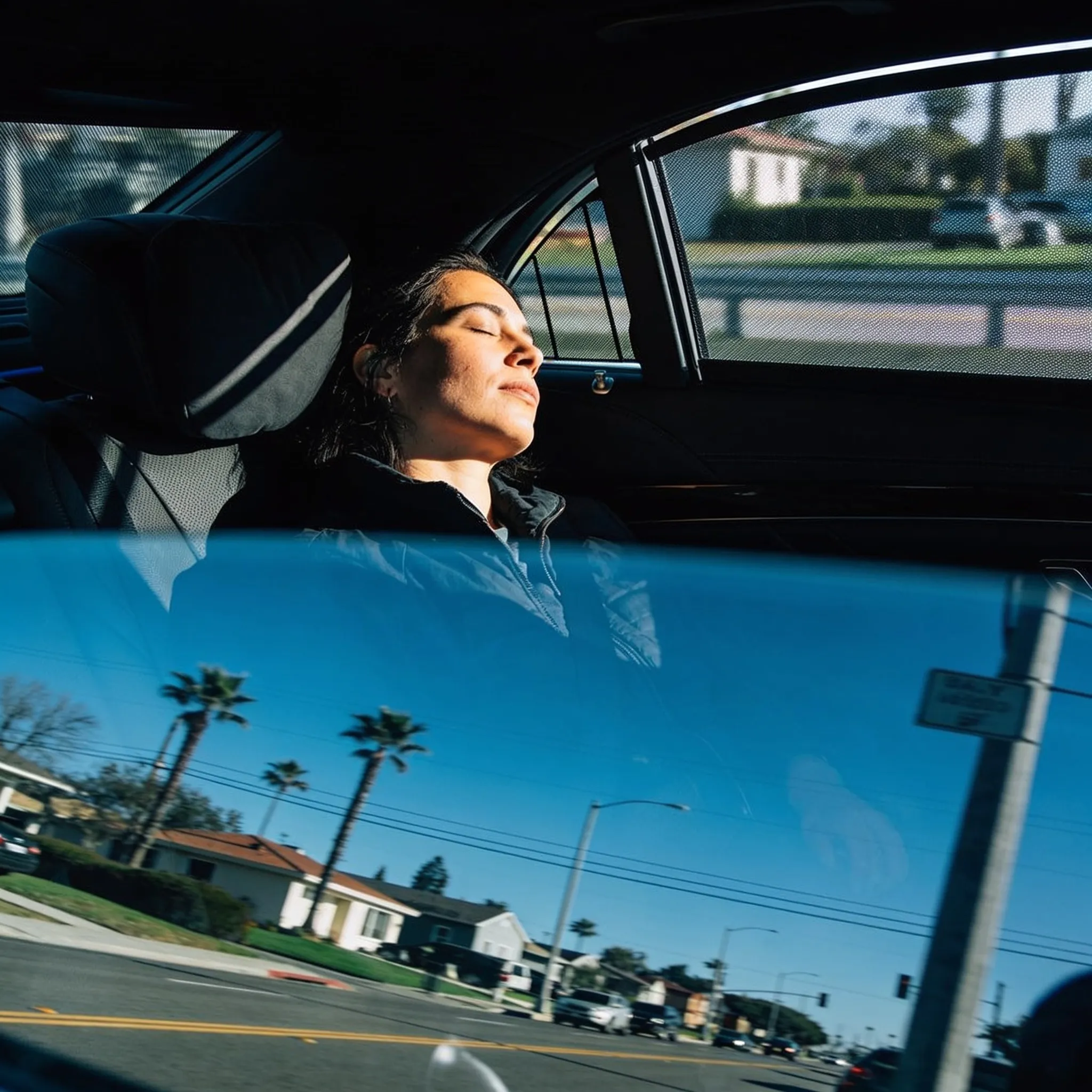
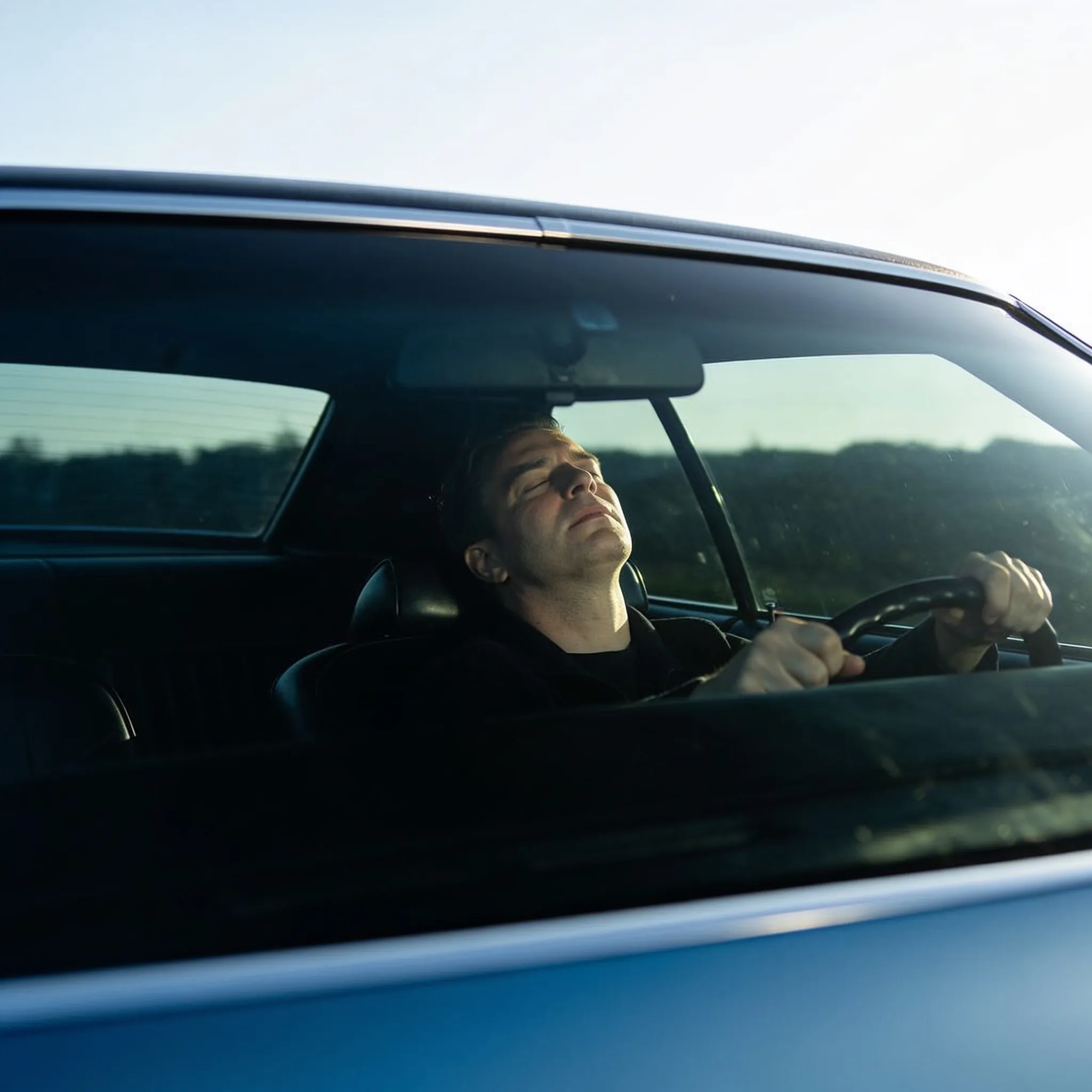
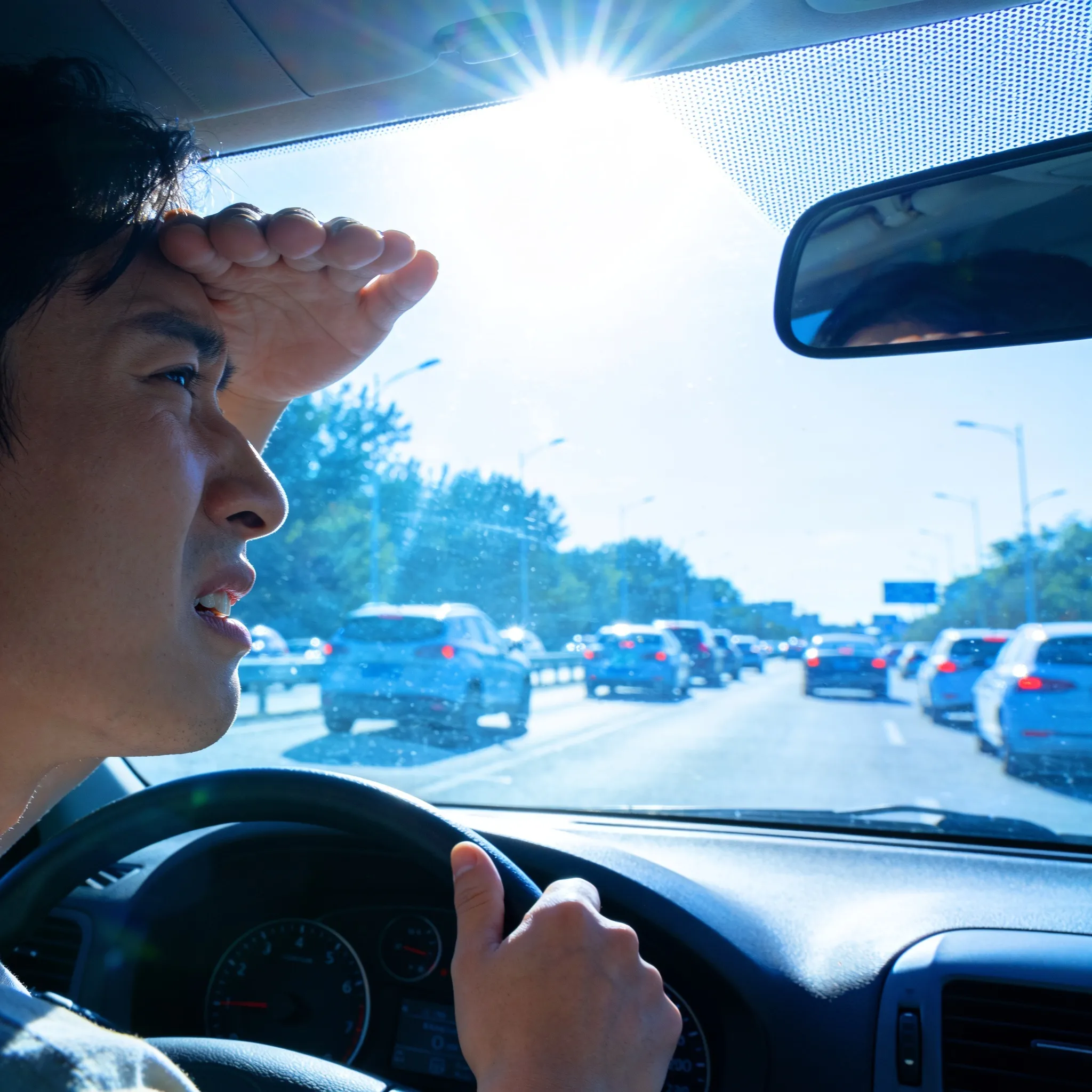
Direct sunlight through windows creates the most obvious problem. The sun’s rays hit the face and eyes without adequate filtering. This exposure can trigger migraine symptoms or worsen existing attacks.
Reflected glare adds another layer of difficulty. Light bounces off other vehicles, road surfaces, and roadside objects. These reflections create sudden bright spots that can be particularly troublesome. Chrome bumpers and glass buildings near roadways create especially intense glare.
Sudden transitions between bright and shaded environments also affect comfort. Driving through tree-lined streets creates rapid light changes. Entering and exiting tunnels produces similar effects. These quick shifts can trigger symptoms even when overall light levels seem manageable.
Research on photophobia and migraine published on PubMed explains how these environmental factors affect neurological function. The brain processes light differently during migraine episodes. This altered processing makes normal light levels feel painful or intolerable.
Individual experiences vary widely among migraine sufferers. Some people experience frequent light-triggered attacks that occur multiple times per week. Others have occasional episodes that happen monthly or less often. Trigger severity also differs between individuals.
Could a Medical Tint Exemption Help You Manage Light Sensitivity?
If bright light or glare makes your migraines harder to manage, find out whether you may qualify for a medical window tint exemption based on your condition and state requirements.
Window tinting does not treat migraines or address underlying neurological mechanisms. The condition requires medical management through proper diagnosis and treatment. However, tinting may help manage environmental light exposure for some people. Tinted MD connects individuals with qualified healthcare providers who can assess whether window tinting represents an appropriate accommodation for their specific situation.
Properly obtained window tinting should not be viewed as a safety improvement or driving aid. It functions as an environmental accommodation where medically justified. The goal is to reduce light exposure that triggers or worsens symptoms, not to enhance driving performance.
Medical Documentation Requirements for Window Tint Exemptions
Getting a window tint exemption for migraines starts with proper medical documentation. Your physician must evaluate your condition and determine if you meet the medical necessity criteria. This process protects both you and the state by ensuring exemptions go to people who truly need them.
What Your Physician Must Determine
Your doctor needs to assess several factors before certifying your need for darker window tinting. They’ll look at how often you get migraines and how severe they are. Chronic migraine patients typically experience 15 or more headache days per month.
Photophobia is a key factor. Your physician must document that bright light triggers or worsens your migraines. They’ll also evaluate how light exposure affects your daily activities, including driving. Your medical history matters too; previous treatments and their effectiveness help establish medical necessity.
The doctor makes this determination independently based on clinical evaluation. You should describe your symptoms accurately, but the physician decides if your condition warrants an exemption.
Required Documentation Components
According to the NY DMV’s medical exemption program, most jurisdictions require specific documentation elements. You’ll need a formal migraine diagnosis with supporting medical history. The documentation should describe your photophobia and light sensitivity symptoms in detail.
Your physician must explain how light exposure impacts your ability to function. This includes driving difficulties caused by sunlight and glare. The doctor then certifies that window tinting is medically necessary for your condition.
Most states require completion of official forms. Some accept letters on office letterhead, but many have specific templates. Supporting documentation of your treatment history strengthens your application. This shows you’ve tried other approaches and still need additional protection.
Healthcare Providers Who Can Certify Your Condition
Several types of doctors can certify your need for a medical exemption for window tint. Neurologists and headache specialists are ideal because they focus on migraine diagnosis and treatment. They understand the connection between light sensitivity and migraine triggers.
Ophthalmologists can document photophobia from a vision perspective. They measure light sensitivity and explain how it affects your eyes. Primary care physicians can also certify exemptions based on their overall assessment of your condition.
The New York DMV medical exemption process requires that providers examine you within a specific timeframe before certification. Many states have similar rules. Some jurisdictions also require periodic renewal of your exemption, so you’ll need follow-up appointments.
Online telemedicine platforms now connect you with qualified physicians who specialize in exemption documentation. These services understand state-specific requirements and can streamline the approval process. They ensure your paperwork meets all necessary standards before submission.
State Window Tint Laws and the Medical Exemption Process
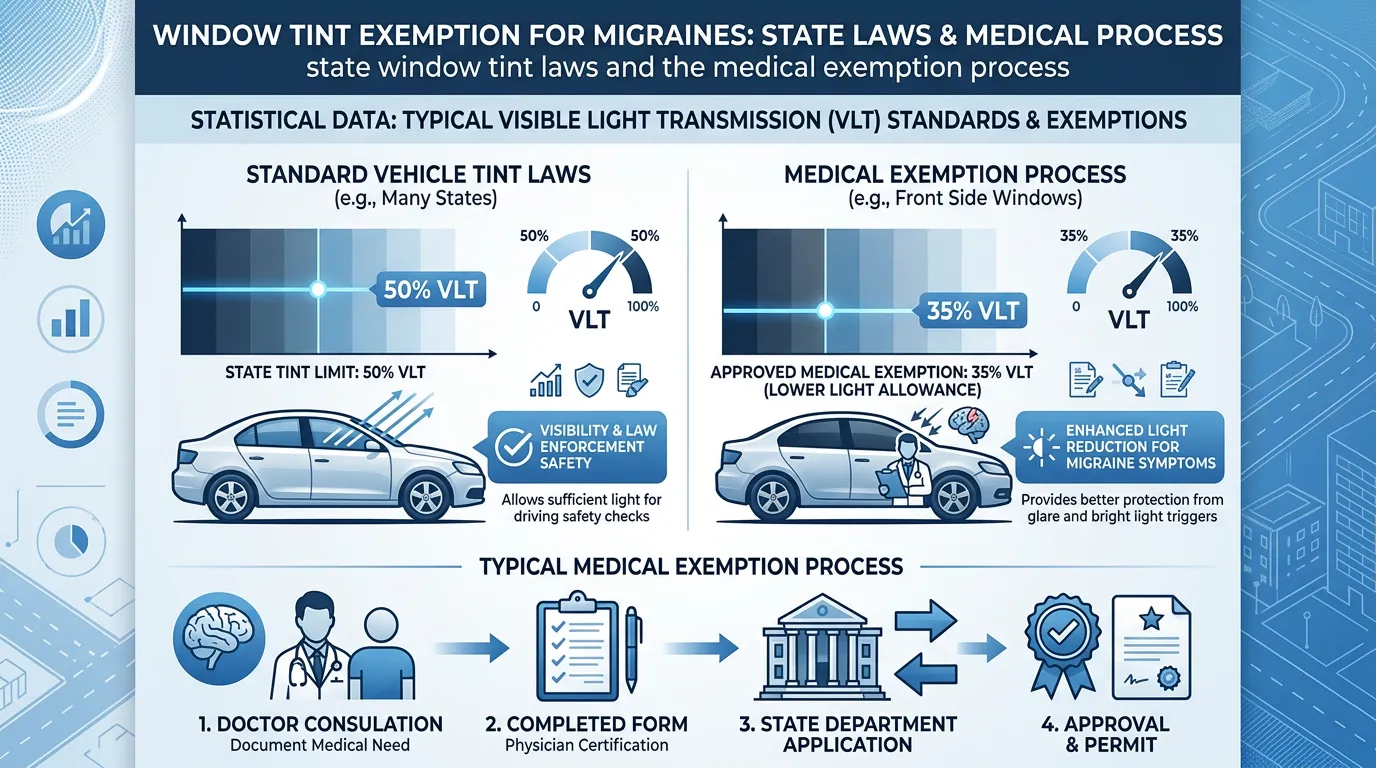
Window tint regulations vary widely across the United States. Each state sets its own limits on how dark vehicle windows can be. These limits are measured by visible light transmission (VLT). VLT shows the percentage of light that passes through the window.
Lower VLT percentages mean darker tinting. Most states restrict front side windows to 35-50% VLT for standard vehicles. This allows enough light for visibility and law enforcement safety checks.
Standard Tinting Limits vs. Medical Exemption Allowances
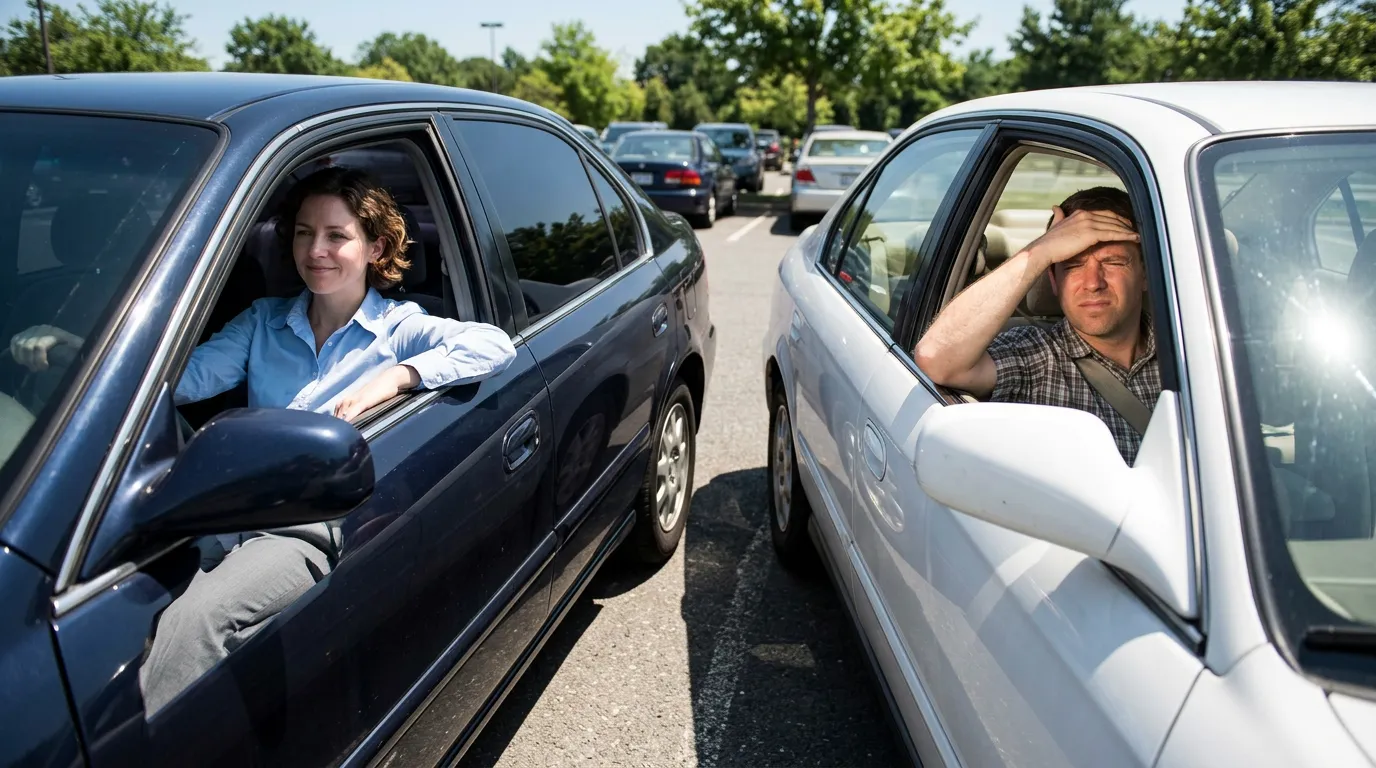
Standard tinting laws protect public safety. They also help officers see inside vehicles during traffic stops. However, these limits don’t account for medical needs like photophobia as a symptom cluster in migraine patients.
Medical exemptions allow darker tinting for people with qualifying conditions. For migraine sufferers, exemptions typically permit 20-35% VLT on front side windows. This provides better light reduction than standard limits allow.
The difference matters for daily comfort. Standard 35% VLT still allows significant light penetration. Medical exemption tinting at 25% VLT cuts light exposure substantially. This reduction helps prevent migraine triggers during driving.
How to Apply for a Medical Exemption in Your State
The application process varies by state. Most require physician certification of your condition. Your doctor must document that light sensitivity from migraines creates a medical need for darker tinting.
Start by checking your state’s specific requirements. The Massachusetts tinted glass waiver application provides one example of state-specific forms and procedures. Some states accept letters on office letterhead. Others require completion of designated forms.
Next, gather required documentation. This typically includes:
-
Completed state exemption form or physician letter
-
Medical diagnosis confirming chronic migraines with photophobia
-
Doctor’s recommendation for window tinting as treatment
-
Physician’s license number and signature
-
Your vehicle registration information
Submit your application to the appropriate agency. This is usually your state’s Department of Motor Vehicles or Department of Revenue. Keep copies of all documents for your records.
Processing Times and Renewal Requirements
Processing times differ significantly by state. Some states approve exemptions immediately at DMV offices. Others take several weeks to review applications and mail certificates.
Plan ahead if you need your exemption by a specific date. Contact your state agency to ask about current processing times. This helps you avoid delays in getting protective tinting installed.
Exemption validity periods also vary. Some states issue permanent exemptions that never expire. Others require renewal every one to five years. Renewal typically needs updated medical documentation from your physician.
Always carry your exemption certificate in your vehicle. Law enforcement officers may request to see it during traffic stops. Display any required stickers or labels as your state mandates. Some states charge processing fees while others provide exemptions at no cost.
Migraine Window Tint Exemption Requirements by State
Each state maintains its own medical exemption program with varying rules and permitted tint levels. Understanding your state’s specific requirements matters before applying for a window tint exemption for migraines.
Florida Tint Exemption for Migraines
Florida allows medical exemptions for window tinting when a licensed physician certifies medical necessity. The state permits darker tinting for qualifying conditions, including migraine-related photophobia. You’ll need to submit physician documentation to the Florida Department of Highway Safety and Motor Vehicles along with your vehicle registration information.
California Tint Exemption for Migraines
California’s medical exemption process requires physician certification of your condition. The state recognizes photophobia as a qualifying condition for darker window tinting. Documentation must specify how light sensitivity affects your daily function and driving ability. Processing typically takes several weeks through the California DMV.
Texas Tint Exemption for Migraines
Texas medical exemptions allow for window tinting with proper physician documentation. The state requires a completed medical exemption form signed by your doctor. Migraine-related photophobia qualifies under Texas law when medical necessity is established. Your exemption certificate must be carried in your vehicle at all times.
New York Tint Exemption for Migraines
New York’s medical exemption program accepts physician certifications for migraine-related light sensitivity. The state permits 20-35% VLT on front side windows with a valid exemption. Your physician must document the functional impact of photophobia on your daily activities. Exemptions require periodic renewal with updated medical documentation.
Ohio Tint Exemption for Migraines
Ohio recognizes medical exemptions for window tinting when a licensed physician determines medical necessity. The state accepts neurologist, ophthalmologist, or primary care physician certifications. Migraine patients with documented photophobia can qualify for darker tinting. Ohio requires submission of the medical exemption form and physician letter to the Ohio Bureau of Motor Vehicles.
Note: State requirements vary. Always check your specific state’s Department of Motor Vehicles website for current rules, forms, and processing procedures before applying.
Conclusion
A window tint exemption for migraines can help you manage light sensitivity while driving. You learned how migraines cause photophobia and why bright light triggers symptoms. We covered the medical documentation you need from your physician. You also learned how state laws vary and what the exemption process requires.
Window tinting won’t cure your migraines. But it can reduce glare and bright light exposure behind the wheel. This works best when combined with proper medical treatment and other light protection strategies.
Talk to your doctor if you experience migraine light sensitivity that affects your driving. Your physician can evaluate whether a medical exemption for window tint makes sense for your situation. They’ll assess your symptoms and provide the documentation you need.
Ready to apply for your window tint exemption? Check your eligibility with Tinted MD and get your paperwork started.
Frequently Asked Questions
What medical documentation do I need from my doctor to apply for a window tint exemption for migraines?
You need a completed physician certification form or letter from your doctor. The documentation must include your specific diagnosis and detail how light exposure affects your daily function. Your doctor should explain why darker tinting helps manage your condition. Medical records showing treatment history and symptom patterns strengthen your application. The certification needs to specify that standard tinting doesn't provide enough protection for your needs. Your physician must document the frequency and severity of your migraine attacks. They should also note the degree of light sensitivity you experience during episodes.
Does having migraines automatically qualify me for a window tint exemption?
No, a migraine diagnosis alone doesn't guarantee approval for a window tint exemption. Your physician must certify that window tinting is medically necessary for your specific case. You need to show that your condition requires protection from light exposure. About 80% of people experience photophobia during migraine attacks, but not everyone qualifies. Your doctor must document that darker window tinting is medically needed. The symptoms must be severe enough to warrant extra protection beyond standard tinting. Your medical records should demonstrate how light exposure triggers or worsens your symptoms.
How does photophobia from migraines make driving dangerous without darker window tint?
Bright light and glare streaming through car windows can trigger severe headaches during migraine attacks. These symptoms include pain, nausea, and visual disturbances that make driving unsafe. Photophobia can last hours or even days after an attack starts. Sunlight exposure while driving often causes immediate discomfort and impairs your ability to focus on the road. Standard window tinting blocks some light but often isn't enough for people with severe light sensitivity. The glare can turn a simple drive into a dangerous ordeal. Darker tinting through a medical exemption provides better protection from these triggers.
What factors does my doctor consider when determining if I need a window tint exemption for migraines?
Your doctor evaluates the frequency and severity of your migraine attacks first. They assess the degree of light sensitivity you experience during episodes. The physician reviews how light exposure affects your driving ability and safety. They consider previous treatments you've tried and their effectiveness. Your doctor examines how light exposure triggers or worsens your symptoms. The functional impact of photophobia on your daily activities matters too. They determine whether standard tinting provides enough protection or if you need darker windows. All these factors help establish medical necessity for the exemption.
Can I get a window tint exemption for migraines in every state?
No, each state sets its own rules for medical exemptions. Some states have clear programs that recognize photophobia-related conditions like migraines. Others maintain stricter policies or offer no exemption program at all. You must check your state's specific requirements before applying. States that do offer exemptions typically require completed physician certification forms. They need specific diagnosis and symptom documentation. The recommended tint darkness level must be included. Some states have more detailed requirements than others. You should research your state's Department of Motor Vehicles or transportation department for exact guidelines.
Why isn't standard window tinting enough for people with migraine-related photophobia?
Standard tinting laws restrict how dark your windows can be. These limits often fail to protect people who experience photophobia as a primary trigger. About 80% of migraine sufferers experience light sensitivity during attacks. Standard tinting blocks some light but not enough for severe cases. Bright light streaming through your windshield can still trigger debilitating attacks. The glare and sunlight exposure remain problematic even with legal tinting levels. Medical exemptions allow darker tinting that provides better protection. This extra darkness helps manage symptoms and makes driving safer for people with severe light sensitivity.
How long does the physician certification for a migraine window tint exemption remain valid?
The article doesn't specify exact validity periods for physician certifications. Each state sets its own rules for how long medical exemptions last. Some states require annual renewals of the certification. Others may allow longer periods between updates. You need to check your state's specific requirements for renewal timelines. Your doctor's certification should include the date of evaluation. The documentation may need updating if your condition changes. Contact your state's Department of Motor Vehicles to learn about renewal requirements. Keep your medical records current to support future renewal applications if needed.
What happens if I drive with darker window tint for migraines without getting a proper medical exemption?
Driving with darker tint than your state allows without a valid exemption is illegal. You risk traffic citations and fines from law enforcement. Officers can pull you over for window tint violations during routine stops. You may face penalties including tickets and required tint removal. Some states impose increasing fines for repeat violations. Without proper documentation, you can't prove medical necessity during a traffic stop. The exemption protects you legally while providing the darker tinting you need. Getting the proper certification and approval keeps you compliant with local laws while managing your migraine symptoms.

Meet the author
Areeba Imran
I am a healthcare professional and seasoned medical writer with 13+ years of experience across health, wellness, and clinical content. My work focuses on delivering trustworthy, evidence-based information that empowers readers to make informed decisions. With a keen interest in innovation and evolving areas of patient care, I bring a modern perspective to today's healthcare setup.
Get Your Medical Tint Exemption Online in Minutes
Check Your Eligibility