

Xeroderma Pigmentosum
 by Nida Hammad
Last updated:
Medically reviewed by:
Dr. Karen Whitfield, MD


Xeroderma pigmentosum affects roughly 1 in 250,000 people in the United States. This rare genetic disorder stops the body from fixing DNA damage. UV radiation causes this damage. Brief sun exposure through car windows can cause skin damage. It can also cause cancer. For XP patients, standard automotive glass blocks only some UV rays. That leaves them vulnerable during every car ride.
This guide covers XP window tint exemption rules. It also covers UV protection methods. You’ll learn how the eight genetic subtypes affect disease severity. We explain why regular car windows don’t protect XP patients. You’ll discover how to qualify for medical window tint exemptions in your state. We also cover complete protection methods that go beyond tinting.
The article walks through state-by-state exemption laws and application processes. You’ll see how to combine window tints with other UV barriers for maximum safety. We look at new treatments for xeroderma pigmentosum. We share tips for daily life with this condition.
We start with the genes behind this condition. You need to know why UV protection matters so much.
What Is Xeroderma Pigmentosum?

Xeroderma pigmentosum (XP) is a rare genetic disorder. It stops the body from fixing DNA harm from UV rays. People with this condition face extreme sensitivity to sunlight. Even brief exposure can cause severe burns and long-term complications. Protective measures like medical window tint help people with light sensitivity. These steps are not just helpful—they are medically needed.
The condition affects roughly 1 in 250,000 people in the United States. However, rates vary globally. In Japan, XP occurs in about 1 in 22,000 births. Certain populations show higher prevalence due to genetic factors. The disorder doesn’t discriminate by gender or ethnicity.
The Genetic Basis of XP
XP stems from mutations in genes responsible for nucleotide excision repair (NER). This DNA repair system normally fixes damage from UV radiation. When these genes malfunction, cells can’t correct UV-induced errors. The damage accumulates over time.
Scientists have identified eight distinct genetic forms of XP. These are called complementation groups, labeled XP-A through XP-G, plus XP-V. Each group represents mutations in different repair genes. XP-A and XP-C are the most common types in the United States and Europe.
The condition follows an autosomal recessive inheritance pattern. This means both parents must carry a mutated gene. Each child of two carriers has a 25% chance of developing XP. Carriers themselves don’t show symptoms. They have one normal gene copy that provides adequate DNA repair function.
How DNA Repair Mechanisms Fail
Normal cells constantly monitor DNA for damage. UV radiation creates specific types of DNA lesions called pyrimidine dimers. These abnormal structures distort the DNA helix. They block normal cell functions like replication and transcription.
The NER system detects these lesions and removes them. Specialized proteins cut out the damaged DNA segment. Other enzymes fill the gap with correct nucleotides. DNA ligase seals the repair. This process happens continuously in healthy cells exposed to sunlight.
In XP, mutations disable one or more NER proteins. The repair system can’t function properly. Damaged DNA accumulates in skin cells and other tissues. This triggers several harmful effects:
-
Unrepaired DNA causes cells to die, leading to severe sunburn from minimal exposure
-
Mutations accumulate in surviving cells, dramatically increasing cancer risk
-
Some XP types affect nerve cells in the brain and spine. This causes nerve damage that gets worse over time.
-
Eye tissues suffer UV damage, resulting in vision problems and increased cancer risk
The XP-V variant works differently. It involves a gene called POLH that codes for DNA polymerase eta. This enzyme helps cells replicate past UV-damaged DNA sections. Without it, cells use error-prone backup systems. This increases mutation rates even though the main NER system functions normally.
Prevalence and Inheritance Patterns
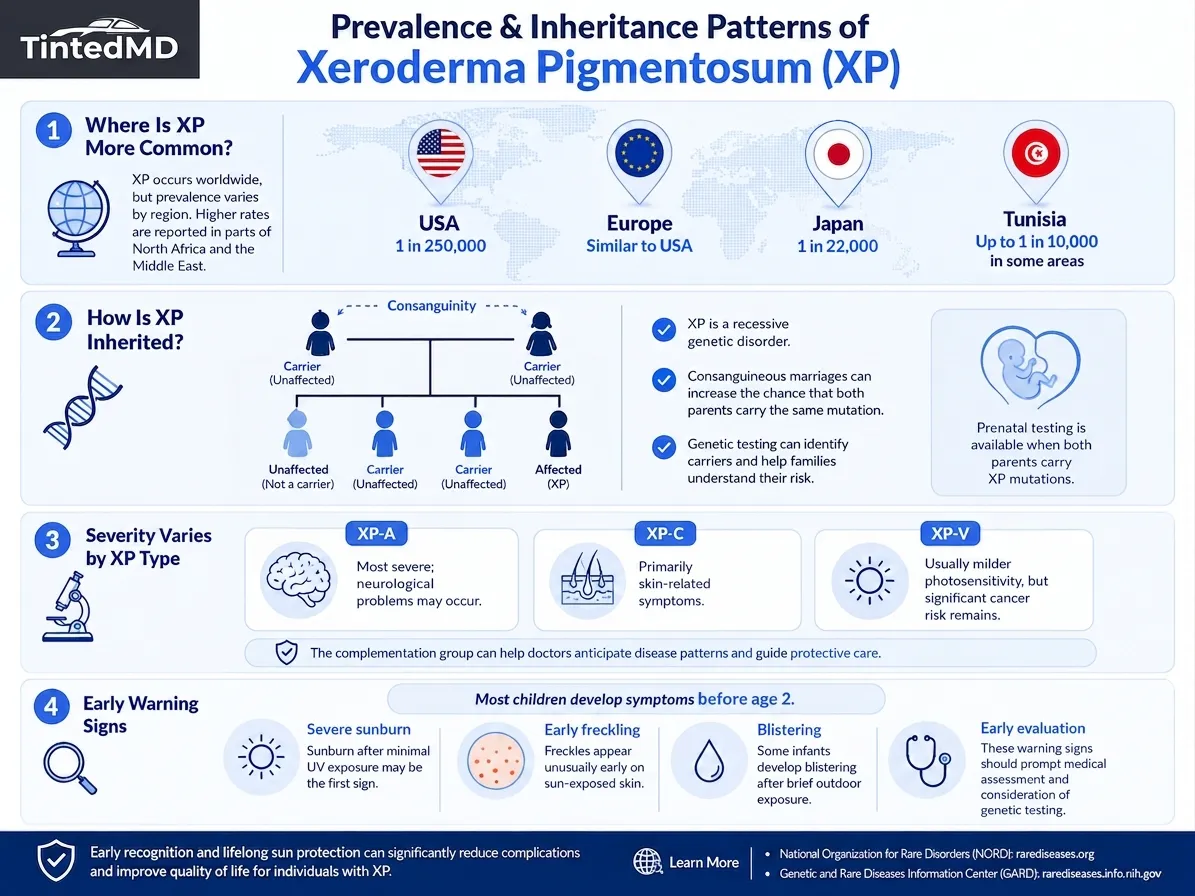
XP occurs worldwide but shows geographic variation. North Africa and the Middle East report higher rates in some regions. Consanguineous marriages (between relatives) increase the likelihood of two carriers having children together. This concentrates recessive genetic disorders in certain populations.
In the United States, XP affects approximately 1 in 250,000 people. European rates are similar. Japan shows notably higher prevalence at roughly 1 in 22,000. Tunisia reports rates as high as 1 in 10,000 in some areas.
Genetic testing can identify carriers before they have children. This helps families understand their risk. Prenatal testing is available for couples who both carry XP mutations. Early diagnosis allows families to implement protective measures from birth.
The severity varies by complementation group. XP-A typically causes the most severe symptoms, including neurological problems. XP-C often presents with primarily skin symptoms. XP-V usually shows milder photosensitivity but still carries significant cancer risk. Understanding these patterns helps doctors predict disease course and recommend appropriate protections, including window tint exemptions for photosensitive conditions.
Most children with XP show symptoms before age two. Severe sunburn from minimal exposure is often the first sign. Freckling in sun-exposed areas appears unusually early. Some infants develop blistering after brief time outdoors. These early warning signs should prompt immediate medical evaluation and genetic testing.
The Eight Complementation Groups of Xeroderma Pigmentosum
Xeroderma pigmentosum divides into eight distinct genetic subtypes. Each type results from mutations in different DNA repair genes. Doctors call these subtypes groups because cells work together. Cells from one group fix defects in cells from another group. This happens in lab tests.
The groups range from XP-A through XP-G, plus a variant form called XP-V. Each group shows unique patterns of severity, cancer risk, and neurological involvement. Understanding your specific type helps predict disease progression and guide protection strategies.
Classic XP Groups (XP-A through XP-G)
The seven classic groups result from defects in nucleotide excision repair (NER). This DNA repair pathway removes UV-damaged DNA sections. It then puts correct sequences in their place. When NER fails, UV damage accumulates rapidly.
XP-A represents the most severe form of xeroderma pigmentosum. Symptoms appear in infancy, often before age two. Children with XP-A develop severe sunburns after minimal sun exposure. Skin cancers typically emerge before age ten.
Neurological problems affect most XP-A patients. These include developmental delays, hearing loss, and progressive loss of motor skills. Life expectancy is significantly reduced compared to other XP types. Strict UV avoidance from birth is critical for XP-A patients.
XP-C is the most common type in the United States and Europe. It accounts for roughly 30-40% of all XP cases. Symptoms typically appear later than XP-A, often in early childhood rather than infancy.
Patients with XP-C show milder symptoms overall. Neurological involvement is rare. Skin cancer risk remains high but develops more slowly. Many XP-C patients survive into adulthood with proper sun protection. This group demonstrates why early diagnosis matters, since medical conditions that qualify for window tint exemptions include all XP types regardless of severity.
XP-D presents unique challenges because it overlaps with other genetic disorders. Some XP-D patients show Cockayne syndrome features. Cockayne syndrome causes growth failure and early aging. Others develop trichothiodystrophy, characterized by brittle hair and developmental problems.
The XPD protein does two jobs in cells. It repairs DNA and controls gene transcription. This dual role causes the overlap. Mutations affecting both functions cause combined syndromes. XP-D patients need monitoring for multiple complications beyond skin cancer.
XP-E, XP-F, and XP-G are less common but follow similar patterns. Each results from mutations in specific NER genes. Severity varies within each group based on the exact mutation. Some patients develop symptoms in childhood while others remain relatively mild into adulthood.
-
XP-E typically shows the mildest symptoms among classic groups
-
XP-F can include kidney problems and joint contractures
-
XP-G may involve growth delays and hearing loss
XP Variant (XP-V) and Polymerase Deficiency
XP-V differs fundamentally from the seven classic groups. Patients with XP-V have normal nucleotide excision repair. Their cells can remove UV-damaged DNA sections correctly.
The defect in XP-V involves DNA polymerase eta. This specialized enzyme copies past UV-damaged DNA during cell division. Without functional polymerase eta, cells cannot replicate DNA accurately after UV exposure. Errors accumulate, leading to mutations and cancer.
XP-V symptoms typically appear later than classic XP types. Many patients don’t develop obvious problems until adolescence or early adulthood. Skin cancer risk increases significantly after age 20. Neurological problems are uncommon in XP-V.
The delayed onset creates diagnostic challenges. Many XP-V patients experience years of unexplained sun sensitivity before receiving correct diagnosis. Early genetic testing helps identify XP-V before severe damage accumulates.
Severity Spectrum Across Different Types
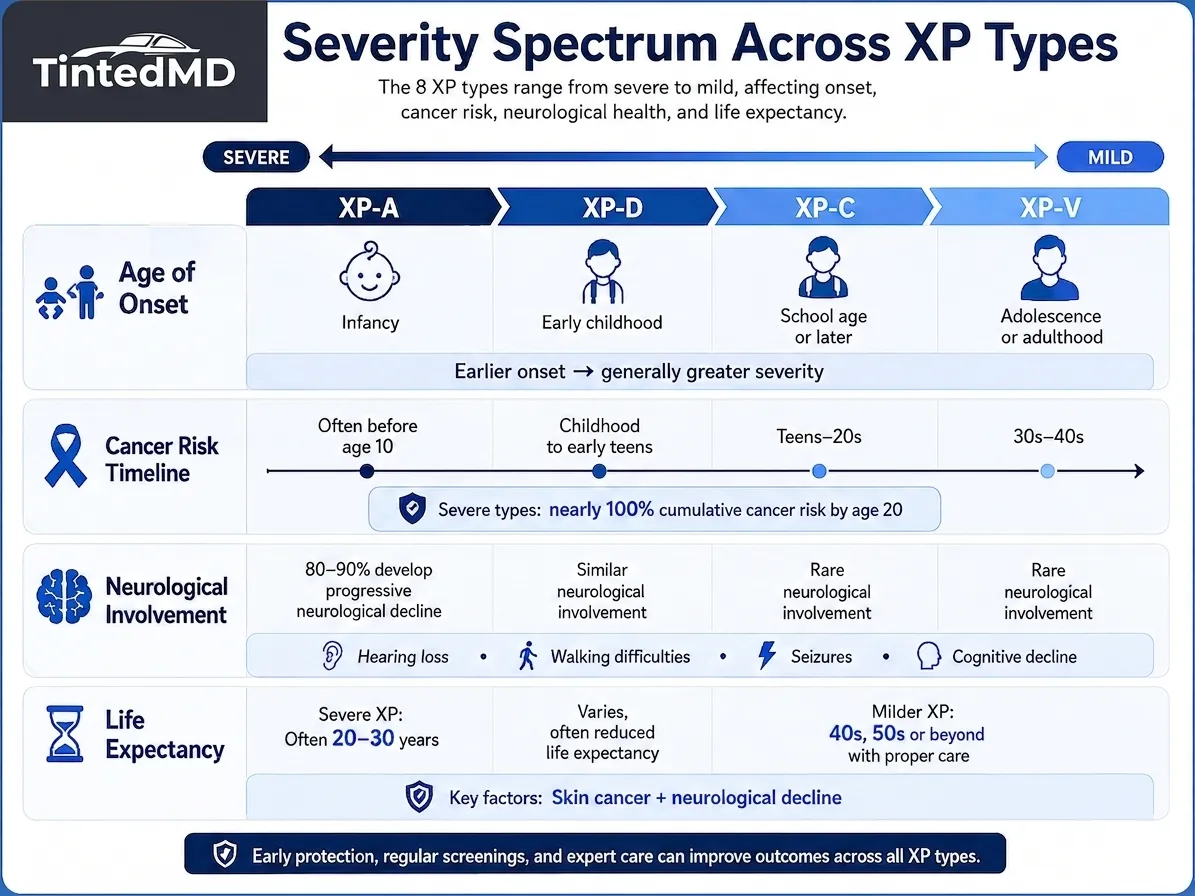
The eight XP types span a range of severity. Some cases are very severe. Others are mild. This spectrum affects multiple factors that determine quality of life and survival.
Age of onset varies dramatically. XP-A patients show symptoms in infancy. XP-C and XP-V patients may appear normal until school age or later. Earlier onset generally predicts more severe disease.
Cancer risk timeline differs by type. XP-A patients develop skin cancers before age ten in most cases. XP-C patients typically see first cancers in their teens or twenties. XP-V patients may not develop cancer until their thirties or forties.
Research shows the cumulative cancer risk reaches nearly 100% by age 20 in severe types. Milder types may show 50-70% cancer risk by the same age. All types eventually develop multiple skin cancers without strict protection.
Neurological involvement separates severe from mild types most clearly. XP-A causes progressive neurological decline in 80-90% of patients. XP-D with Cockayne syndrome shows similar patterns. XP-C and XP-V rarely involve the nervous system.
Neurological symptoms include hearing loss, difficulty walking, seizures, and cognitive decline. These problems result from accumulated DNA damage in nerve cells. The brain cannot repair itself like skin, so damage becomes permanent. Understanding the medical science behind window tint exemptions becomes especially important for severe XP types where every UV exposure matters.
Life expectancy correlates with severity. Severe types like XP-A reduce life expectancy to 20-30 years in many cases. Milder types allow survival into the 40s, 50s, or beyond with proper care. Skin cancer and neurological decline are the primary causes of early death.
| XP Type | Typical Onset | Neurological Risk | Relative Severity |
|---|---|---|---|
| XP-A | Infancy | High (80-90%) | Most severe |
| XP-C | Early childhood | Rare | Moderate |
| XP-D | Variable | Moderate to high | Moderate to severe |
| XP-V | Adolescence | Rare | Mildest |
Knowing your specific complementation group helps tailor protection strategies. Severe types require absolute UV avoidance from birth. Milder types need strict sun protection. They can handle short sun time with the right care. All XP types gain from medical window tint exemptions. These exemptions cut UV exposure during car travel.
Medical Complications That Justify Window Tint Exemptions

Xeroderma pigmentosum creates severe medical complications that make window tint exemptions a necessity. The condition’s extreme UV sensitivity causes damage that goes far beyond discomfort. These complications justify medical exemptions in all 50 states.
Extreme Photosensitivity and Acute Sun Damage
People with XP experience severe sunburn after just minutes of sun exposure. Even light through standard window glass triggers painful burns. The skin lacks normal DNA repair mechanisms that protect against UV damage.
This photosensitivity makes everyday activities dangerous. A short car ride can cause blistering and peeling. Standard car glass blocks some UV rays. It does not block enough to protect XP patients.
The damage happens at the cellular level. UV radiation creates DNA mutations that normal cells repair automatically. XP cells cannot fix this damage. Each exposure accumulates more mutations that lead to cancer.
Thousand-Fold Increased Skin Cancer Risk
According to skin cancer risk statistics, XP patients face a 10,000-fold increased risk compared to the general population. This staggering number reflects the condition’s severity. Most XP patients develop their first skin cancer before age 10.
The median age for first cancer diagnosis is 8-9 years. Children with XP develop basal cell carcinoma at young ages. They also develop squamous cell carcinoma and melanoma early. These cancers appear on sun-exposed areas like the face, neck, and arms.
Without protection, many XP patients develop multiple skin cancers throughout their lives. Some require hundreds of surgical procedures to remove tumors. Early and aggressive prevention through UV avoidance is the only effective strategy.
Window tinting provides protection during vehicle travel. This reduces cumulative UV exposure that drives cancer development. Every minute of protection matters for XP patients.
Ocular Damage and Vision Impairment
XP affects the eyes as severely as the skin. The cornea and conjunctiva suffer UV damage that causes multiple complications. Photophobia makes bright light intensely painful.
Common eye problems in XP include:
-
Severe photophobia requiring dark environments
-
Keratitis (corneal inflammation) from UV exposure
-
Corneal opacification that impairs vision
-
Ocular surface malignancies including eyelid cancers
-
Progressive vision loss without adequate protection
People’s eyes have natural melanin that blocks UV damage. XP eyes lack this protection. Even brief exposure causes inflammation and pain. Over time, repeated damage leads to permanent vision impairment.
Window tinting reduces both UV radiation and visible light intensity. This makes driving possible for XP patients who would otherwise be unable to tolerate vehicle travel. The protection extends to passengers as well.
Progressive Neurological Degeneration
Up to 30% of XP patients develop progressive neurological problems. These complications worsen over time and significantly impact quality of life. The neurological form of XP appears in specific genetic subtypes.
Neurological symptoms include:
-
Progressive hearing loss starting in childhood
-
Cognitive decline affecting memory and learning
-
Motor dysfunction including difficulty walking
-
Peripheral neuropathy causing numbness and weakness
-
Speech difficulties and swallowing problems
UV exposure accelerates neurological degeneration in affected patients. The exact mechanism remains unclear, but DNA repair defects likely affect nerve cells. Minimizing UV exposure may slow progression.
Window tinting becomes even more critical for XP patients with neurological involvement. These individuals often have mobility limitations that increase time spent in vehicles. Protection during transport preserves remaining function and prevents additional complications.
Many XP patients work with Tinted MD. They obtain medical papers for window tint exemptions. The process connects patients with qualified physicians who understand conditions that qualify in all 50 states and can provide proper certification. This streamlined approach helps XP patients get the protection they need quickly.
XP causes skin cancer risk, eye damage, and nerve problems. These three threats make XP a top reason for window tint exemptions. Protection isn’t about comfort or convenience. It’s about preventing cancer, preserving vision, and maintaining quality of life.
Why Standard Automotive Glass Is Insufficient for XP
Most people assume their car windows protect them from the sun. That’s only half true. Standard automotive glass blocks some UV radiation, but not nearly enough for someone with xeroderma pigmentosum.
UV Transmission Through Vehicle Windows
Windshields offer decent protection because they use laminated glass. This construction blocks about 96% of UVA radiation. However, side and rear windows tell a different story.
Side windows typically use tempered glass. This material blocks most UVB radiation but allows 60-70% of UVA to pass through. That’s a serious problem for XP patients.
-
Windshields: Block 96% of UVA due to laminated construction
-
Side windows: Allow 60-70% of UVA to penetrate
-
Rear windows: Similar to side windows with minimal UVA filtering
-
Sunroofs: Often provide even less protection than side windows
The difference between window types creates uneven protection. Your face gets better shielding than your arms and hands. This inconsistency makes driving particularly dangerous for those with photosensitive conditions like lupus and other UV-sensitive disorders.
The Critical Gap in UVA Protection
UVA radiation penetrates deeper into skin than UVB. For XP patients, this creates a dangerous situation. Their defective DNA repair mechanisms can’t fix the damage UVA causes.
According to an updated medical review of XP, the condition results from mutations in genes responsible for nucleotide excision repair. This means even small amounts of UV exposure accumulate into serious cellular damage.
Standard glass doesn’t address this vulnerability. Side windows let 60-70% of UVA through. XP patients face harm from this radiation. Every drive exposes them to damage.
-
UVA wavelengths: 315-400 nanometers penetrate deep into dermis
-
DNA damage: Occurs with each exposure in XP patients
-
Repair failure: Defective mechanisms can’t fix UV-induced mutations
-
Cancer risk: Increases dramatically with cumulative exposure
Standard glass does not meet what XP patients need. The gap between them is large. Regular automotive glass simply wasn’t designed for medical protection.
Cumulative Exposure During Daily Driving
Even short trips add up. A 15-minute commute twice daily equals 2.5 hours of weekly UV exposure. Over a year, that’s 130 hours of unprotected time.
For XP patients, this cumulative exposure accelerates disease progression. Skin cancers can develop in childhood. Eye damage occurs earlier than in the general population.
Medical-grade window tinting changes this equation completely. Quality films block 99%+ of both UVA and UVB radiation. This protection level matches staying indoors.
-
Daily commutes: Create consistent UV exposure patterns
-
School runs: Add significant weekly exposure for children with XP
-
Errands: Multiple short trips compound the problem
-
Road trips: Extended exposure without proper protection proves dangerous
The difference between standard glass and medical-grade tinting is life-changing. Proper window films reduce UV transmission from 60-70% down to less than 1%. That’s the protection XP patients need to drive safely.
Window Tint Exemption Qualifications for Xeroderma Pigmentosum
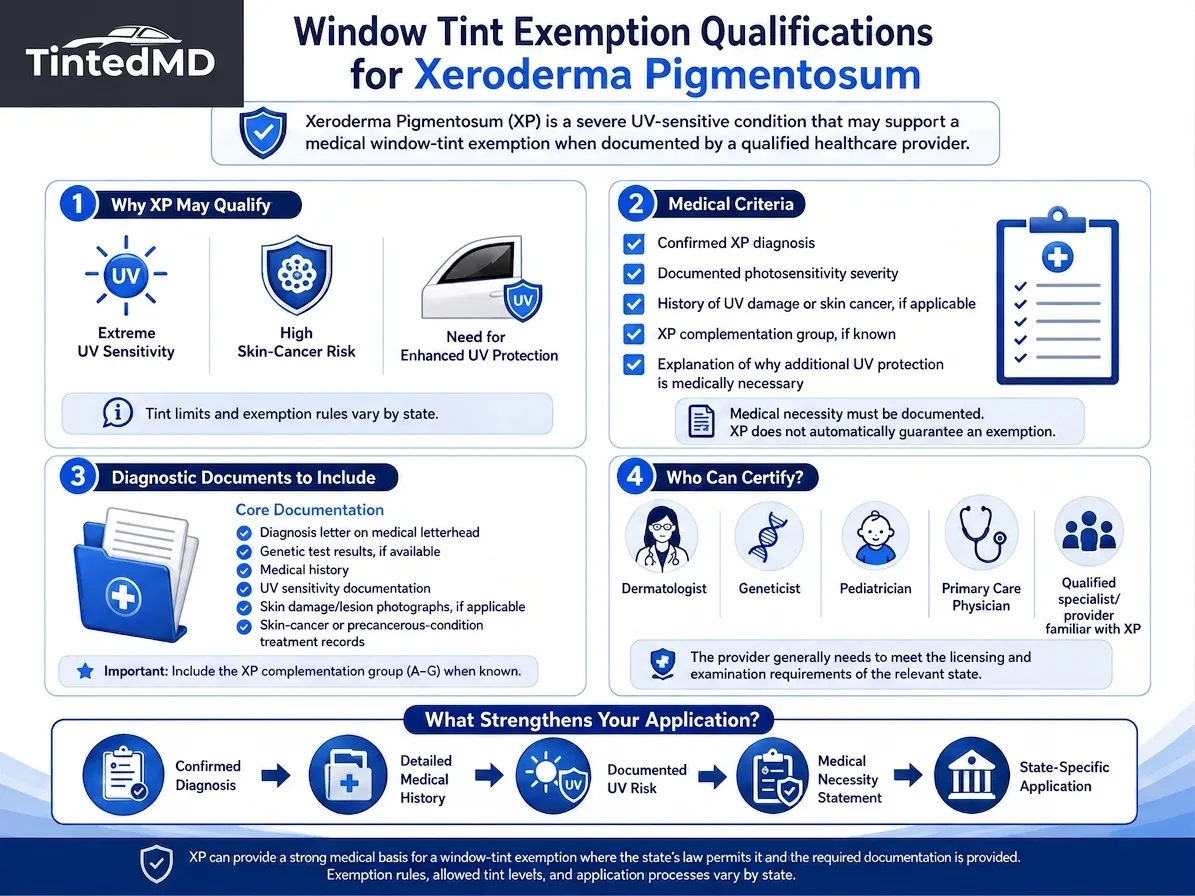
Xeroderma pigmentosum universally qualifies as a medical condition warranting maximum window tint exemptions. The extreme UV sensitivity and cancer risk make protective tinting a medical necessity. State agencies view XP as a top reason for tint exemption approval.
Most states allow XP patients to install the darkest legally permitted tinting. This often means 20-25% visible light transmission on front side windows. Some states grant even darker tinting for documented severe cases.
Medical Criteria for Exemption Approval
To qualify for an XP window tint exemption, you need formal diagnosis documentation. This includes genetic testing results or clinical criteria confirmation. Your healthcare provider must establish the diagnosis through recognized medical standards.
The exemption application requires specific medical information. Your doctor should document your XP complementation group if known. This genetic classification helps state agencies understand disease severity.
Your medical documentation must detail photosensitivity severity. Include information about past UV damage, skin cancers, or precancerous lesions. The more detailed your medical history, the stronger your exemption case.
According to the Georgia exemption documentation requirements, medical necessity statements should reference specific health risks. For XP, this means highlighting extreme cancer risk and comprehensive UV protection needs.
Your physician should explain why standard window glass provides insufficient protection. UV radiation penetrates regular automotive glass, creating danger for XP patients. Medical tinting blocks additional UV wavelengths that standard glass allows through.
If you need help gathering the right documentation, TintedMD and their medical team help patients gathering the right documentation and meet state-specific diagnostic criteria by providing medical window tint exemption services.
Required Diagnostic Documentation
Genetic testing results provide the strongest diagnostic evidence for XP. These tests identify specific gene mutations causing the condition. Labs analyze DNA samples to confirm XP diagnosis and determine complementation group.
Clinical diagnosis documentation works when genetic testing isn’t available. Your dermatologist or geneticist can diagnose XP based on clinical presentation. This includes severe sunburn reactions, early skin cancers, and characteristic skin changes.
Your exemption package should include:
-
Formal diagnosis letter on medical office letterhead
-
Genetic test results showing XP-causing mutations
-
Medical history documenting UV sensitivity and skin damage
-
Photographs of skin damage or lesions (if applicable)
-
Treatment records for skin cancers or precancerous conditions
The documentation should specify your XP complementation group when known. Groups A through G have varying severity levels. Group A typically shows the most severe symptoms and earliest cancer development.
Include details about your photosensitivity severity. Describe how quickly you burn in sunlight. Document any neurological symptoms if present, as these indicate more severe XP variants.
Your medical necessity statement should be comprehensive. It must explain why window tinting is needed for safe vehicle travel. Reference the fact that even brief UV exposure causes DNA damage in XP patients.
Healthcare Providers Who Can Certify
Dermatologists are ideal providers for XP window tint exemption certification. They understand the skin cancer risks and UV protection needs. Most dermatologists familiar with XP readily provide exemption documentation.
Geneticists can certify XP exemptions, especially when genetic testing confirmed diagnosis. They understand the molecular basis of the condition. Their certification carries significant weight with state agencies.
Pediatricians who treat XP patients can provide exemption certification. Many XP cases are diagnosed in childhood. Your child’s pediatrician can document the condition and medical necessity for tinting.
Primary care physicians familiar with XP can certify exemptions. They should have examined you and reviewed your medical history. Their documentation should reference specialist consultations and genetic testing results.
Online medical consultation services now connect XP patients with qualified providers. These platforms specialize in exemption documentation for photosensitive conditions. Providers understand state-specific requirements and ensure proper paperwork completion.
The certifying provider must be licensed in your state. Some states require recent examination within the past year. Check your state’s specific requirements before scheduling your consultation.
Your provider should have experience with XP or photosensitive conditions. They need to understand the severity of UV sensitivity. This knowledge ensures they write compelling medical necessity statements.
State-by-State Window Tint Laws and Medical Exemptions

Window tinting laws differ across the United States. Each state sets its own rules for how dark tints can be. For people with xeroderma pigmentosum, these laws matter. Standard limits often don’t provide enough protection. That’s where medical exemptions come in.
Most states recognize XP as a condition that needs special protection. The exemption process lets you install darker tints than normal limits allow. This section breaks down what you need to know.
Standard Tinting Limits vs. Medical Exemptions
Standard tinting laws measure darkness by visible light transmission (VLT). Lower percentages mean darker tints. Most states set these baseline limits:
-
Windshield: Only a strip at the top (4-6 inches) or 70-75% VLT minimum
-
Front side windows: 35-50% VLT minimum in most states
-
Back side windows: 35-50% VLT minimum
-
Rear window: 35-50% VLT minimum, though some states allow darker
These standard limits don’t work for XP patients. You need much darker tints to block harmful UV rays. Medical exemptions solve this problem.
With a medical exemption, you can install tints as dark as 5-20% VLT on front-side windows. Some states allow even darker options. The exact darkness depends on your state’s specific program.
According to research on photosensitive conditions, medical exemptions recognize that UV protection is a health necessity, not a preference. XP patients qualify for the darkest tinting in most states.
States With Comprehensive Medical Exemption Programs
Many states have well-developed exemption programs. These states make the process straightforward for XP patients.
California allows medical exemptions for photosensitivity conditions. A licensed physician must write a certificate for you. The certificate states that your condition needs sun protection. The state recognizes XP as a qualifying diagnosis.
Texas permits exemptions for conditions that increase light sensitivity. An ophthalmologist or licensed physician must sign your application. The process takes 2-4 weeks after submission.
Florida recognizes sunlight-sensitive medical conditions. You submit documentation from a licensed physician. The state processes most applications within 10 business days.
New York provides exemptions with physician certification. The state requires specific forms completed by your doctor. Processing time runs 3-6 weeks on average.
Other states with strong programs include:
-
Arizona: Allows 5% VLT on all windows with medical exemption
-
Illinois: Permits darker tinting with dermatologist or ophthalmologist certification
-
Michigan: Recognizes XP specifically in exemption guidelines
-
Pennsylvania: Allows exemptions with proper medical documentation
-
Washington: Provides permanent exemptions for qualifying conditions
Application processes vary but generally require physician certification and state-specific forms. Most states charge a small processing fee, typically $10-50.
Special Considerations for XP Patients
XP patients face unique challenges that affect exemption applications. Your condition requires maximum UV protection. This means you need the darkest tints your state allows.
When applying for an exemption, emphasize these points:
-
XP causes extreme UV sensitivity that leads to skin cancer
-
Even brief sun exposure through windows causes DNA damage
-
Standard tints don’t provide adequate protection for your condition
-
You need the darkest allowable tinting for medical safety
Some states require annual renewal of medical exemptions. Others issue permanent certificates. Check your state’s validity period when you apply. Set reminders if renewal is needed.
If you travel frequently, consider getting exemptions in multiple states. Some states honor out-of-state medical exemptions. Others don’t. Having documentation for each state where you drive regularly prevents legal issues.
Windshield tinting remains restricted even with exemptions in most states. You can usually tint the top strip or install 70% VLT across the entire windshield. A few states allow darker windshield tinting for XP patients.
Always carry your exemption certificate when driving. Law enforcement may question dark tints during traffic stops. Having documentation ready prevents delays and potential citations.
Work with professional installers who understand medical exemptions. They know the exact specifications your state allows. Quality installation with proper UV-blocking film is crucial for your protection.
The Window Tint Application Process for XP Patients
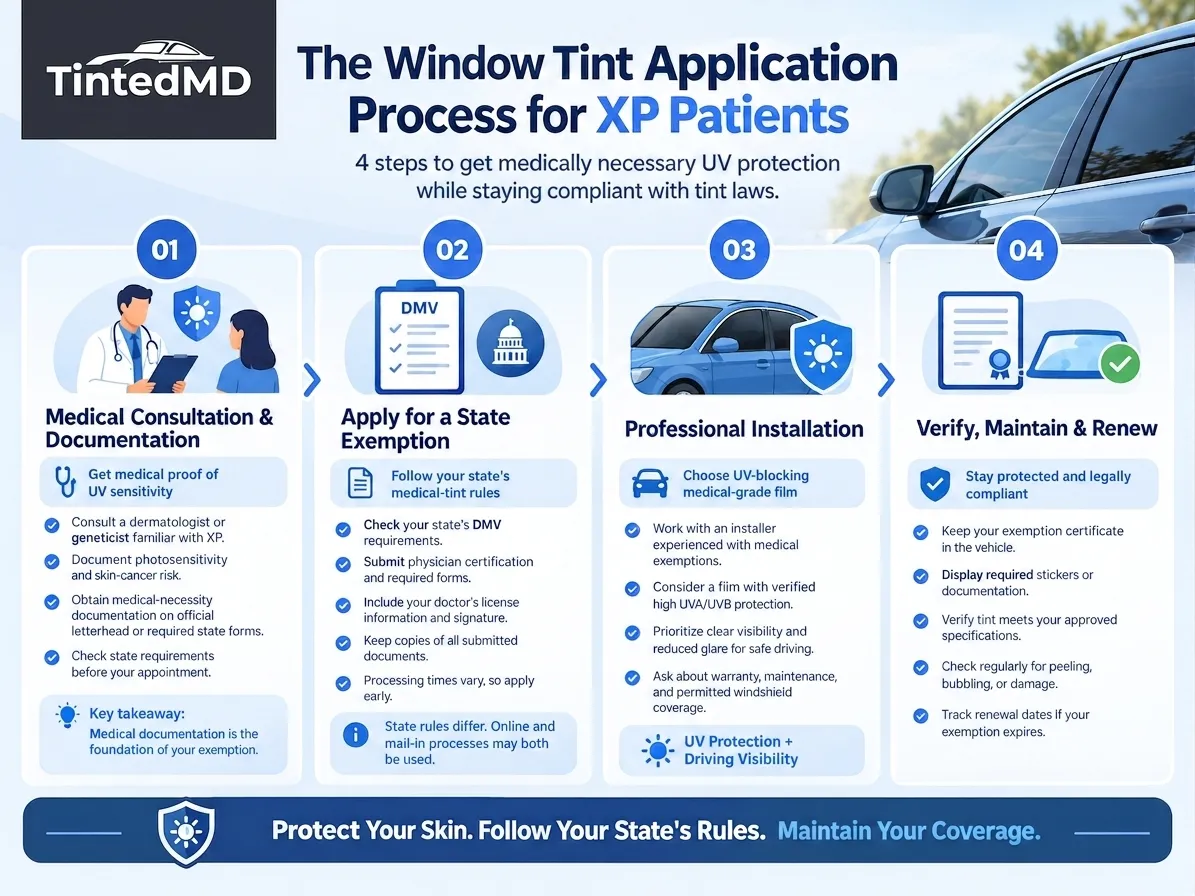
Getting window tint for xeroderma pigmentosum requires careful planning. The process protects you from harmful UV rays while meeting legal requirements. Follow these steps to get proper coverage.
Step 1: Medical Consultation and Documentation
Start with a dermatologist or geneticist who knows XP. They need to document your condition and UV sensitivity. This creates the foundation for your exemption.
Your doctor should include specific details. The documentation must explain your photosensitivity and skin cancer risk. It should state that window tinting is medically necessary for your protection.
Telemedicine platforms now make this easier. These services connect you with doctors who understand tint exemptions. They know what each state requires and can speed up the process.
Request documentation on office letterhead. Some states need specific forms completed. Check your state’s requirements before the appointment to avoid delays.
Step 2: State Exemption Application
Each state has different rules for medical exemptions. Research your state’s process through the DMV website. Some states accept online submissions while others require mail.
According to the Virginia medical authorization procedures, you need physician certification and specific forms. Most states follow similar patterns but have unique requirements.
Submit your application with all medical documentation. Include your doctor’s license information and signature. Keep copies of everything you send.
Processing times vary by state. Some approve exemptions immediately while others take weeks. Plan ahead if you need the exemption by a certain date.
Step 3: Professional Installation with Medical-Grade Film
Choose an installer who works with medical exemptions. They understand the specific requirements for XP patients. Experience matters when selecting UV-blocking films.
Select ceramic or carbon-based films. These block 99% or more of UV radiation. They protect against both UVA and UVB rays that damage your skin.
The film must maintain visibility for safe driving. High-quality films reduce glare without compromising your view. Ask about warranty coverage and care instructions.
Consider tinting all windows including the windshield. Some states allow windshield tinting for medical conditions. This provides complete protection during vehicle travel.
Step 4: Compliance Verification and Maintenance
Keep your exemption certificate in the vehicle always. Law enforcement may ask to see it during traffic stops. Display any required stickers as your state mandates.
Verify the tinting meets your exemption specifications. Some installers use light meters to confirm darkness levels. This ensures you stay within legal limits.
Plan for exemption renewal if your state requires it. Some states issue permanent exemptions while others need updates. Set reminders to avoid lapses in coverage.
Inspect your tinting regularly for damage. Peeling or bubbling reduces UV protection. Quality films should last for years with proper care and maintenance.
Comprehensive UV Protection Strategy for Xeroderma Pigmentosum
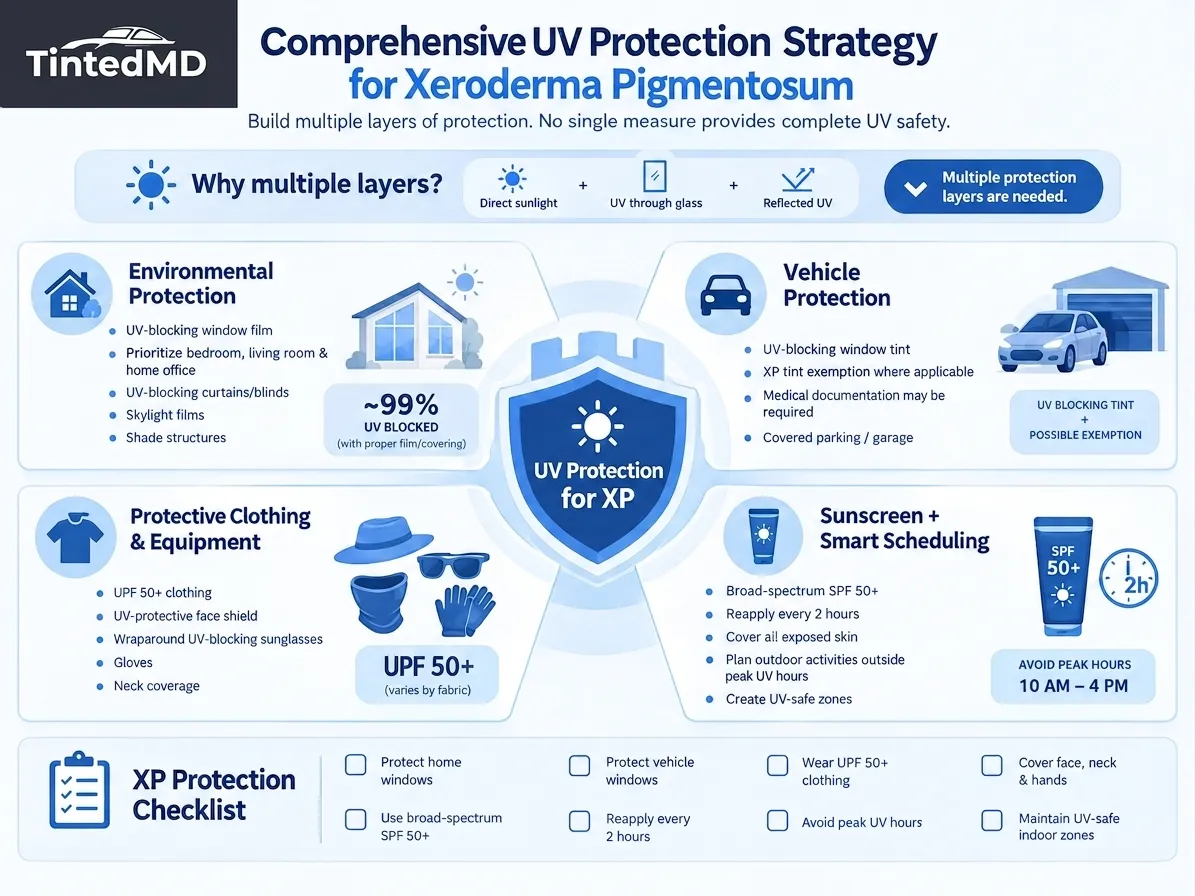
Xeroderma pigmentosum demands a multi-layered approach to UV protection. No single measure provides complete safety. Combine several strategies to cut down UV exposure. This lowers your skin cancer risk.
Layered Protection Approach
Think of UV protection like building a fortress. Each layer adds another barrier against harmful radiation. Window tinting forms one critical component of this defense system.
Start with your most frequent environments. Your home and vehicle represent the spaces where you spend most of your time. These areas need the strongest protection measures first.
According to clinical practice guidelines for xeroderma pigmentosum, comprehensive UV protection should address all potential exposure sources. Direct sunlight poses a threat. UV rays bounce off surfaces. Radiation passes through glass windows.
Your protection strategy should cover:
-
Physical barriers like window films and protective clothing
-
Chemical barriers including broad-spectrum sunscreens
-
Behavioral modifications such as activity scheduling
-
Environmental controls in home and vehicle spaces
Home and Vehicle Modifications
Install UV-blocking window film on all home windows. Focus first on rooms you use most often. Bedrooms, living areas, and home offices need priority treatment.
Standard glass blocks some UV radiation but not enough for xeroderma pigmentosum. Quality window film blocks 99% of UV rays. It lets visible light pass through. This lets you enjoy natural daylight without the danger.
For vehicles, an XP window tint exemption allows darker tinting than standard legal limits. This provides both UV protection and glare reduction. You need medical documentation to obtain this exemption in most states.
Also consider these modifications:
-
UV-blocking curtains or blinds as backup protection
-
Covered parking or garage storage for vehicles
-
UV-protective plastic films on skylights
-
Shade structures over outdoor areas you must access
Protective Clothing and Equipment
Wear specialized clothing with a UPF 50+ rating whenever you go outside. This fabric blocks over 98% of UV radiation. Regular clothing provides much less protection.
Use UV-protective face shields for maximum facial coverage. Wide-brimmed hats help but don’t cover all exposed areas. Face shields provide complete protection for your most vulnerable skin.
Your protective gear should include:
-
Long-sleeved shirts and full-length pants in UPF-rated fabric
-
UV-blocking sunglasses that wrap around to protect from side angles
-
Gloves for hand protection during any outdoor activity
-
Neck gaiters or scarves to cover exposed neck areas
Replace protective clothing annually. UV-blocking properties degrade over time with washing and sun exposure. Check manufacturer recommendations for replacement schedules.
Sunscreen and Topical Protection
Apply broad-spectrum SPF 50+ sunscreen to all exposed skin every two hours. This includes time spent indoors near windows. UV radiation penetrates glass and can cause damage even inside.
Use generous amounts of sunscreen. Most people apply too little to get full protection. You need about one ounce (a shot glass full) to cover your entire body.
Choose sunscreens with both physical and chemical blockers. Zinc oxide and titanium dioxide provide immediate protection. Chemical filters absorb UV radiation before it reaches your skin.
Schedule all activities during low-UV hours when possible. UV intensity peaks between 10 AM and 4 PM. Plan errands, appointments, and outdoor tasks before or after these hours.
Create UV-safe zones at home and work. These are areas with comprehensive window protection and artificial lighting only. You can relax in these spaces without constant vigilance about sun exposure.
Medical Monitoring and Cancer Surveillance for XP
XP patients face a lifetime of vigilant medical surveillance. Regular monitoring catches cancers early when treatment works best. This proactive approach can extend both lifespan and quality of life.
Dermatology Examination Protocols
Dermatology visits occur every 3-6 months for XP patients. These aren’t quick checkups. Doctors examine every inch of skin, including the scalp, between toes, and inside the mouth.
Full-body photography creates a visual baseline. Dermoscopy magnifies suspicious spots for closer inspection. These tools help doctors spot changes that might signal cancer development.
Many dermatologists use digital mapping systems. These track each lesion’s location, size, and appearance over time. Even subtle changes become obvious when comparing images side by side.
Biopsies happen frequently. Any new growth or changing lesion gets tested. Quick action prevents small problems from becoming life-threatening cancers.
Ophthalmology Monitoring
Eye exams happen every 6-12 months. UV damage affects the cornea, conjunctiva, and eyelids. Early detection prevents vision loss and catches ocular cancers.
Ophthalmologists check for pterygium, pinguecula, and corneal scarring. They also screen for eyelid tumors, which occur frequently in XP patients. Slit-lamp examinations reveal damage invisible to the naked eye.
Protective eyewear becomes part of daily life. UV-blocking glasses and goggles shield eyes from further damage. Some patients need specialized contact lenses for added protection.
Neurological Assessment
About 25% of XP patients develop neurological problems. Annual assessments track cognitive function, hearing, and coordination. These evaluations catch decline early.
Testing includes memory checks, balance tests, and hearing screenings. Speech therapy and occupational therapy help maintain function. Physical therapy addresses mobility issues before they worsen.
Brain MRI scans may be needed for patients showing symptoms. Early intervention slows progression in many cases.
Early Detection and Treatment Strategies
Catching precancerous lesions changes everything. Actinic keratoses get treated with cryotherapy, topical medications, or photodynamic therapy. Removing these lesions prevents invasive cancers.
Basal cell and squamous cell carcinomas require surgical removal. Mohs surgery offers the highest cure rates with minimal scarring. Some patients need dozens of procedures over the course of their lives.
Melanoma demands immediate action. Early-stage melanoma has excellent survival rates. Advanced melanoma becomes much harder to treat successfully.
This thorough monitoring approach works. XP patients who follow strict watch plans live longer. They stay healthier than those who miss check-ups.
Living With Xeroderma Pigmentosum: Practical Adaptations
Daily life with xeroderma pigmentosum demands careful planning and protective measures. Families and individuals learn to adapt routines, work environments, and social activities around UV avoidance. These adaptations make normal activities possible while protecting health.
Educational Accommodations for Children
Children with XP need modified school schedules that avoid outdoor activities during peak UV hours. Schools can provide indoor recess alternatives and covered walkways between buildings. UV-protective film on classroom windows creates safer learning spaces.
Teachers should seat XP students away from direct window exposure. Larger print materials and adjustable lighting help students with vision problems. Some children benefit from wearing UV-protective clothing and hats during necessary outdoor time.
Parents should work with school administrators to develop individualized education plans. These plans document specific needs and accommodations. Regular communication ensures teachers understand the condition’s severity and necessary precautions.
Career and Lifestyle Considerations
Adults with XP should prioritize indoor work environments with controlled lighting. Office jobs, computer-based careers, and indoor service positions offer safer options. Remote work provides flexibility for medical appointments and UV avoidance needs.
Career planning should start early in adolescence. Students can focus on skills that translate to indoor professions. Technology, writing, design, and administrative fields offer many opportunities.
According to the New York medical exemption process, individuals with photosensitive conditions can obtain window tint exemptions for safer vehicle travel. This accommodation allows XP patients to commute to work and attend appointments with reduced UV exposure.
Flexible scheduling helps patients manage fatigue and medical visits. Employers who understand XP can provide reasonable accommodations. These might include adjusted work hours, remote options, or modified break schedules.
Social and Psychological Support
Support groups connect XP families with others facing similar challenges. These groups share practical advice and emotional support. Online communities make connections possible regardless of geographic location.
Mental health support addresses anxiety, depression, and social isolation common in XP patients. Therapists familiar with chronic conditions help patients develop coping strategies. Family counseling supports parents and siblings dealing with the condition’s impact.
Social activities require planning but remain possible. Evening gatherings, indoor events, and covered outdoor spaces allow participation. Friends and extended family need education about UV protection requirements.
Children with XP may face bullying or exclusion due to their appearance or restrictions. Schools should implement anti-bullying programs and educate classmates. Building confidence and self-advocacy skills helps children handle social challenges.
Building XP-Aware Communities
Education reduces stigma and promotes understanding in communities. Families can share information with neighbors, schools, and local organizations. Awareness campaigns highlight XP challenges and needed accommodations.
Community spaces can become more XP-friendly with simple changes. These include:
-
Installing UV-protective film on public building windows
-
Creating covered walkways and shaded outdoor areas
-
Offering evening hours for recreational programs
-
Providing indoor alternatives for outdoor activities
Local support networks help families access resources and services. Parent groups can advocate for school accommodations and community awareness. Medical professionals who understand XP provide better care and guidance.
Technology enables virtual participation in activities. Video calls, online classes, and digital entertainment expand options. These tools help XP patients stay connected without UV exposure risks.
Emerging Treatments and Research for Xeroderma Pigmentosum
Scientists are working to develop new treatments for xeroderma pigmentosum. These advances offer hope for better outcomes. However, proven protection methods remain the most reliable option today.
DNA Repair Enzyme Therapy
Topical DNA repair enzymes show promise in reducing skin cancer formation. The most studied enzyme is T4 endonuclease V. This enzyme helps repair UV-damaged DNA in skin cells.
Clinical trials have tested T4 endonuclease V in lotion form. Patients apply the lotion to their skin after sun exposure. The enzyme penetrates the outer skin layers and targets damaged DNA.
Research shows this approach can reduce new skin cancers. One study found a 30% reduction in actinic keratoses. These are precancerous lesions that often develop into skin cancer.
That said, enzyme therapy doesn’t replace UV protection. It works best as an additional layer of defense. Patients still need comprehensive sun avoidance strategies.
Gene Therapy Approaches
Gene therapy aims to correct the underlying genetic defects in xeroderma pigmentosum. Researchers are testing methods to deliver functional genes to skin cells. This could restore normal DNA repair capabilities.
Scientists use viral vectors to carry corrected genes into cells. The challenge is getting the genes into enough cells. Skin cells constantly regenerate, so treatment would need regular updates.
Early research shows promise in laboratory settings. However, human trials remain limited. The complexity of treating all affected skin cells presents major obstacles.
Gene therapy also faces regulatory and cost challenges. Even if successful, it may take years to reach patients. In the meantime, UV protection through window tinting remains the most practical solution.
Chemoprevention Strategies
Chemoprevention uses medications to reduce cancer risk. Oral retinoids have shown some benefit for xeroderma pigmentosum patients. These vitamin A derivatives help regulate cell growth and differentiation.
Nicotinamide, a form of vitamin B3, also shows potential. It enhances DNA repair and reduces inflammation. Some studies suggest it may lower skin cancer rates in high-risk patients.
According to the Massachusetts tinted glass waiver application, medical exemptions provide immediate protection while research continues. This makes window tinting a practical complement to experimental treatments.
Despite these advances, UV protection remains the cornerstone of management. Window tint exemptions offer proven, immediately available protection. They reduce UV exposure during vehicle travel, which accounts for significant daily sun exposure.
Research continues to advance, but practical protection can’t wait. Window tinting provides reliable defense today while scientists work toward future breakthroughs.
The Critical Role of Window Tint Exemptions in XP Management
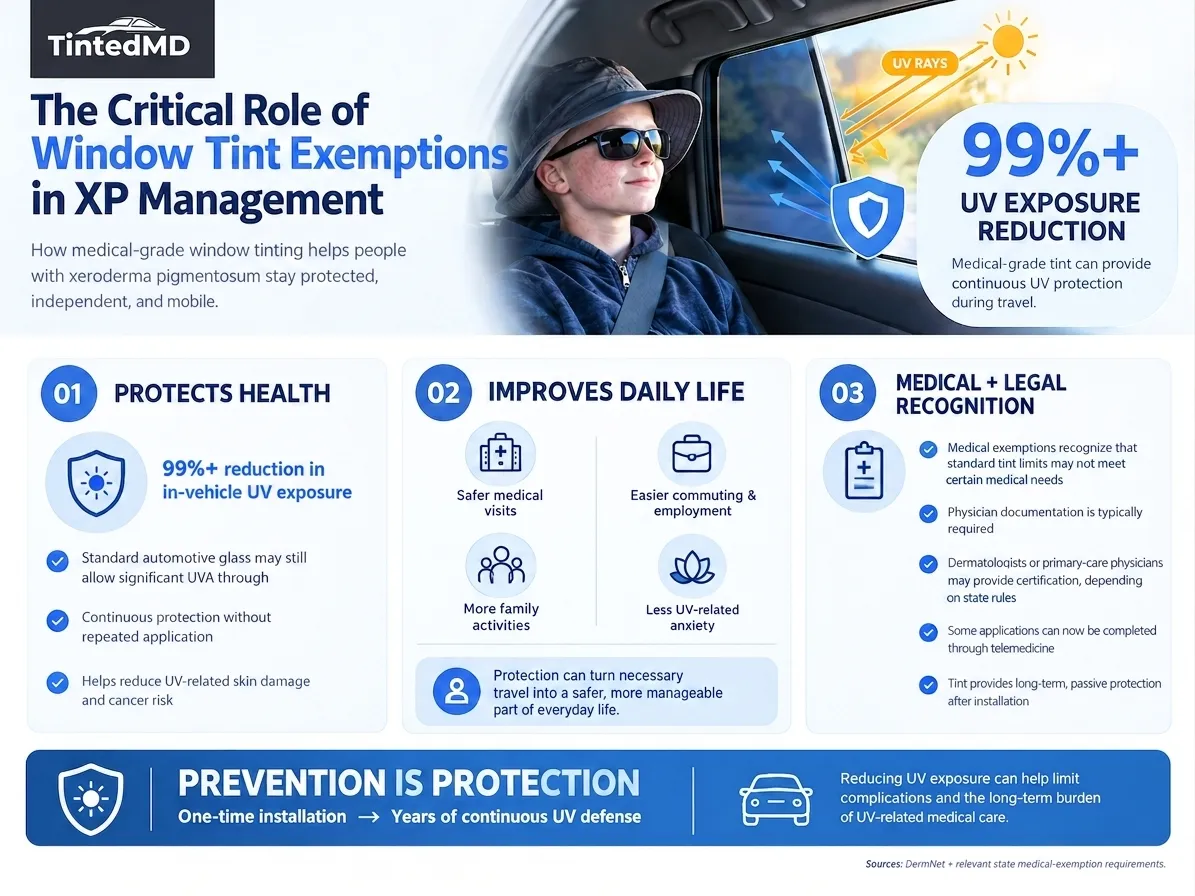
Window tint exemptions serve as a medical lifeline for individuals with xeroderma pigmentosum. This genetic condition makes even brief UV exposure dangerous. Medical-grade window tinting transforms vehicles from potential hazards into safe spaces.
Quantifiable Health Benefits
Medical-grade window tinting reduces in-vehicle UV exposure by over 99%. This dramatic reduction directly lowers skin cancer risk during transportation. For XP patients, every UV photon avoided matters.
Standard automotive glass blocks only about 50% of UVA radiation. This leaves XP patients vulnerable during daily commutes and errands. Medical exemptions allow darker tinting that blocks nearly all harmful rays.
According to XP diagnosis and management guidelines, UV protection must be comprehensive and consistent. Window tinting provides passive protection that doesn’t require daily application or maintenance. Once installed, it works continuously.
The cancer prevention benefit cannot be overstated. XP patients develop skin cancers at rates 10,000 times higher than the general population. Reducing UV exposure during vehicle travel cuts this risk significantly. This protection extends lifespan and reduces medical costs.
Quality of Life Improvements
Window tint exemptions enable XP patients to attend medical appointments safely. Many require frequent dermatology visits and specialist consultations. Without proper vehicle protection, these necessary trips become dangerous.
Employment opportunities expand dramatically with window tinting. XP patients can commute to work without fear of UV damage. This independence improves financial stability and mental health. Many can maintain careers that would otherwise be impossible.
Family activities become accessible again. Parents with XP can drive children to school and activities. Families can take road trips with proper planning. These experiences build normalcy in lives often constrained by medical limitations.
The anxiety reduction proves equally valuable. XP patients often experience severe stress about UV exposure. Knowing their vehicle provides reliable protection reduces this constant worry. Mental health improves when daily activities feel safer.
Legal Recognition of Medical Necessity
Legal recognition through medical exemptions validates XP as a serious condition. State laws acknowledge that standard tinting limits don’t accommodate all medical needs. This formal recognition helps XP patients access necessary accommodations.
Modern telemedicine platforms have simplified exemption applications. Patients can now connect with qualified physicians online who understand state-specific requirements. This streamlined process makes protection more accessible than ever before.
Window tinting represents cost-effective, permanent protection. A one-time installation provides years of continuous UV defense. This contrasts sharply with ongoing medical treatments for UV damage. Prevention costs far less than treating skin cancers and other complications.
The exemption process typically requires physician documentation of photosensitivity. Most states accept certification from dermatologists or primary care physicians. Processing times vary but many states approve applications within weeks.
Conclusion
Xeroderma pigmentosum demands thorough UV protection to prevent devastating complications. This article covered the genetic basis of XP, the eight complementation groups, and why standard automotive glass fails to protect XP patients. We explored medical qualifications for window tint exemptions, state-by-state laws, and the application process. You learned about multi-layered UV protection strategies, cancer surveillance protocols, and practical daily adaptations. We also examined emerging treatments and research developments.
Window tint exemptions provide proven protection for XP patients. They reduce in-vehicle UV exposure by over 99%. This protection allows safe travel to medical appointments, school, work, and family activities. Without proper window tinting, even brief car rides can trigger severe photosensitivity reactions and increase cancer risk.
If you or a loved one has xeroderma pigmentosum, start your application with Tinted MD today to streamline the medical documentation process and better understand your state requirements. Don’t wait to protect yourself from UV damage. Take action now to secure the protection you need for safer, more comfortable travel.
Frequently Asked Questions
What causes Xeroderma pigmentosum at the genetic level?
Mutations in genes responsible for nucleotide excision repair cause XP. These genes normally fix DNA damage from UV radiation. When they malfunction, cells can't correct UV-induced errors. The damage builds up over time. Scientists identified eight distinct genetic forms, labeled XP-A through XP-G plus XP-V. Each represents mutations in different repair genes. The condition follows autosomal recessive inheritance. Both parents must carry a mutated gene for a child to develop XP.
How common is Xeroderma pigmentosum in different populations?
XP affects about 1 in 250,000 people in the United States. Rates vary globally based on genetic factors. In Japan, the condition occurs in roughly 1 in 22,000 births. Certain populations show higher prevalence due to inherited genetic patterns. The disorder doesn't favor any gender or ethnicity. XP-A and XP-C are the most common types found in the United States and Europe. Carriers don't show symptoms because one normal gene copy provides adequate DNA repair.
Why can't normal car windows protect people with XP?
Standard automotive glass blocks only some UV rays. This leaves XP patients vulnerable during every car ride. Even brief sun exposure through car windows can trigger severe skin damage and cancer. Regular glass doesn't provide complete UV protection. People with XP need medical window tint exemptions for adequate safety. Their bodies can't repair DNA damage from any UV radiation that passes through. This makes protective measures medically necessary, not optional.
What happens when UV radiation damages DNA in XP patients?
UV radiation creates DNA lesions called pyrimidine dimers. These abnormal structures distort the DNA helix and block normal cell functions. In healthy people, the repair system detects and removes these lesions. XP patients lack working repair proteins. Damaged DNA accumulates in their skin cells and other tissues. Unrepaired DNA causes cells to die, leading to severe sunburn from minimal exposure. Mutations build up in surviving cells, which dramatically increases cancer risk.
How does the XP-V variant differ from other types?
The XP-V variant involves a gene called POLH that codes for DNA polymerase eta. This enzyme helps cells replicate past UV-damaged DNA sections. Without it, cells struggle to copy their DNA after sun exposure. Other XP types involve mutations in nucleotide excision repair genes. Those mutations prevent cells from cutting out and fixing damaged DNA. XP-V patients still have some repair function. They face different symptoms and risks than other XP types.
Can carriers of XP genes develop symptoms themselves?
Carriers don't show XP symptoms. They have one normal gene copy that provides adequate DNA repair function. The condition requires two mutated genes to cause disease. Each child of two carriers has a 25% chance of developing XP. Carriers can pass the mutation to their children without knowing. Genetic testing can identify carrier status before having children. This helps families understand their risk and plan accordingly.
What tissues besides skin are affected by XP?
Eye tissues suffer UV damage in XP patients. This results in vision problems and increased cancer risk. Some XP types also affect neurological cells. These patients experience progressive nerve damage over time. The brain and nervous system can deteriorate in certain genetic forms. Not all XP types cause neurological problems. The specific gene mutation determines which tissues are affected. Skin remains the most vulnerable tissue in all XP types.
Why do XP patients get severe sunburn from minimal exposure?
Unrepaired DNA damage causes cells to die rapidly after UV exposure. Normal cells fix this damage before it becomes severe. XP patients lack working repair systems. Even brief sun exposure creates more damage than their cells can handle. The accumulated DNA lesions trigger cell death. This produces severe burns from sunlight that wouldn't harm most people. The body's inflammatory response to dying cells causes the visible burn symptoms.

Meet the author
Nida Hammad
I am a professional writer with over five years of experience creating clear, engaging, and well-researched content. I specialize in medical window tint exemptions and state compliance topics, helping readers understand tint laws and exemption requirements in simple, easy-to-follow language. Currently, I write for TintedMD, where I focus on producing accurate, trustworthy guides to help drivers navigate the medical tint exemption process with confidence.
Get Your Medical Tint Exemption Online in Minutes
Check Your Eligibility