Blepharitis and Window Tint Exemption
 by Anam Moin
Last updated:
Medically reviewed by:
Dr. Matthew Reynolds, MD


Blepharitis is long-term inflammation of the eyelid margins. It often shows up as red, swollen lids, crusting at the base of the lashes, burning, and watery eyes.
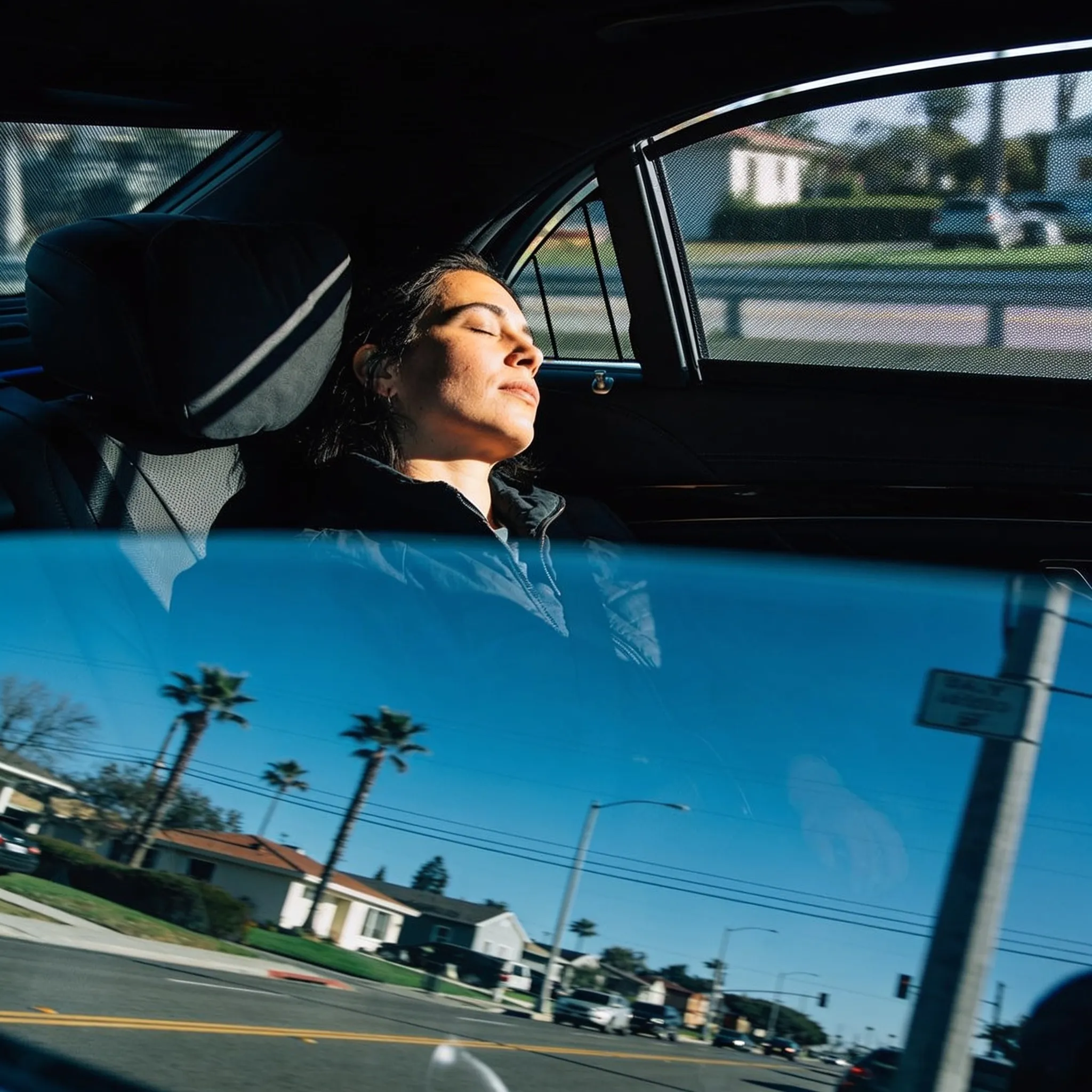
Some people with blepharitis also find that bright light hurts or blurs their vision, which can make daytime driving harder.
This page is education, not a service page. It explains how blepharitis can relate to light sensitivity, what a tint exemption is, what a clinician reviews, and what the DMV still decides. We document. The DMV decides.
How Blepharitis Can Relate to Light Sensitivity
Blepharitis has several common drivers. Bacteria on the lid margins can multiply and irritate the skin.
The meibomian glands along the lid edge make the oily layer of the tear film, and when they clog, tears evaporate faster. Skin conditions such as seborrheic dermatitis and rosacea often appear alongside it.
The National Eye Institute describes the condition and its usual symptoms.
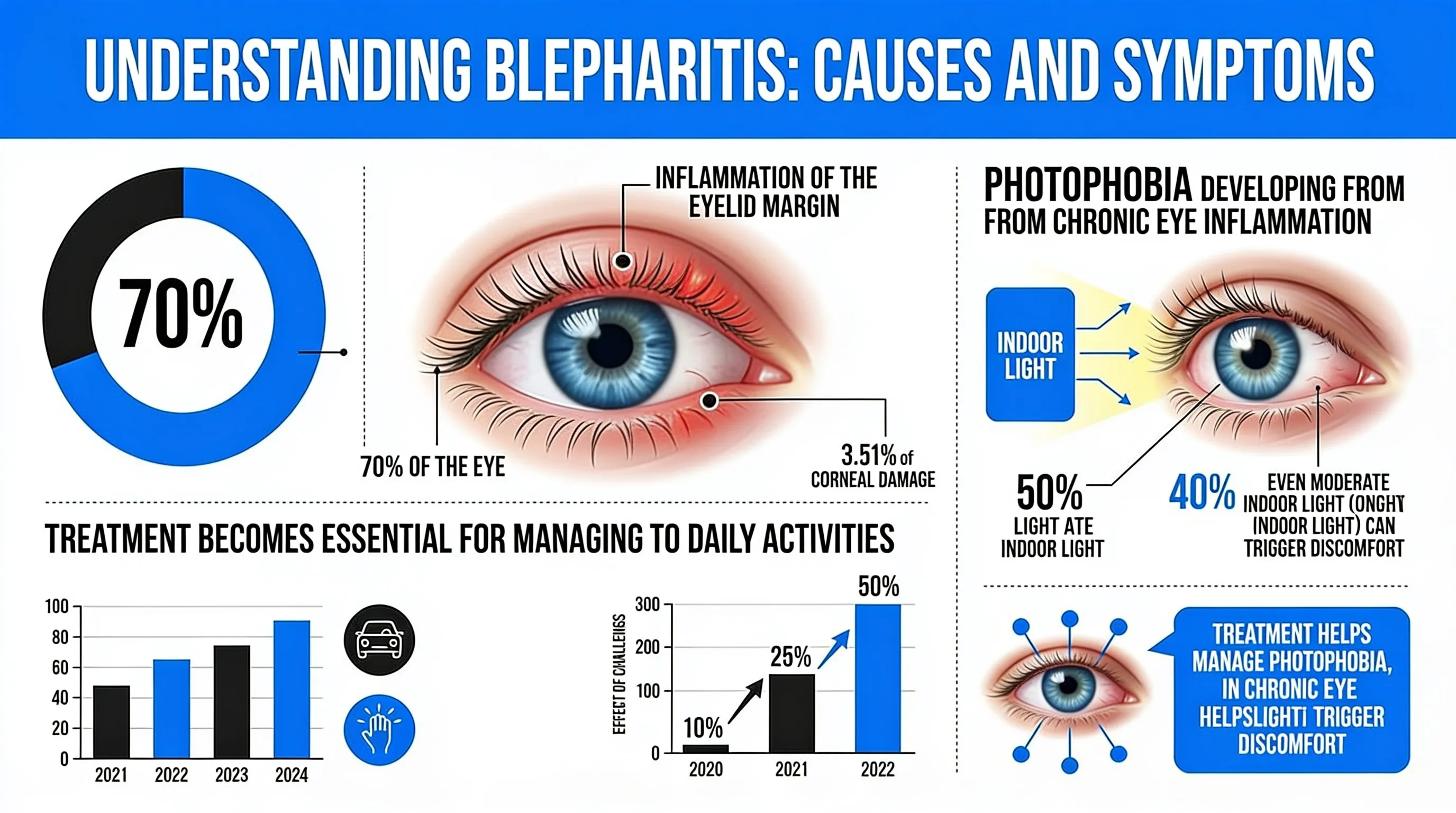
When the tear film is unstable, the surface of the eye can become irritated, and bright light may feel harsher. Dry eye commonly occurs with blepharitis, which can add to that sensitivity.
Not everyone with blepharitis has light sensitivity. For those who do, it can range from mild to severe. Some light-related eye problems appear among the medical conditions that qualify for a tint exemption review, but only a clinician can say whether yours does.
Doctors call light sensitivity photophobia. For background on this symptom, read about photophobia from chronic eye inflammation. Sun glare through a windshield or side window can cause squinting, tearing, burning, and blurred vision.
Those symptoms are the reason some people ask a clinician about a tint exemption.
Some people also say that heat and dry air inside a parked car make their eyes feel worse. If that sounds familiar, mention it to your clinician. Treatment for light-sensitive eyes starts with the eye itself, and you can read about treatment options for light sensitivity in a separate guide.
How Symptoms Change Through the Day
Blepharitis rarely behaves the same way all day. Many people notice the worst of it in the morning. Lids can feel crusty or stuck together after sleep, and the eyes may sting until the tear film settles.
By evening, tired lids and long hours of screen use can bring back the grit and the glare discomfort. Seasons play a part too. Winter brings low, bright sun and indoor heating. Spring brings pollen that irritates already inflamed lids. Summer adds longer hours of strong daylight.
These swings matter for drivers because light does not only come from above. A windshield catches low sun at sunrise and sunset, and it also picks up reflections from the dashboard and from wet roads. Side windows let in light from an angle that a sun visor cannot block.
An irritated eye surface can make each flash of glare feel sharper, and the squinting that follows can tire the eyes further. A short drive may feel fine one day and uncomfortable the next.
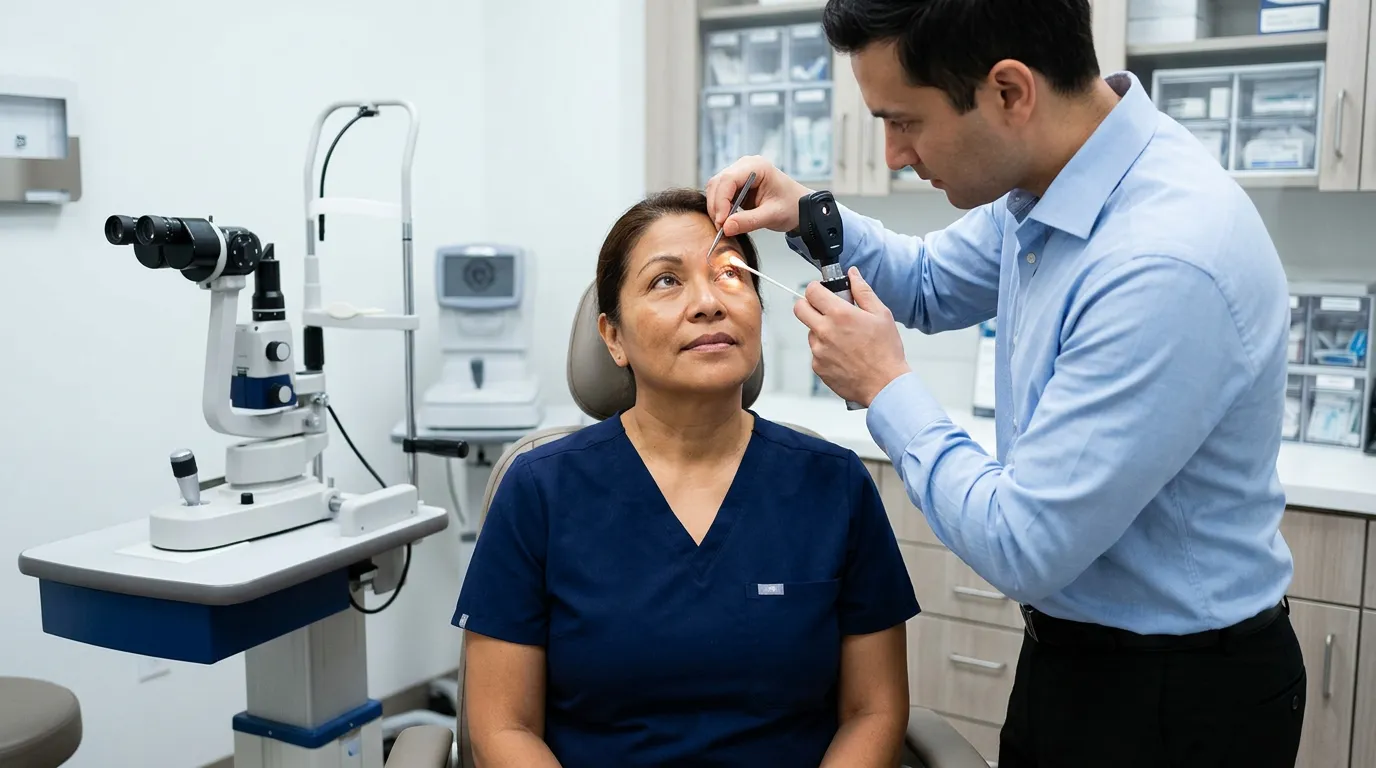
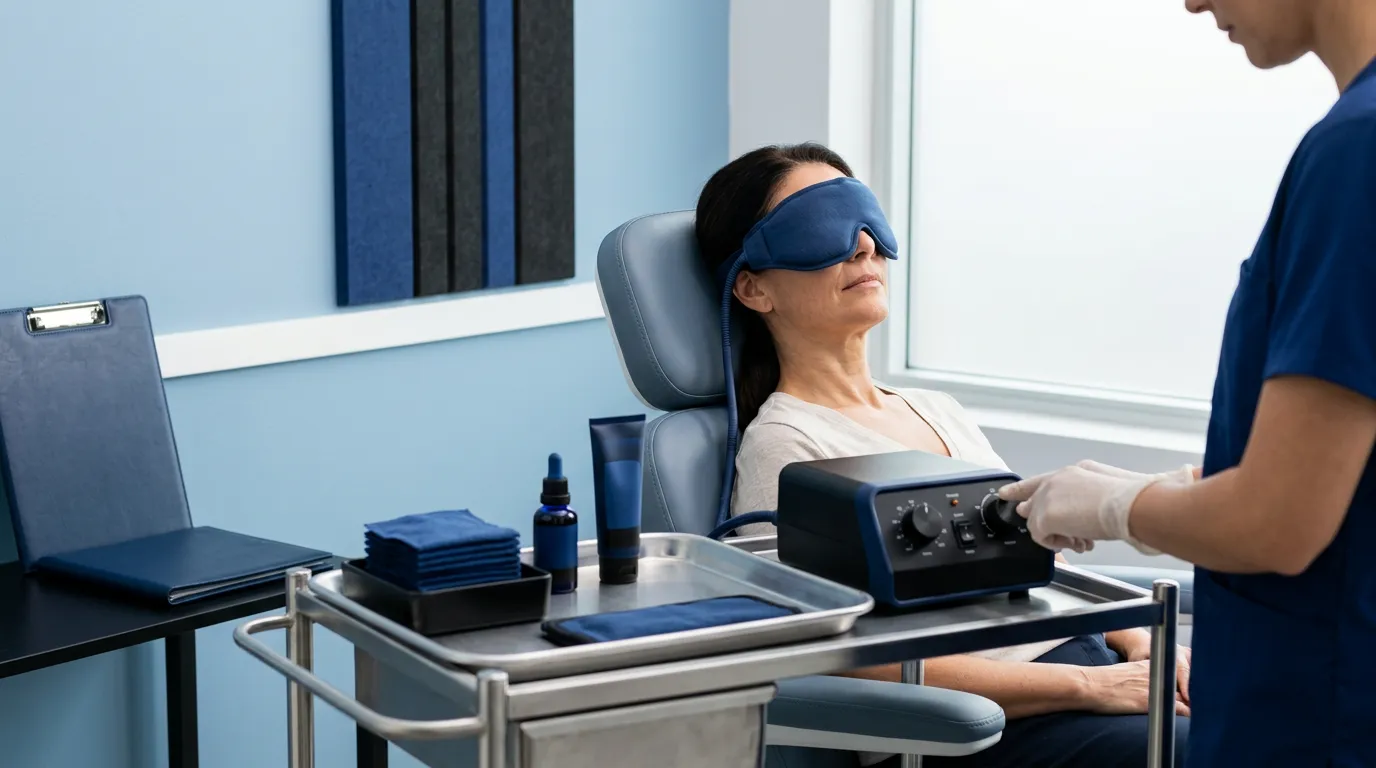
That variability is one reason a clinician should judge the situation. Light sensitivity has many possible sources, and blepharitis may be only one of them. An eye exam can look at the lid margins, the oil glands, and the tear film, then decide what is driving the symptoms. A self-diagnosis from an online description cannot do that.
What a Tint Exemption Is
Every state sets limits on how dark window film can be. A medical tint exemption is a state process that can allow darker film than the standard limit when a clinician documents a medical need.
The paperwork differs by state. Some states ask for a form, others for a letter, and others for a note tied to the vehicle record.
A tint exemption does not let you run any darkness. The state and your clinician’s letter set the limits, and they can differ for the windshield, the front side windows, and the rear windows.
TintedMD does not install tint. TintedMD documents the medical need. A shop installs the film, and a good shop will follow the limits in your paperwork and your state’s rules.
Blepharitis is one of several light-sensitive conditions people raise with a clinician. You can see which medical conditions can qualify for a closer look.
Another example is albinism and light sensitivity. The research behind UV and eye comfort is covered in our review of the medical science.
It helps to be clear about what an exemption is not. It is not a license to ignore state rules, because it covers only what the approval describes. It is not a product you can buy. It is also not a guarantee, since the state reviews each request and may approve or deny it.
Understanding Film Darkness and VLT
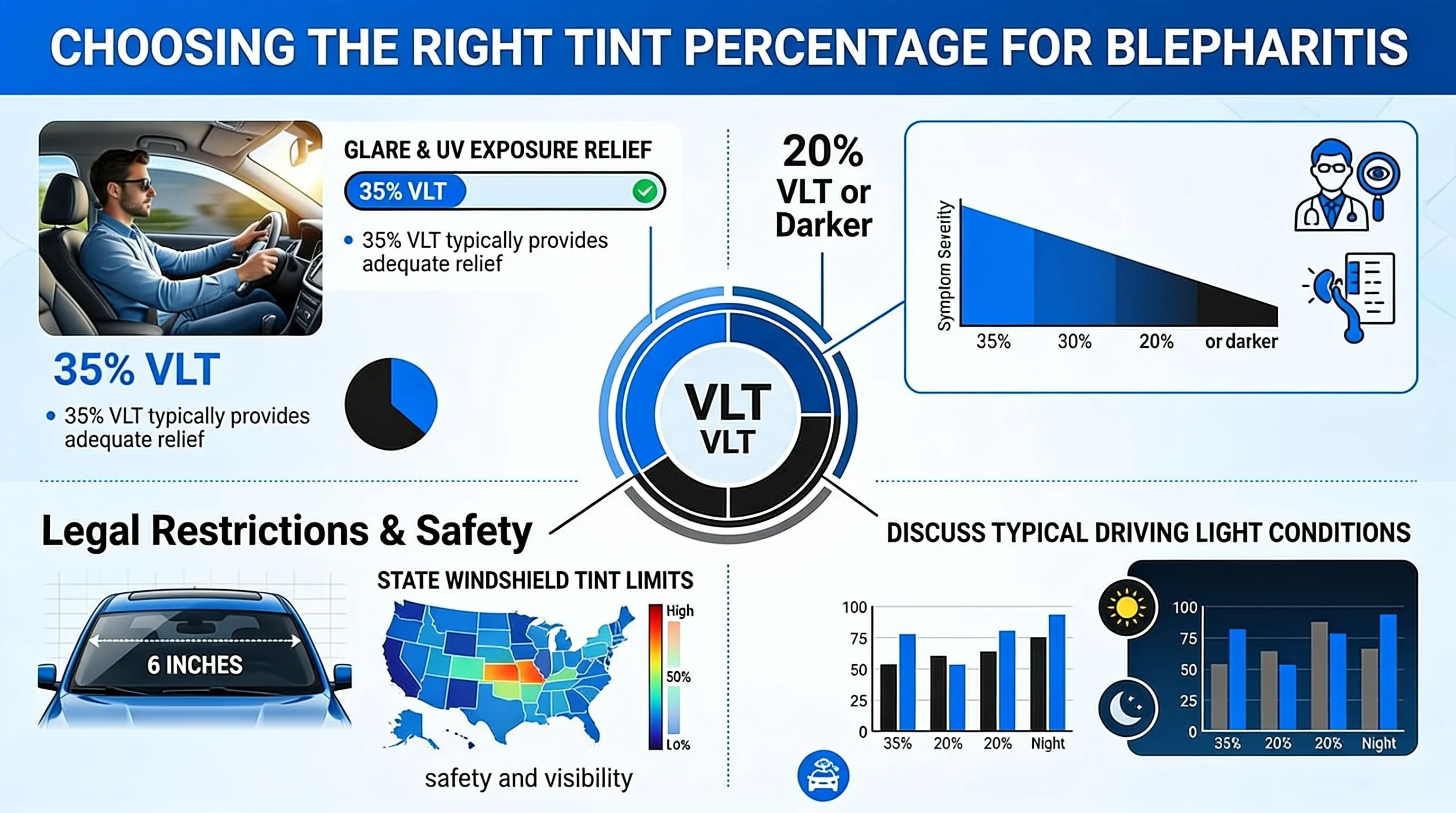
Film darkness is usually described by visible light transmission, or VLT. That is the percentage of visible light that passes through the glass and film together.
A lower percentage means a darker window. Factory glass already blocks some light, so the final VLT depends on both the film and the window it goes on. A spec sheet and a meter reading tell you more than a label like “limo” or “dark.”
A shop should follow the letter of the approval, not a rough version of it. Film that is darker than the exemption allows, or applied to a window the exemption does not cover, can lead to a citation or a removal order. It can also cause trouble with the exemption itself.
What the Clinician Reviews
A licensed clinician reviews your history and symptoms before deciding whether to document a medical need. The right type of care, eye or skin, depends on the condition. Blepharitis symptoms are usually eye-related, so the visit intake sends you to the right clinician.
A clinician may review:
-
Your diagnosis and how long you have had symptoms
-
How light affects you while driving, including glare, squinting, tearing, and blurred vision
-
Related conditions such as dry eye or rosacea
-
Your current eye care and any treatments you use
-
Whether your symptoms point to a medical need for darker film
The clinician makes the medical call. They may decide to document a need, or they may decide not to. Eye care providers follow published diagnosis and management guidance to assess blepharitis. That care stays separate from any tint paperwork.
Tint does not replace treatment. The Mayo Clinic lists lid hygiene and medical care as the usual approach. Your eye care provider guides that part.
-
Be open about your experience. The clearer you are, the better the clinician can judge whether your blepharitis fits what a tinted option could support.
-
Expect questions about when symptoms flare: first thing in the morning, after hours at a screen, in wind, or around certain products.
-
Say what eases the discomfort, such as warm compresses, lid cleansing, or time away from bright rooms, and what makes it worse.
-
Be specific about night versus day, too. Crusting and stickiness on waking point in a different direction than burning or light sensitivity that builds by late afternoon.
-
Records can fill gaps in your memory. A recent eye exam, notes from an optometrist or ophthalmologist, or a list of lid treatments you have tried gives the clinician a baseline to compare with your current symptoms. If you have no paperwork, say so plainly. A clear verbal history still counts.
Understand, too, that the clinician may decline. Approval is never guaranteed, and a decline usually means your symptoms need a different kind of evaluation or the picture is not clear enough to proceed.
Your intake answers also steer the visit. Questions about the lids, lashes, and surrounding skin help route you toward an eye-focused review or a skin-focused one, since redness and flaking around the eyes can come from either source.
What the DMV Still Decides
A clinician’s letter is not the last step. The DMV, or the state agency that handles tint rules, reviews what you submit. It can accept the paperwork, ask for more, or reject it. There is no guaranteed approval.
State rules differ on how dark the film can be, which windows it covers, which forms are used, and how long an exemption lasts. We do not state a national expiry, because none applies.
Check the rules for the state where your vehicle is registered.
Do not assume another state honors your exemption. If you move or drive across state lines, check each state’s rules before you rely on your paperwork.
When the Agency Asks for More Information
Even when a clinician documents a condition such as blepharitis, the state makes the decision about your window tint. If the agency rejects your paperwork or asks for more information, contact it directly first. Ask what fell short.
It could be a missing field, an unclear signature, or a form version that has been replaced. Then take that response back to your clinician and ask about next steps. They can often clarify details or update the documentation, though the state decides what it accepts. A request for more information does not mean the process has ended. No submission carries a guarantee of approval.
Keeping Proof in Your Vehicle
Once you have an acceptable outcome, keep a copy of the paperwork in the vehicle. If an officer or an inspection station questions your tint, you can show the document on the spot instead of explaining from memory.
Law enforcement and inspectors both follow state rules. How they treat your paperwork, and what they may ask to see, can vary by location.
Rules also change. Legislatures revise tint statutes, and agencies update forms and procedures. Check your state’s current guidance before you apply, renew, or modify your tint.
A diagnosis like blepharitis may explain why someone seeks an exemption. The agency still reviews the submitted documentation against its own standards.
Our approach stays simple. We document. The DMV decides.
How to Start
To begin, use the TintedMD welcome page. Intake asks about your condition and routes you to the right clinician. For blepharitis, that often means an eye care visit, but the intake decides based on what you report.
What to Gather Before Your Visit
A few details help the visit go faster. Gather these before you begin:
-
The state where your vehicle is registered
-
The name of any eye care provider who has diagnosed or treated your blepharitis
-
A short list of your symptoms and the times of day when light bothers you most while driving
-
Any treatments you use now, such as lid hygiene routines or eye drops
After the visit, the clinician decides whether to document a medical need. If they do, you take the paperwork through the steps your state requires. Talk to an installer about film only after you know what your paperwork and your state allow.
Remember the order of things. A clinician documents the need. The state agency reviews it. A shop installs the film. Each step belongs to a different party, and none of them can speak for the others. Having blepharitis does not guarantee an exemption. We document. The DMV decides.
Frequently Asked Questions
Does a tint exemption let me run any darkness?
No. A medical tint exemption does not automatically allow you to use any level of window tint darkness. Each state has specific regulations regarding permitted tint levels and visible light transmission. Your medical documentation must meet these requirements, and the DMV or relevant state authority determines what tint darkness is allowed under your exemption.
Do you install tint?
No. TintedMD provides medical evaluations and supporting documentation for individuals who may need darker window tint due to qualifying health conditions. We do not install window tint or modify vehicles. Once you obtain the necessary medical documentation and state authorization, a professional tint shop can help you install film that complies with applicable regulations.
Will this work in another state?
Not necessarily. Medical window tint exemption laws differ from state to state, and an exemption issued in one state may not be recognized elsewhere. If you frequently travel across state lines or plan to relocate, check the regulations of the state where you will be driving. Your medical documentation does not guarantee exemption privileges in another state.
What if the DMV rejects it?
The DMV or responsible state agency can reject medical tint exemption paperwork if it does not meet the state's requirements. A clinician's recommendation does not guarantee approval. If your application is rejected, review the reason for denial and determine whether additional documentation, corrections, or an appeal is permitted under your state's procedures.
Which clinician do I need?
The type of clinician you need depends on your medical condition and state requirements. For example, certain light-sensitive eye conditions may require an ophthalmologist or optometrist, while skin conditions involving sunlight sensitivity may require a dermatologist or another qualified healthcare professional. TintedMD's online intake process helps identify the appropriate evaluation pathway based on your condition and applicable regulations.
How long does it last?
The validity of a medical tint exemption depends on the state where it is issued. Some states require periodic renewals or updated medical certification, while others follow different expiration rules. Review your exemption documentation and official state guidelines to determine how long your authorization remains valid and whether you need to renew it.
How do I start?
You can begin by visiting the [TintedMD online application](https://patient.tintedmd.com/tinted-window/welcome) and completing the initial medical intake. Provide details about your health condition and why you need additional protection from sunlight. A qualified clinician evaluates your information and determines whether medical tint exemption documentation is appropriate. Any required state approval remains a separate process.
Who reviews the article?
This article is reviewed by Dr. Matthew Reynolds to help ensure the medical information is clear, accurate, and relevant to individuals researching medical window tint exemptions. The content provides general educational guidance and should not replace professional medical advice or official state DMV requirements.

Meet the author
Anam Moin
I’m Anam Moin, a health-focused writer at TintedMD. I write about medical window tint exemptions, light-sensitive conditions, and state tint regulations, bringing together health and regulatory information in a reader-friendly way.
Get Your Medical Tint Exemption Online in Minutes
Check Your Eligibility