
Macular Degeneration and Window Tint Exemption
 by Areeba Imran
Last updated:
Medically reviewed by:
Dr. Matthew Reynolds, MD


Macular degeneration robs you of sharp central vision. You can’t read. You can’t recognize faces. You can’t drive safely. The damage is permanent. But light sensitivity can be managed. Medical window tint exemptions offer real relief.
Most people don’t know they have it until warning signs appear. Straight lines look wavy. A dark spot grows in the center. The disease damages the macula. This tiny spot in your retina controls central vision. Damaged tissue amplifies sunlight into blinding glare. Every sunny drive becomes uncomfortable.
This guide explains how the disease attacks your retina. It covers the difference between its two forms: one progresses slowly, while the other can take vision in weeks. You’ll learn which treatments preserve sight, why light sensitivity develops alongside vision loss, and how medical window tint exemptions help people drive comfortably and safely despite severe glare.
What Is Macular Degeneration and How Does It Steal Your Vision?
Your macula is a small area at the center of your retina. It measures just 5 millimeters across. Despite its tiny size, it controls everything you depend on for detailed vision. This region contains the highest concentration of cone photoreceptors. These are specialized cells that enable you to perceive color and fine detail.
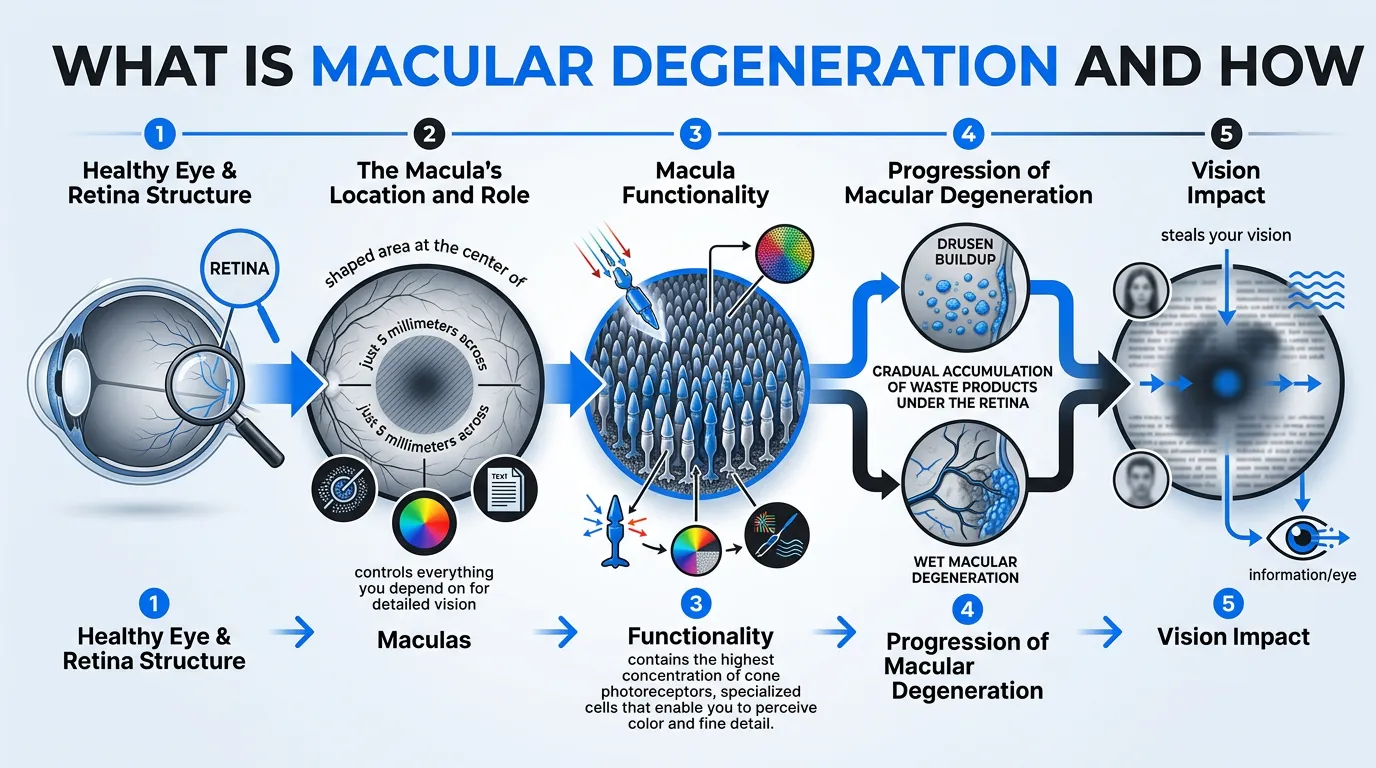
When you read text, recognize a face, or thread a needle, you’re using your macula. This is why the disease attacks your most valuable visual abilities first. It leaves peripheral vision intact. You might still move around a room but struggle to see the person standing in front of you.
The Macula’s Role in Central Vision
Cone photoreceptors packed densely in the macula translate light into sharp, colorful images. Your brain interprets these images. These cells handle tasks requiring precision: reading street signs, distinguishing facial features, and identifying objects at a distance.
When the disease damages this concentrated area of cones, you lose the ability to see what you’re looking directly at. Your peripheral vision, controlled by different cells spread across the retina, often remains functional for years.
Why Photoreceptor Cell Death Is Permanent
Once photoreceptor cells die, they cannot regenerate. According to the National Eye Institute guidance, reversal is impossible. Early detection matters more than any treatment breakthrough.

The retinal pigment epithelium layer beneath these cells breaks down over time. It loses its ability to nourish photoreceptors. It can’t clear metabolic waste. This creates a cascade where healthy cells adjacent to damaged ones begin failing. The area of vision loss expands.
How Drusen Signals Disease Progression
Drusen are yellow deposits that accumulate under the retina. Your eye cannot clear them. These deposits signal early disease. They help doctors predict progression risk.
Small amounts of drusen appear in many older adults without causing problems. Larger drusen or clusters indicate the retinal pigment epithelium is struggling. This suggests a higher risk for advancing disease.
Understanding this biological process helps you set realistic expectations. Treatment aims to slow progression and preserve remaining vision, not restore what’s already lost. The goal is protecting the photoreceptors you still have, not regenerating dead cells.
Dry vs. Wet Macular Degeneration: Two Different Diseases
Macular degeneration has two distinct forms. They differ in speed and damage pattern. One progresses slowly over years. The other can steal vision in weeks. Knowing which type you have matters for planning treatment and understanding what to expect.
Dry AMD: Slow Progression and Geographic Atrophy
Dry AMD accounts for 85-90% of all cases. It progresses slowly over many years. Most patients keep functional vision for years. Some never lose much sight at all.
Advanced dry AMD causes geographic atrophy. This means cells die and blind spots grow. The process takes years, not months. This gives patients time to adjust and plan.
According to CDC data, many dry AMD patients never lose much sight. But the slow decline hides damage. You might not notice changes until later.
Wet AMD: Abnormal Blood Vessel Growth
Wet AMD occurs when abnormal blood vessels leak. This damages vision very quickly. It can happen in days or weeks. This is a medical emergency.
Wet AMD is less common but more damaging. It causes 90% of severe vision loss. Early detection allows treatment to preserve sight. Speed matters with wet AMD.
Sudden wet AMD vision changes make driving unsafe. Many patients need light protection solutions. Window tinting helps manage glare and light. This allows safe driving as the disease progresses.
How One Form Can Convert to the Other
About 10-15% of dry AMD patients develop wet AMD. This transition can happen suddenly. Home monitoring with Amsler grids matters. Early detection can save your remaining vision.

The Amsler grid reveals sudden line distortions. Wavy lines mean wet AMD may be starting. Call your eye doctor the same day. Do not wait.
This shift is a turning point for your vision. Early detection allows quick anti-VEGF treatment. This stops rapid vision loss in weeks. Speed saves your sight.
Early Warning Signs: Symptoms You Shouldn’t Ignore
Early detection saves vision. Delayed detection leads to permanent loss. Dry and wet AMD show different symptoms. Knowing the signs helps you act fast.
Visual Distortions That Signal Wet AMD
Wavy or bent lines signal wet AMD urgently. Door frames and blinds look distorted. Text lines bend and warp. This condition is called metamorphopsia.
Leaking blood vessels cause the retina to buckle. This warps your vision and bends lines. Sudden wavy lines mean call your eye doctor today.
Dark spots block your central vision. You can’t see faces or text clearly. You might miss a person’s nose or mouth. Your side vision still works fine.
Gradual Changes in Dry AMD
Blurry central vision makes reading hard. New glasses don’t help much. This blurriness develops slowly over months. Dry AMD progresses gradually, not suddenly.
Colors look faded or washed out. One eye may see duller colors than the other. Color cells in your retina are dying. This fading gets worse over time.
You need brighter light to read. Your eyes struggle in dim rooms. Your retina is weakening. Many patients then develop light sensitivity. Light sensitivity treatment can help you stay active.
When to Seek Emergency Eye Care
Wet AMD changes happen fast, in days. This is a medical emergency. Call your eye doctor today. Delays cause permanent vision loss.
Call your eye doctor today if you see: wavy lines, sudden blur, or new dark spots. Speed saves your remaining vision. Do not wait.
Treatment Options: What Actually Works and What Doesn’t
Wet and dry AMD need different treatments. Each approach works differently. Understanding what to expect helps you plan ahead.
Anti-VEGF Injections for Wet AMD
Anti-VEGF injections are the best wet AMD treatment. They block proteins that cause abnormal vessels. Lucentis, Eylea, and Avastin work well. These drugs stopped wet AMD from being a blinding disease.
Injections are given every 4-12 weeks depending on disease activity. Most patients see stabilization rather than improvement. The goal is preventing further vision loss, not restoring what’s gone.
Laser therapy and photodynamic therapy are rarely used now. These older treatments often caused more retinal damage than they prevented, making anti-VEGF drugs the clear superior choice.
AREDS2 Vitamins for Dry AMD
The AREDS2 vitamin formulation is the only proven intervention for dry AMD. This specific combination of vitamins C, E, zinc, copper, lutein, and zeaxanthin can slow progression in intermediate dry AMD by about 25% over five years.
No FDA-approved treatment exists yet for geographic atrophy. Complement inhibitors are in late-stage trials and showing promise for slowing atrophy expansion, but they remain investigational.
Many patients also develop severe light sensitivity as retinal damage progresses, requiring protective measures beyond standard treatment protocols.
Emerging Therapies and Clinical Trials
Clinical trials are testing new approaches for both wet and dry AMD. Gene therapies, stem cell treatments, and novel drug delivery systems may offer future options, though none have reached widespread approval yet.
Realistic expectations matter. Treatment aims to preserve remaining vision, not restore what’s already lost. Success requires ongoing commitment to regular appointments and monitoring for the rest of your life.
Living with Anti-VEGF Injections: What Patients Actually Experience
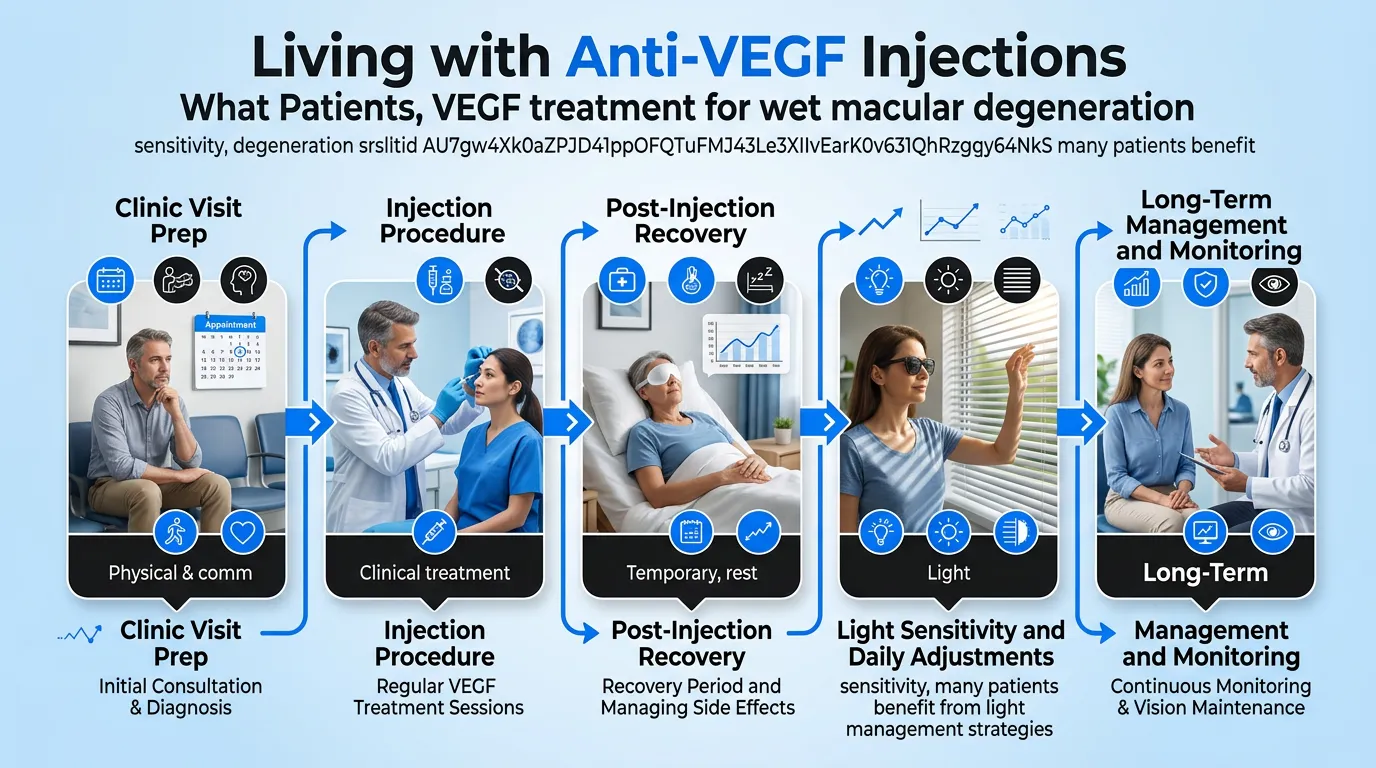
The reality of anti-VEGF treatment for wet macular degeneration extends beyond clinical outcomes. Understanding what to expect helps patients prepare for the physical, emotional, and financial commitment ahead.
What the Injection Procedure Feels Like
The injection itself takes less than five minutes after numbing drops. Most patients report pressure rather than pain when the needle enters the eye.
The anticipation is typically worse than the actual procedure. Your ophthalmologist will clean the eye surface, apply anesthetic drops, and use a small speculum to keep your eyelid open. You’ll feel pressure as the medication enters, but sharp pain is rare.
Recovery Timeline and Side Effects
Mild discomfort, grittiness, and light sensitivity typically resolve within 24 to 48 hours after injection. Plan to have someone drive you home and avoid bright conditions that day.
Floaters or small dark spots immediately after injection are normal. These usually disappear within a few days as the medication disperses through the eye.
Serious complications like infection or retinal detachment occur in less than 1 in 1,000 injections. The risk is real but statistically small compared to the benefit of preserving vision. According to NEI Low Vision, many patients benefit from light sensitivity management strategies during the recovery period.
Long-Term Treatment Burden and Costs
Treatment requires ongoing appointments every one to three months indefinitely. This is a lifelong commitment, not a temporary fix, creating significant time and financial burden.
Out-of-pocket costs range from $50 to $200 per injection with insurance. Uninsured costs can exceed $2,000 per injection, making financial planning necessary for long-term management.
The cumulative effect of monthly appointments, transportation, time off work, and copays adds up over years. Many patients find the treatment burden affects their work schedule and daily routines more than the disease itself.
Light Sensitivity and Macular Degeneration: The Overlooked Symptom
Between 60 and 70% of people with macular degeneration develop severe light sensitivity, yet most treatment plans never address this debilitating symptom. Macular degeneration is one of the medical conditions that qualify for light protection solutions like medical tint exemptions. Patients discover this need on their own, often months after diagnosis, when bright environments become unbearable.
Why Damaged Retinas Become Photophobic
Damaged retinal tissue loses its ability to process and filter light efficiently. The macula normally regulates how much light reaches photoreceptor cells, but when disease disrupts this system, unfiltered light floods the retina.
This creates intense glare and discomfort in conditions that healthy eyes handle easily. What was once a pleasant sunny day becomes a painful visual assault.
How Bright Light Worsens Visual Function
Bright sunlight doesn’t just cause discomfort. It actively reduces functional vision in people with macular degeneration, making outdoor activities difficult or impossible.
Many patients avoid driving during peak daylight hours because glare obscures road signs and traffic signals. A medical tint exemption can help restore safe daytime driving by reducing this amplified glare. Indoor lighting, computer screens, and car headlights at night trigger similar problems, affecting work productivity and daily independence.
Visual fatigue sets in quickly under bright conditions, forcing people to retreat to dimly lit spaces just to function.
UV Exposure and Disease Progression
UV radiation may accelerate disease progression by increasing oxidative stress in the retina. This makes sun protection both a comfort measure and a potential disease management strategy.
Protecting eyes from excessive light exposure through specialized eyewear, window tinting, and photophobia treatment options can restore functional independence. Simple modifications like polarized sunglasses or a medical tint exemption for vehicle windows allow patients to drive, shop, and participate in outdoor activities they had abandoned.
Medical Window Tint Exemptions for Macular Degeneration
For people with macular degeneration, light sensitivity can make daytime driving difficult even with sunglasses. Most states limit how dark vehicle window tint can be, but many also allow medical exemptions for qualifying medical conditions. This is a legitimate accommodation written into law for people whose conditions create a health need for added shading. It is not a workaround.
What a Tint Exemption Is
A tint exemption is legal permission to apply darker window tint than state law normally allows. Tint darkness is usually expressed as visible light transmission (VLT), the percentage of light that passes through the glass. A lower VLT means a darker window. An exemption permits a lower percentage than the standard limit, sometimes only on certain windows. Which windows qualify, and how dark they may go, depends on the state.
What the Clinician Reviews and Documents
The exemption process usually begins with a physician or eye care specialist who evaluates the patient and prepares supporting documentation. This typically includes:
-
Medical evidence of light sensitivity: the macular degeneration diagnosis, relevant retinal findings, and a record of the patient’s photophobia symptoms and how long they have been present.
-
Functional impact on driving safety: how glare affects the patient’s ability to read signs, see signals, and recover vision after exposure to bright light.
-
How the condition qualifies: a statement connecting the diagnosis and symptoms to the criteria the state sets for a medical exemption.
This documentation is a clinical opinion. It supports an application, but it does not grant the exemption.
What the DMV Still Decides
The state motor vehicle agency, not the clinician, makes the decision. The DMV reviews the medical documentation against the state’s specific exemption criteria. Some states approve exemptions readily for documented light-sensitive conditions; others apply stricter review. The agency may approve the exemption, deny it, or approve it with conditions, such as restricting tint to rear windows only, requiring annual recertification, or limiting the darkness level to a specific VLT percentage. Exemptions are also state-specific: an exemption valid in one state may not be recognized in another, which matters if you drive across state lines.
Understanding this process helps set realistic expectations. A clinician’s documentation strengthens your case, but the final authority rests with the DMV. Approval timelines vary by state, typically ranging from a few weeks to several months.
Conclusion
Macular degeneration permanently damages central vision through photoreceptor cell death that cannot be reversed. The most valuable action you can take is recognizing the difference between gradual changes that warrant monitoring and sudden symptoms that demand immediate care. If straight lines suddenly appear wavy, central vision blurs rapidly, or dark spots expand in your field of view, contact an ophthalmologist the same day. Early intervention with anti-VEGF injections can preserve vision in wet AMD.
For those already managing the condition, addressing light sensitivity can restore comfort and independence in daily life. Bright sunlight, glare, and UV exposure worsen both symptoms and potentially disease progression. Specialized eyewear and vehicle window tinting reduce discomfort while protecting your remaining vision during driving and outdoor activities.
Check your eligibility today. If photophobia limits your ability to drive safely or comfortably, TintedMD can help. You can obtain a medical window tint exemption that meets your state’s legal requirements while providing the protection your eyes need.
Frequently Asked Questions
Does a tint exemption let me run any darkness?
No. The state and the letter set limits. The DMV decides what it will honor. Your exemption approval may restrict tint to rear windows only or cap the darkness at a specific VLT percentage.
Do you install tint?
No. TintedMD documents the medical need. A shop installs film. We provide the medical letter; you choose a licensed tint shop to apply it to your vehicle.
Will this work in another state?
Exemptions are state-specific and may not be recognized across state lines. Check with the DMV in any state where you plan to drive regularly. Each state has its own exemption criteria and approval process.
What if the DMV rejects it?
The DMV can reject paperwork or deny the exemption request. There is no guaranteed approval. If denied, you can reapply with updated medical documentation or appeal the decision under your state's motor vehicle regulations.
Which clinician do I need?
Eye care specialists (ophthalmologists or optometrists) typically document macular degeneration exemptions. The visit intake routes your request to the right provider. Dermatologists handle photophobia exemptions for skin conditions.
How long does it last?
State rules differ on exemption duration and renewal. Some states issue permanent exemptions; others require annual or multi-year recertification. Do not assume a national expiry—check your state's specific rules.
How do I start?
Check your eligibility and begin the process at [our patient portal](https://patient.tintedmd.com/tinted-window/welcome). We'll guide you through documentation and next steps.
Who reviews the article?
Dr. Matthew Reynolds reviews and approves this content. All medical information is verified by our clinical team.

Meet the author
Areeba Imran
I am a healthcare professional and seasoned medical writer with 13+ years of experience across health, wellness, and clinical content. My work focuses on delivering trustworthy, evidence-based information that empowers readers to make informed decisions. With a keen interest in innovation and evolving areas of patient care, I bring a modern perspective to today's healthcare setup.
Get Your Medical Tint Exemption Online in Minutes
Check Your Eligibility