
Cataracts and Window Tint Exemption
 by Areeba Imran
Last updated:
Medically reviewed by:
Dr. Matthew Reynolds, MD


Cataracts cloud the vision of more than 24 million Americans over age 40. The glare they create makes driving risky and uncomfortable. A medical window tint exemption lets you use darker tints than standard limits in many states, protecting your eyes during recovery and daily life. Cataracts form when proteins in your eye’s lens break down and clump together, turning clear tissue cloudy. Surgery restores vision, and managing light exposure reduces discomfort while you decide on treatment timing. Controlling light exposure also helps slow early cataract progression.
This guide explains how cataracts form, what symptoms to watch for, and what treatment options work best in 2027. You’ll learn practical ways to protect your eyes from UV damage and glare. You’ll also see how medical window tint exemptions can ease light sensitivity while you drive.
What Are Cataracts and How Do They Develop
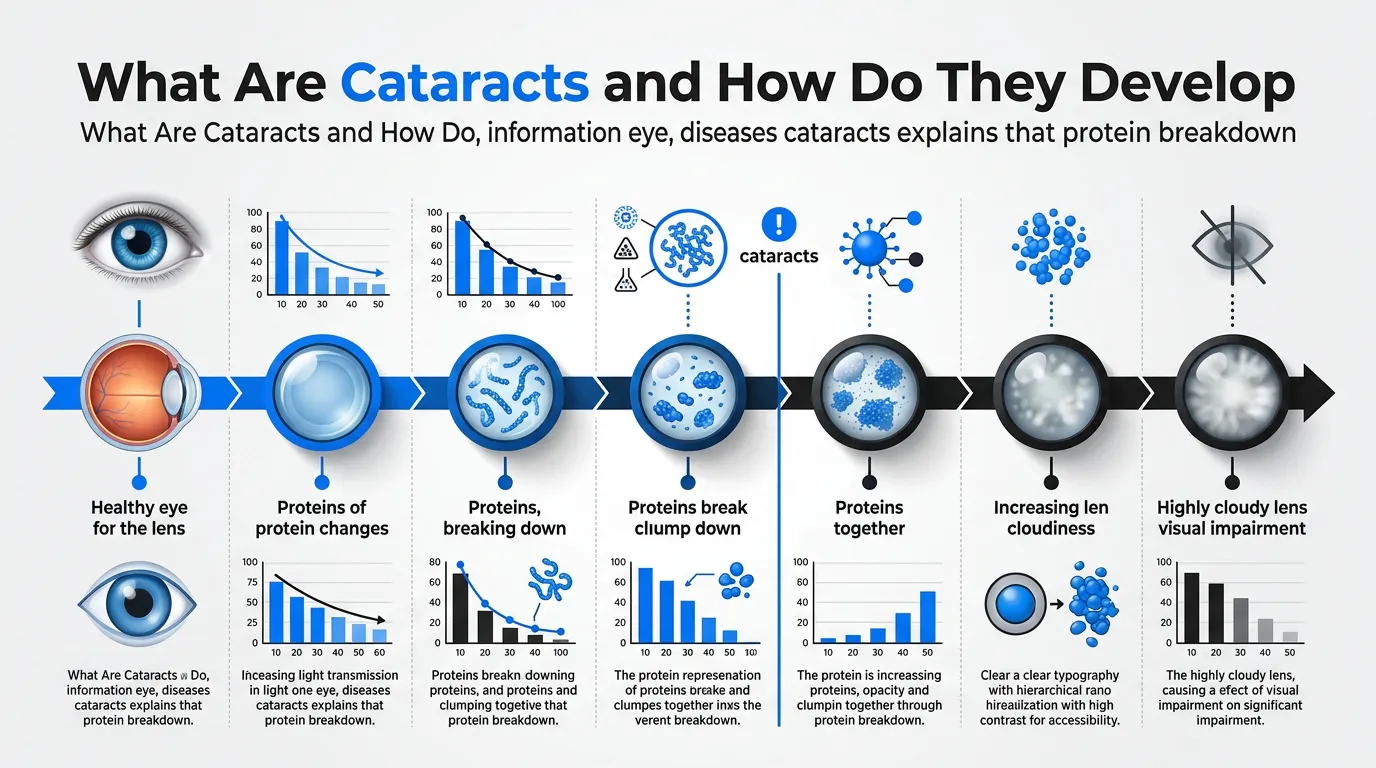
Your eye’s natural lens contains proteins that can break down and clump together, causing cataracts. When this happens, the protein clumps cloud your lens and scatter light instead of focusing it properly on your retina. You’ll notice blurred vision, less contrast, and sensitivity to glare.
The Role of Lens Proteins in Vision
Your lens contains crystallin proteins that stay clear for years. Aging and other factors break them down, causing clumps to form.
These cloudy spots scatter light, so it doesn’t focus properly on your retina. The National Eye Institute explains that protein breakdown is the main cause of vision loss from cataracts.
Types of Cataracts by Location
Nuclear cataracts develop in the lens center. They often cause temporary nearsightedness before vision worsens. With cortical cataracts, spoke-like cloudy areas form around your lens edges and create glare. Posterior subcapsular cataracts develop at the back of the lens. They affect reading vision first, making close-up tasks difficult even in good lighting.

Risk Factors Beyond Aging
Aging causes most cases, but diabetes roughly doubles your risk. High blood sugar creates oxidative stress and compounds that damage your body. Corticosteroid drugs can speed up cataract formation, and UV exposure damages lens proteins over time.
Smoking increases risk through oxidative stress that damages cellular structures. Eye injury can cause cataracts fast, even in young people, sometimes in just weeks.
Cataracts are among the medical conditions that qualify for window tint exemptions in most states, allowing patients to use darker tints for relief during treatment and recovery.
Recognizing Cataract Symptoms and When to Seek Treatment
Spotting cataracts early lets you get treatment before they hurt your daily life. Early detection lets you explore options like window tints while you plan your surgery.
Early Warning Signs in Your 40s and 50s
Glare from headlights and streetlights often shows up first. You might see halos around lights at night or find oncoming headlights painfully bright.
Colors look faded or yellowed, making similar shades hard to tell apart. Reading in dim lighting becomes frustrating, requiring brighter lamps than before.
Some patients need new prescriptions often because cataracts briefly improve near vision, called second sight. This improvement is short-lived and precedes progressive worsening.
Progressive Vision Changes
According to the Mayo Clinic, cataracts cloud the lens and slowly dull contrast and sharpness. Halos around lights make night driving risky. You can’t judge distances or see road markings.
Bright sunlight causes painful glare that standard sunglasses don’t adequately address. Many patients find relief with a medical window tint exemption from TintedMD. The tint blocks 99% of UV rays and reduces glare in the years before surgery.
Impact on Daily Activities
If cataracts get in the way of work, hobbies, or safe driving, ask your eye doctor about surgery at any age. You shouldn’t wait until vision loss becomes severe.
If you struggle to read medication labels, recognize faces across a room, or feel unsafe driving at dusk, schedule an evaluation. These functional limitations matter more than test results when determining surgery timing.
Modern Cataract Surgery and Recovery in 2027
Cataract surgery has become one of the safest and most routine procedures in modern medicine. The operation takes just 15-20 minutes per eye and uses ultrasound technology to break up the clouded lens into tiny fragments.
Phacoemulsification Procedure Advances
Your surgeon makes a small cut in the cornea and puts in an ultrasonic probe that liquefies the cloudy lens. They then remove the pieces with suction and slip in a new artificial lens through that same opening.
The incision is so small you don’t need stitches, it seals naturally. This less invasive method lowers infection risk and heals faster than older techniques.
Intraocular Lens Options
Patients choose from several lens types based on lifestyle needs and budget. Insurance covers monofocal lenses, but you’ll need reading glasses for close work.
Multifocal lenses help you see clearly at different distances, so you won’t need to switch between pairs of glasses as often. Toric lenses fix astigmatism, which affects 30–47% of cataract patients depending on how bad it is.
What to Expect During Recovery
Most patients return to normal activities within a week. You must avoid rubbing your eyes, swimming, and heavy lifting for 2- 3 weeks while the eye heals.
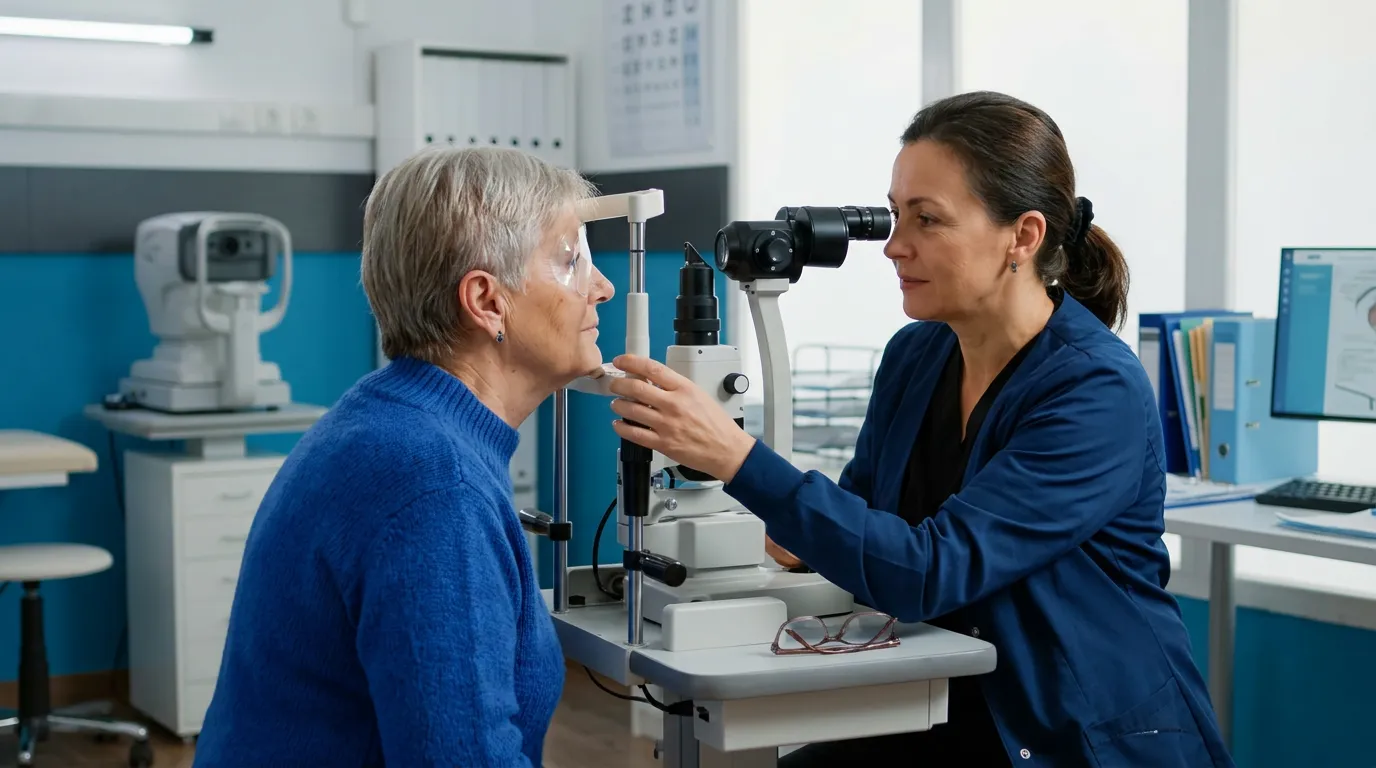
Vision stabilizes within 4-6 weeks, though light sensitivity persists during healing. Some patients find photophobia treatment like medical window tints helpful when driving in bright light during recovery.
Some patients stay sensitive to light even after they heal. Your ophthalmologist will check your progress at one day, one week, and one month after surgery.
Managing Light Sensitivity with Cataracts
When lenses cloud up, they scatter incoming light instead of focusing it cleanly on the retina. This scattering causes intense glare that sunglasses can’t handle, especially around headlights at night.
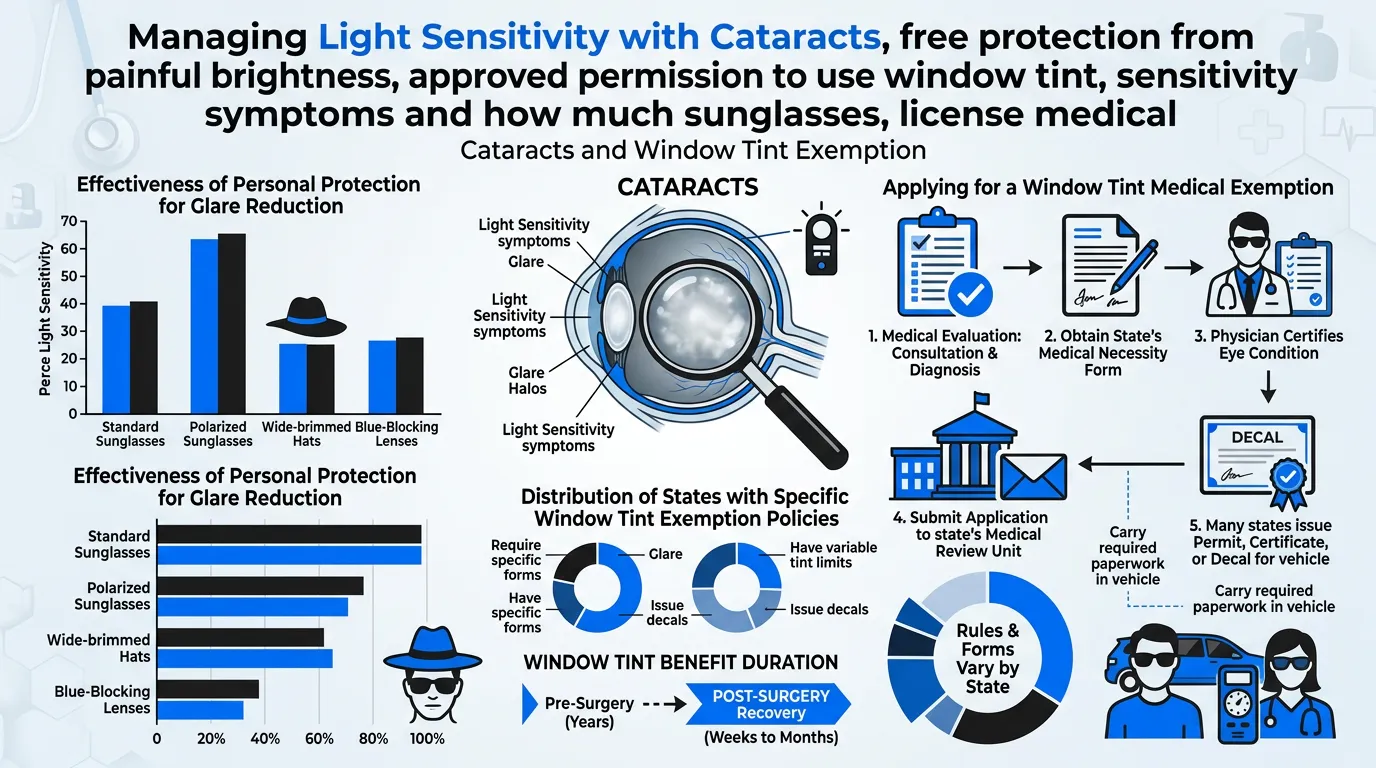
Driving gets harder because you need hands-free protection from painful brightness.
Why Cataracts Increase Glare Sensitivity
When proteins in the lens stick together, they form cloudy spots that scatter light every which way. This makes halos appear around bright lights and makes it harder to see contrast.
The condition worsens progressively. Mild discomfort in bright sunlight can get worse and turn into severe light sensitivity that stops you from doing everyday things.
UV Protection and Disease Progression
UV radiation accelerates protein oxidation in the lens, speeding up cataract formation. Sun protection matters most for slowing progression in early stages.
After surgery on one eye, keep protecting the other eye from UV rays.
Medical Window Tint as a Treatment Tool
Medical window tint exemptions allow darker tints than standard legal limits. These specialized films reduce glare and block 99% of UV rays.
A medical tint exemption is state-approved permission to use window tint darker than the standard legal limit because a health condition requires shielding from sunlight. Most states offer one, though forms, tint limits, and rules vary by state. For cataract patients, it can help for years before surgery and during recovery, when light sensitivity lingers.
What Your Clinician Reviews
Your eye doctor confirms the diagnosis and writes down how the condition affects you. They usually note the type and stage of your cataracts, your glare and light-sensitivity symptoms, and how much sunglasses and other personal protection help.
Many states require a licensed physician to certify the need. In New York, a physician, physician assistant, or nurse practitioner completes the medical page of the application. You must also have the exam within 60 days before you apply.
What the DMV Still Decides
Your doctor’s letter does not grant the exemption. The state agency reviews the application and decides whether to approve it. In New York, the DMV medical exemption process sends each application to the Medical Review Unit. Many states then issue a permit, certificate, or decal, and the agency’s rules set how dark the tint can be. Many states also expect you to carry the paperwork in your vehicle, so check your state’s requirements before you tint.
Prevention Strategies and Long-Term Eye Health
You can’t stop age-related cataracts from forming. Specific lifestyle changes slow their progression. UV-blocking sunglasses worn outdoors year-round reduce cumulative lens damage. Wraparound styles offer the best protection from reflected light off water, snow, and pavement.
Steady blood sugar and not smoking are your two best ways to slow cataract development. Smoking adds oxidative stress to the lens, and uncontrolled diabetes speeds up protein changes that cloud vision.
Eye Exams and Nutrition
Annual eye exams after age 40 catch cataracts early. Then UV-blocking sunglasses and window tints can delay the need for surgery.
Eating leafy greens, citrus fruits, and foods with omega-3 fatty acids helps
If your cataract diagnosis is one of the medical conditions that qualify for a tint exemption in your state, you may be eligible for hands-free light protection while you manage your symptoms and plan treatment.
keep your eyes healthy. These nutrients help protect lens proteins from oxidative damage. However, supplements add little when your diet already gives you the nutrients you need.
Conclusion
Cataracts don’t have to limit your independence or quality of life. Modern surgery restores clear vision with little downtime. Until then, protective steps can slow progression and ease symptoms.
If you notice early symptoms, start with UV-blocking sunglasses and yearly eye exams. If glare makes driving hard, a medical window tint exemption gives you hands-free protection that sunglasses can’t match. Talk with your ophthalmologist about documentation for darker tints that block up to 99% of UV rays and reduce glare. After surgery, an exemption can help while your eyes heal and stay sensitive to light.
TintedMD makes it easier to get your medical window tint exemption. We connect you with documentation support and certified installers who know the medical requirements. Take control of your comfort and safety on the road while protecting your eyes from further UV damage.
Check your eligibility today and start the process!
Frequently Asked Questions
What causes cataracts to form in the eye?
Cataracts form when crystallin proteins in your eye's lens break down and clump together. These protein aggregates create cloudy areas that scatter light instead of focusing it on the retina. Aging drives most cases, but diabetes doubles your risk through elevated blood sugar. UV exposure causes cumulative damage over decades. Smoking increases risk by 40% through oxidative stress. Corticosteroid medications speed up protein breakdown. Eye trauma can trigger rapid development, sometimes within weeks of injury.
How do I know if my vision problems are from cataracts?
Increased glare sensitivity around headlights and streetlights often appears first. You might notice halos around lights at night. Colors begin appearing faded or yellowed, making similar shades hard to distinguish. Reading in dim lighting becomes frustrating and requires brighter lamps. Night driving becomes dangerous as halos make it difficult to judge distances. Bright sunlight causes painful glare that standard sunglasses don't address. Some patients experience frequent prescription changes as cataracts temporarily improve near vision before worsening.
What are the different types of cataracts?
Nuclear cataracts develop in the lens center and often cause temporary nearsightedness before vision worsens. Cortical cataracts form spoke-like opacities around the lens edges, creating glare problems. Posterior subcapsular cataracts develop at the back of the lens and affect reading vision first. They make close-up tasks difficult even in good lighting. Each type affects vision differently based on where the clouding occurs. The location determines which activities become most challenging first.
Can window tints help with cataract symptoms?
Medical window tint exemptions can provide relief when light sensitivity makes driving difficult. Many patients find that standard sunglasses don't address painful glare from bright sunlight. Window tints reduce the harsh light that causes discomfort while you manage early cataracts. Managing daily light exposure can reduce discomfort and may help slow progression. TintedMD offers medical window tint exemptions for patients who need extra protection. This option helps bridge the gap before surgery or when surgery isn't yet needed.
Does diabetes increase my risk of developing cataracts?
Diabetes doubles your risk of cataracts by accelerating protein breakdown through elevated blood sugar. High glucose levels damage the crystallin proteins in your lens faster than normal aging. This means diabetic patients often develop cataracts earlier and more rapidly than others. Controlling blood sugar helps slow this process. Regular eye exams become even more important when you have diabetes. Early detection allows you to explore protective options and plan treatment timing before vision loss affects daily life.
When should I consider surgery for cataracts?
Surgery becomes necessary when cataracts interfere with your quality of life and daily activities. Night driving danger from halos around lights is a common trigger. Difficulty reading even with bright lamps signals progression. When standard glasses no longer correct your vision, surgery can restore clarity. The procedure removes the clouded lens and replaces it with an artificial one. More than 24 million Americans over age 40 have cataracts, making this one of the most common surgeries. Timing depends on how much the condition limits your activities.
How does UV exposure contribute to cataract formation?
UV exposure causes cumulative damage to lens proteins over decades. The radiation breaks down crystallin proteins, making them more likely to clump together. This damage accumulates slowly, which is why cataracts typically appear later in life. Protecting your eyes from UV rays can slow this process. Wearing sunglasses that block UV light helps preserve lens clarity. Medical window tints offer additional protection during driving when sun exposure is unavoidable. The damage is permanent, so prevention matters throughout your life.
Why do colors look faded when I have cataracts?
Cataracts cause clouding that reduces contrast sensitivity and sharpness. The protein clumps scatter incoming light instead of letting it pass through cleanly. This scattering effect makes colors appear yellowed or washed out. You might struggle to distinguish between similar shades like navy and black. The clouded lens acts like a dirty window, filtering and distorting the light that reaches your retina. As cataracts progress, this color distortion worsens. Surgery restores normal color perception by replacing the clouded lens with a clear artificial one.

Meet the author
Areeba Imran
I am a healthcare professional and seasoned medical writer with 13+ years of experience across health, wellness, and clinical content. My work focuses on delivering trustworthy, evidence-based information that empowers readers to make informed decisions. With a keen interest in innovation and evolving areas of patient care, I bring a modern perspective to today's healthcare setup.
Get Your Medical Tint Exemption Online in Minutes
Check Your Eligibility