Can You Use a Tint Exemption on a Rental Car?
 by Anam Moin
Last updated:
Medically reviewed by:
Dr. Matthew Reynolds, MD


Can you use a tint exemption on a rental car? Yes, but only if your exemption follows you as a driver, not a specific vehicle. Your medical certificate travels with you across all vehicles. Rental companies and state officers still decide what tint they accept on each car.
This guide covers how medical tint exemptions work across different states. It explains what documentation you need when driving a rental vehicle. It also shows how rental companies handle tint requests. You’ll also learn what to do during a traffic stop. And you’ll find practical alternatives for when a pre-tinted rental isn’t available.
How Medical Tint Exemptions Work: Vehicle vs. Driver Authorization
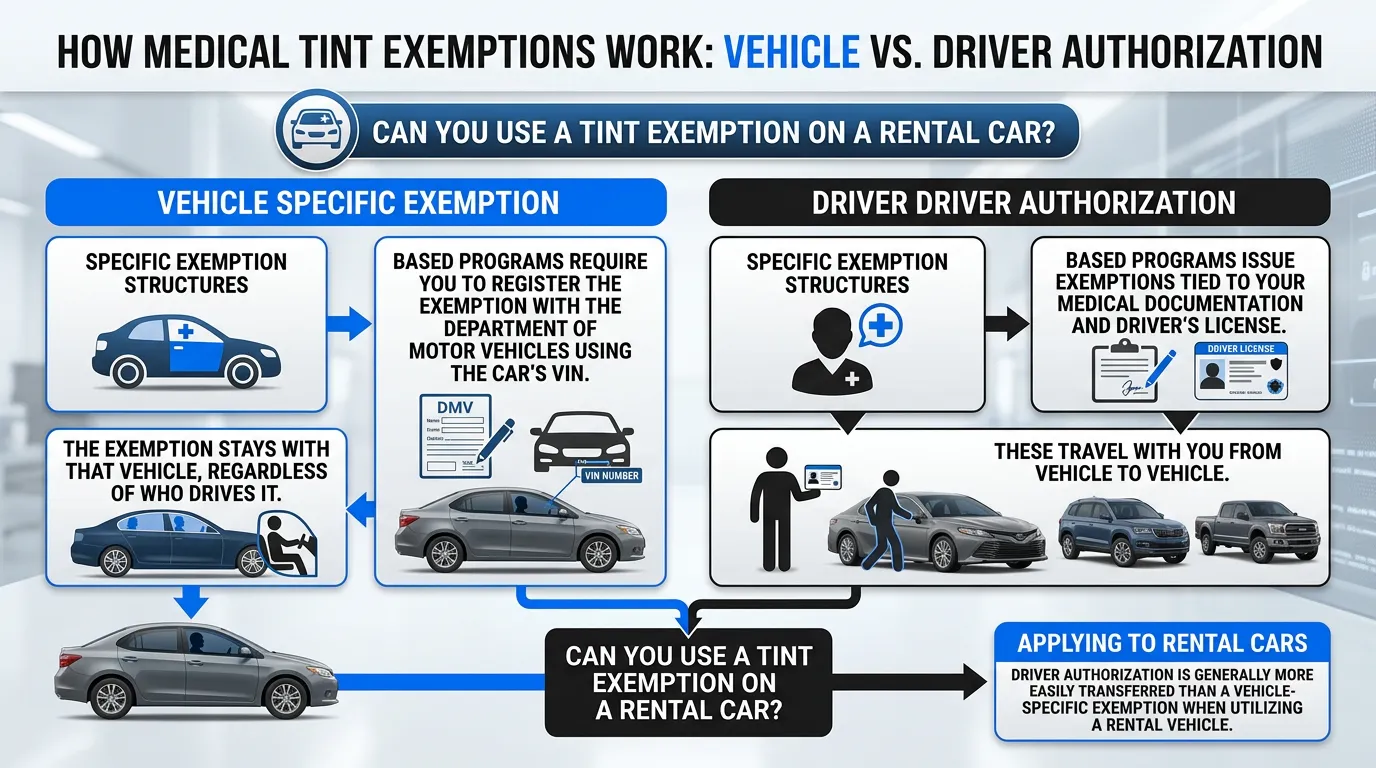
Medical tint exemptions operate differently depending on your state. Some states tie the exemption to a specific vehicle. Others tie it to the driver’s medical condition. This distinction affects whether you can use a tint exemption on a rental car.
State-Specific Exemption Structures
States follow two main models when issuing tint exemptions. Vehicle-based programs require you to register the exemption with the Department of Motor Vehicles using the car’s VIN. The exemption stays with that vehicle, regardless of who drives it.
Driver-based programs issue exemptions tied to your medical documentation and driver’s license. These travel with you from vehicle to vehicle. Understanding how to get a medical tint exemption in your state determines which model applies to you.
Vehicle Registration Requirements
Vehicle-specific exemptions require registration paperwork listing the car’s VIN, make, and model. You receive a certificate or sticker to display in the registered vehicle. If you sell the car or lease a new one, you must reapply and pay additional fees.
This system creates problems for rental car users.
The exemption doesn’t transfer to a temporary vehicle you don’t own. Some states let one exemption cover several vehicles, but you must register each VIN in advance.
An Alabama tint exemption, for example, is tied to your vehicle’s registration. It doesn’t transfer to rentals.
Driver-Based Exemption Models
Driver-portable exemptions work like a medical placard. You carry documentation for qualifying medical conditions that require window tint protection. This certificate lets you drive any vehicle with suitable tint, including rentals.
New York and Illinois use driver-based systems. You show your medical exemption certificate during traffic stops, whichever vehicle you’re driving. These exemptions usually excuse a violation, though. They don’t authorize you to install aftermarket tint on a car you don’t own.
Can You Use a Tint Exemption on a Rental Car: Legal Status
Whether a tint exemption is legal in a rental car depends on how your state runs its exemption program.
Some states issue exemptions that follow the driver. Others tie the exemption to a specific vehicle identification number (VIN). That difference decides whether your exemption protects you in a rental car.
When Your Exemption Covers Rental Car Tint
Driver-portable exemptions protect you regardless of which vehicle you operate. Your state may issue an exemption certificate or license endorsement based on your medical condition. If it does, you can legally drive any vehicle with tint that meets the exemption specifications.
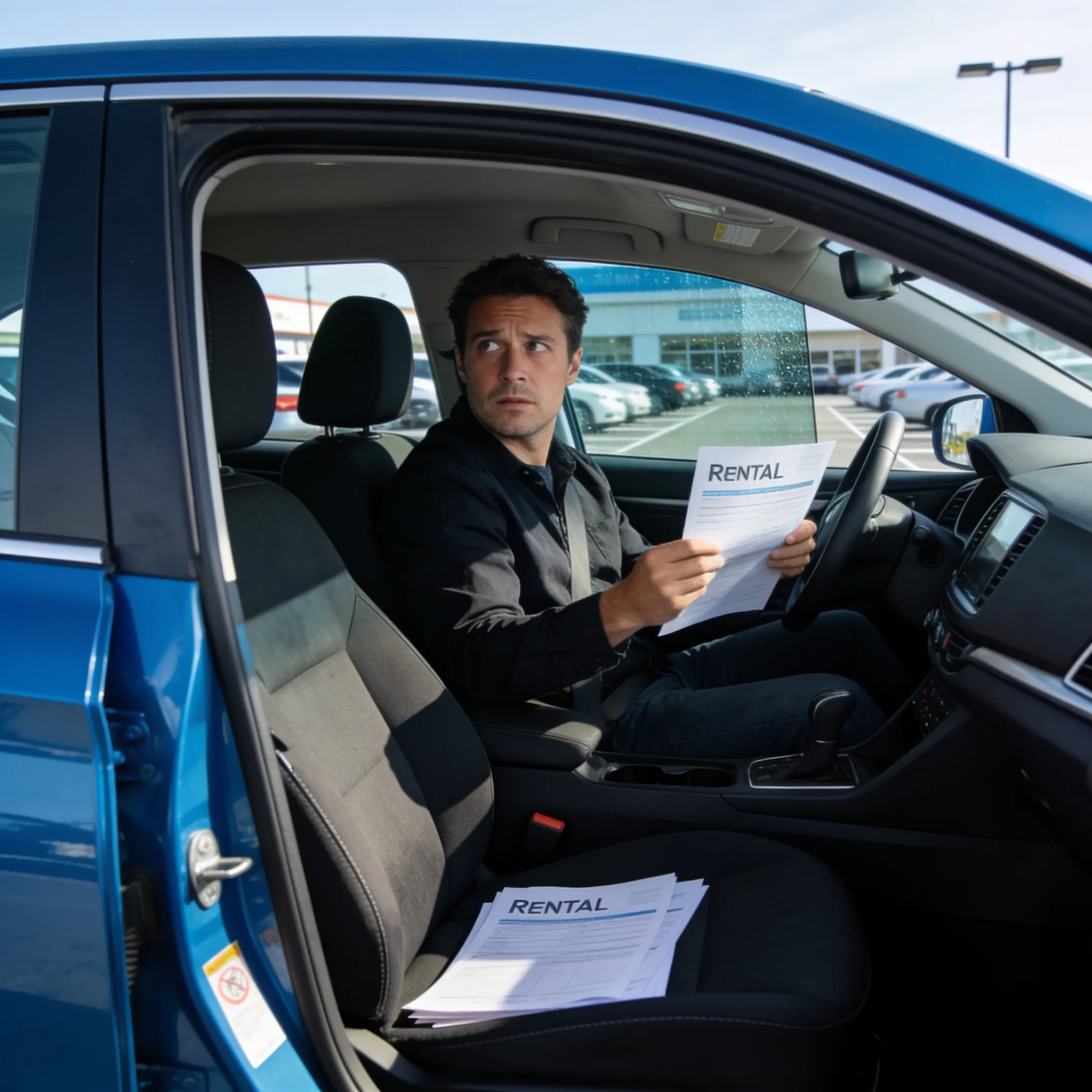
Most rental cars have factory tint that meets standard legal limits, not medical exemption levels. A rental with darker tint than those limits can cause trouble. You can’t add aftermarket tint to a rental, because rental agreements prohibit modifications. The car belongs to the rental company, and altering it breaks your contract.
Georgia’s medical exemption requirements say you must carry your certificate whenever you drive a vehicle with medical tint. TintedMD recommends keeping a digital copy and a paper copy of your exemption documents when you travel.
Documentation Law Enforcement Accepts
During a traffic stop, officers expect to see your medical exemption certificate, prescription letter, or license endorsement. The document must clearly state your medical condition, the tint specifications allowed, and the issuing authority.
In a rental car, you also need the rental agreement showing you’re an authorized driver. Together, the two documents prove you have the right to the exemption and permission to drive the vehicle.
Check your state-specific tint laws, because documentation requirements vary by jurisdiction.
Interstate Travel Complications
Crossing state lines with a rental car creates reciprocity challenges. Most states don’t recognize out-of-state medical exemptions, even when the exemption follows the driver instead of the vehicle.
If you rent a car in one state and drive it into another, you risk a citation in any state that doesn’t honor your home state’s exemption. Courts have treated exemption portability inconsistently. Some judges dismiss citations when drivers show valid medical documentation. Others enforce the destination state’s laws, no matter where the exemption was issued. This legal gray area leaves drivers open to enforcement discretion.
Rental Company Policies on Window Tint Modifications
Most major rental car companies ban aftermarket modifications, including window tint installation. Enterprise, Hertz, Avis, Budget, and National all follow this policy. A medical tint exemption doesn’t change it.
The rental agreement you sign forbids any changes to the vehicle. Adding window tint breaks that contract, even if your state exemption would allow darker tint on your own car.
Major Rental Company Restrictions
Enterprise and Hertz both say in their rental terms that customers can’t modify vehicles in any way. Budget and Avis use similar language. They bar installations, attachments, or any change to the car’s original condition.
Rental companies run standardized fleets that must meet the laws of many states. Tint that’s legal under your exemption in one state might break the law where the company registers the car. It might also break the law where the car travels next.
Reading about how exemptions apply to new vehicles explains why rental companies can’t allow individual modifications.
Liability and Insurance Concerns
If you modify a rental car and have an accident, the rental company’s insurance may deny coverage. You would then be personally liable for damage to the rental, damage to other vehicles, and any injuries.
Breaking the rental agreement also exposes you to breach of contract claims. The company can bill you to remove the tint and restore the car to its original condition. It can also charge you for rental revenue lost during repairs.
For more detail, see what to show police.
At TintedMD, we help drivers understand these restrictions and find compliant alternatives before they travel. Removal fees typically run $100 to $300. Dealerships may add penalties that total up to $1,300. You may also owe legal fees if the rental company enforces the contract.
Traffic Stops: What to Do When Driving a Rental Car
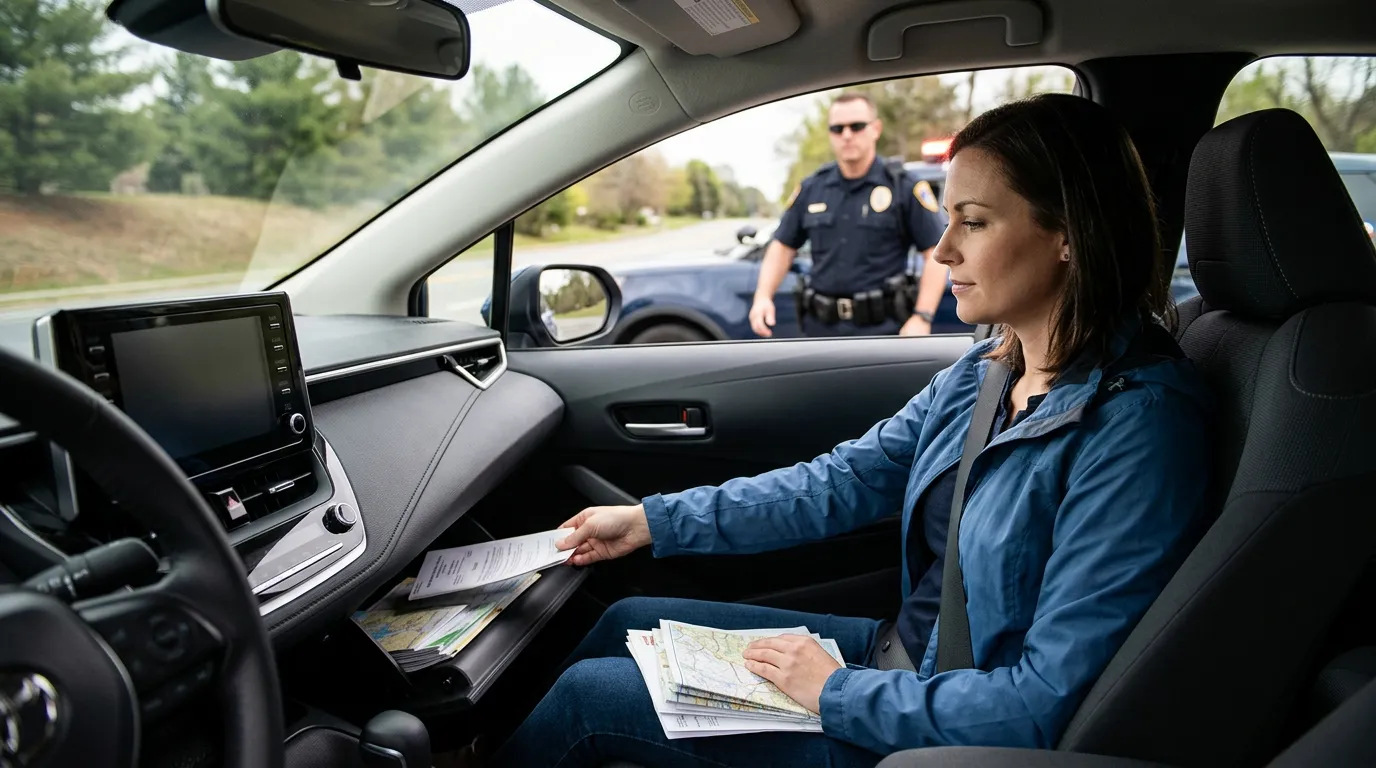
Getting pulled over in a rental car with tinted windows can be stressful, even with a medical exemption. If you know what to carry and what to tell the officer, the stop goes better and your rights stay protected.
Documentation to Carry
Always keep your medical exemption certificate in the vehicle, whether you drive your own car or a rental. It proves your medical need for window tint protection.
Also carry the rental agreement that shows you’re an authorized driver. Virginia’s medical authorization program ties exemptions to the driver, not a specific vehicle. That gives you more flexibility with rental cars.
Keep a copy of your doctor’s letter explaining your light-sensitive condition. It isn’t always required. Still, it helps clear up questions about your medical situation.
Your driver’s license and insurance information complete the essential documents. Some states note medical exemptions directly on the license, which reinforces your authorization.
Explaining Your Medical Condition to Officers
When an officer approaches, stay calm and polite. Hand over your license, rental agreement, and exemption certificate together, without being asked.
Use clear, direct language: “I have a medical condition that requires window tint for UV protection. Here’s my exemption certificate and rental agreement.”
Skip long medical explanations unless the officer asks for details. Most officers recognize valid exemption certificates and understand the process.
If the rental came with factory tint that exceeds local limits, tell the officer you didn’t modify the car. Virginia’s tinting statute and similar state laws typically don’t hold drivers responsible for tint installed by the manufacturer. Rental companies should provide compliant vehicles.
Can you be cited for tint violations in an unmodified rental? Usually not, since you didn’t install the tint. Still, having your exemption documents ready prevents misunderstandings and shows you take your medical needs seriously.
Requesting Pre-Tinted Rental Vehicles for Medical Needs
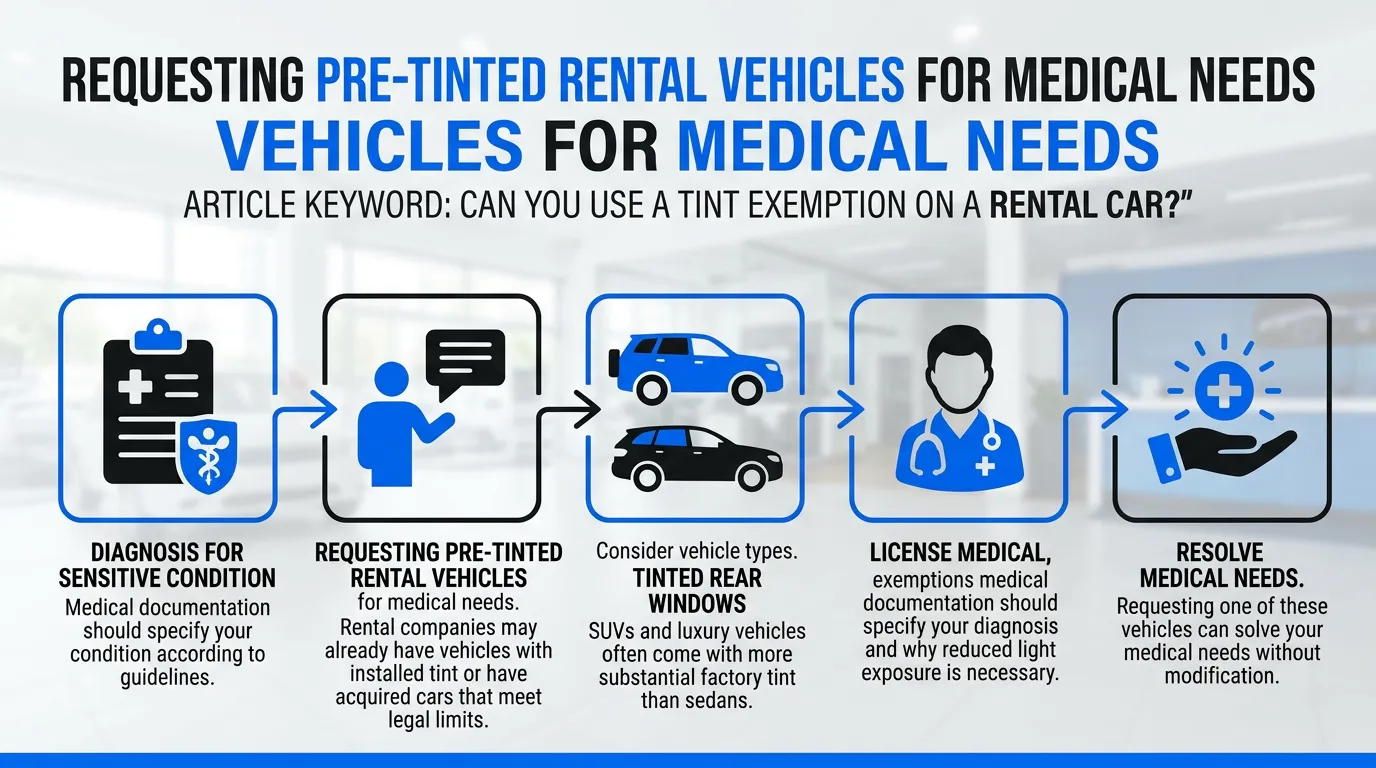
Many rental companies keep cars with factory-installed tint that already meets legal limits. Requesting one of these vehicles can solve your medical needs without modification.
How to Request Accommodations
Contact the rental company at least 72 hours before your reservation. Speak directly with a manager and explain that your medical condition requires reduced light exposure.
Send a letter from your physician describing your light-sensitive condition. The New York DMV exemption guidelines say medical documentation should state your diagnosis and explain why you need reduced light exposure.
Ask if they have vehicles with factory tint or darker-tinted rear windows. SUVs and luxury vehicles often come with more substantial factory tint than sedans.
Request written confirmation of the accommodation. This protects you if the promised vehicle is unavailable at pickup.
Success Rates and Realistic Expectations
Enterprise and Hertz get the best feedback for handling medical requests, though availability varies by location. Smaller airport locations have limited inventory and fewer options.
No rental company can guarantee a specific vehicle with adequate tint. They can note your request and try to meet it, but fleet availability changes daily.
Success rates improve at larger metro locations where companies maintain diverse fleets. Expect better results in cities like Los Angeles or Miami than in rural areas.
Have a backup plan. Bring clip-on window shades or medical-grade sunglasses in case the rental car lacks adequate tint protection.
Alternative Solutions for Light-Sensitive Drivers
Removable window film offers a practical option for rental cars. These static-cling products attach without adhesive and peel off cleanly, leaving no residue. Most states allow them if the film meets legal tint limits, but verify local regulations before you apply any.
Medical-grade sunglasses and UV-blocking eyewear protect you right away, with no changes to the vehicle. Wraparound styles block light from all angles. Polarized lenses cut glare from windshields and side windows. Some prescription options include photochromic lenses that darken in bright light.
Ride-sharing services like Uber and Lyft let you skip rental cars entirely. You can request a driver in advance and explain your light sensitivity, though vehicle tint varies by driver.
Long-Term Travel Planning
Planning trips around vehicle access takes advance coordination. Contact rental companies 2-3 weeks ahead to request a pre-tinted vehicle or ask about ADA accommodations.
Compare costs before you decide. A week of ride-sharing may cost $300-500, versus $200-300 for a rental car. Ride-sharing removes modification worries and the risk of violations.
Conclusion
Can you use a tint exemption on a rental car? It depends on whether your exemption follows you as a driver or stays with a specific vehicle.
Most exemptions protect you from citations when you drive a rental that already has tint. They rarely let you modify a car you don’t own. Rental agreements prohibit alterations, and companies can charge you for any tint you install.
Your best protection starts with a proper medical exemption for your personal vehicle. Learn how your state’s program works, too. Carry your exemption certificate and rental agreement whenever you drive. Request a pre-tinted vehicle when you book, and give the rental company advance notice of your medical needs. For short trips, removable window film and UV-blocking eyewear are practical alternatives. They won’t risk your deposit or break company policy.
TintedMD helps you secure the medical tint exemption you need. You get state-specific documentation and professional medical support. You’re prepared whether you’re driving your own car or facing a rental situation.
Frequently Asked Questions
Can you use a tint exemption on a rental car?
A medical tint exemption is generally issued to the qualifying driver, but that does not automatically mean you can modify a rental vehicle. The rental company controls what changes can be made to its vehicle, and state tint laws still apply while you are driving it. Check both before relying on your exemption.
Does the certificate transfer to any car?
Keep your medical tint certificate with you when driving, especially if your state requires you to present it during a traffic stop or inspection. However, the certificate does not automatically give you permission to install aftermarket tint on every vehicle you use, particularly a rental car owned by someone else.
Do I need a new exemption for a rental?
Usually, you do not need a separate medical evaluation simply because you are driving a rental. The medical certificate documents your qualifying need rather than ownership of the vehicle. However, rental-company policies and state-specific tint requirements can differ, so confirm the rules before picking up or modifying the vehicle.
What if the rental already has factory tint?
Factory-installed tint is different from a medical tint exemption. A medical certificate may allow different tint limits under applicable state law, while factory glass still has to meet the legal requirements for that vehicle. If you are stopped, law enforcement may review the vehicle's tint level as well as any exemption documentation you carry.
Can TintedMD tint the rental?
No. TintedMD provides the medical evaluation and, when approved, the supporting tint-exemption certificate. It does not install window film or modify vehicles. Any tint installation must be handled separately by an appropriate tint shop and must also be permitted by the vehicle owner or rental company.
Which states can I use the exemption in?
Tint-exemption rules are set by individual states, so requirements can change when you cross state lines. Carry your home-state documentation with you, but follow the tint laws of the state where you are driving. A certificate accepted in your home state does not necessarily override another state's vehicle or enforcement rules.
How fast is the certificate?
Start by completing the online medical evaluation. If the clinician determines that you qualify for a tint exemption, the certificate is usually delivered the same day after approval. Timing can vary depending on the evaluation and whether additional information is needed.
Where do I start?
Start the online tint-exemption evaluation at [https://patient.tintedmd.com/tinted-window/welcome](https://patient.tintedmd.com/tinted-window/welcome). You will provide the required information, complete the clinician review, and receive your documentation if your evaluation supports an exemption.

Meet the author
Anam Moin
I’m Anam Moin, a health-focused writer at TintedMD. I write about medical window tint exemptions, light-sensitive conditions, and state tint regulations, bringing together health and regulatory information in a reader-friendly way.
Get Your Medical Tint Exemption Online in Minutes
Check Your Eligibility