Uveitis and Window Tint Exemption
 by Nida Hammad
Last updated:
Medically reviewed by:
Dr. Matthew Reynolds, MD


Uveitis and window tint exemption connect through a medical reality. This eye condition causes inflammation and severe sensitivity to light. Standard car tints don’t block enough light for safe driving. When the uvea becomes inflamed, patients feel pain from even filtered sunlight. They may squint and temporarily lose vision. Medical window tint exemptions allow darker tints than state law usually permits. These darker tints reduce light enough to prevent flares. This protects vision during daily activities.
This guide explains how uveitis disrupts normal light processing at the cellular level. It reviews the clinical evidence linking UV exposure to disease progression. You’ll also learn the medical justification for therapeutic window tints. You’ll learn which uveitis subtypes qualify for exemptions. The guide shows how to work with your ophthalmologist through the application process. You’ll also discover which complementary strategies maximize light protection while managing this sight-threatening condition.
The Pathophysiology of Uveitis and Window Tint Exemption
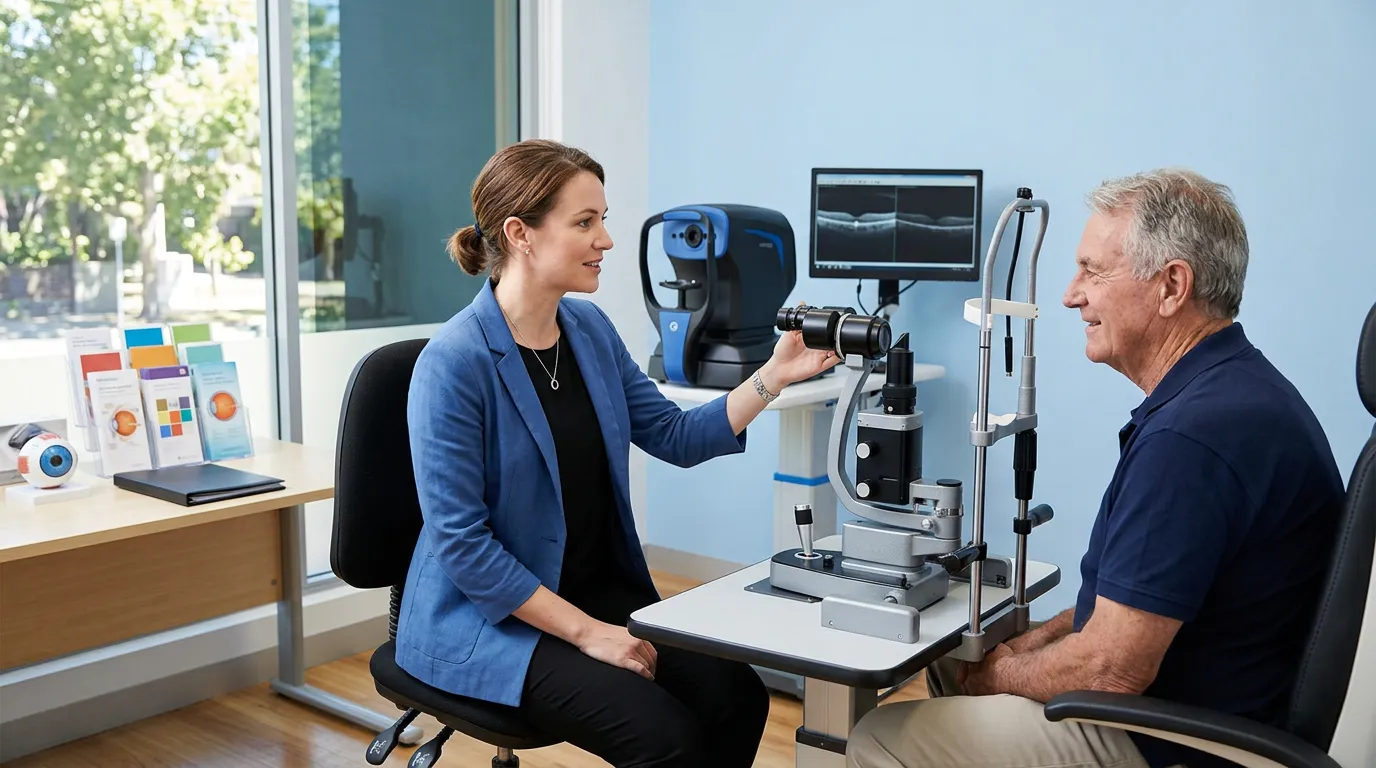
Uveitis disturbs the eye’s ability to process light at the cellular level. The condition sets off a chain of inflammation that makes ordinary light painful. Knowing how these processes work helps explain why standard window tints often fail to bring relief. It very important to know about medical conditions that qualify for Tint exemption.
Inflammatory Mechanisms in the Uveal Tract
The uveal tract has three connected parts: the iris, ciliary body, and choroid. When inflammation hits these tissues, immune cells release chemicals called cytokines and prostaglandins. These chemicals flood the front of the eye. Inflammation also makes the eye’s pain receptors more sensitive. Nerves that normally handle bright light become overactive.
Clinical guidance shows this extra sensitivity can last even after the visible swelling goes away. The iris swells and cannot shrink properly. This lets too much light reach the retina, which makes discomfort worse.
Photophobia as a Clinical Symptom
Photophobia in uveitis: light sensitivity is more than discomfort. Even normal indoor light can bring on sharp pain, tearing, and eyes that shut on their own. This happens because the trigeminal nerve gets triggered. Certain proteins that cause swelling send pain signals from the eye to the brain.
Many patients find relief with photophobia treatment that tackles both inflammation and light sensitivity. Light can set off inflammatory flares. Each flare creates a loop of pain and tissue damage. With every flare, the light-sensing cells become more sensitive, so later light is harder to handle.
Acute Versus Chronic Uveitis Presentations
Anterior uveitis inflames the iris and produces severe light sensitivity. Patients typically seek emergency care within hours of symptom onset.
Posterior uveitis affects the retina and choroid in distinct ways. Light sensitivity can develop over time as inflammation spreads or damages photoreceptors.
Chronic uveitis patients experience ongoing light sensitivity even when not actively inflamed. Structural changes to the uveal tract and retina affect light processing long-term. These patients require ongoing light protection beyond active flare periods.
Clinical Evidence: Ultraviolet Radiation and Uveitis Progression
Research shows that ultraviolet radiation worsens eye inflammation in uveitis patients. U-V exposure harms inflamed eye tissue. This is why many ophthalmologists recommend strong light protection for these patients.
UV-Induced Inflammatory Responses
UVA and UVB light can trigger cytokine release. This wakes up immune cells in eye tissue that is already inflamed. When UV rays reach your eye, they set off inflammatory chemicals. Those chemicals make the existing inflammation worse.
Medical research on window tint provides more information on this. Light exposure then ramps up the immune response, which means more pain and tissue damage. The inflamed uveal tract becomes very sensitive to light. Healthy eyes handle that same light just fine.
Wavelength-Specific Damage Patterns
Blue light has wavelengths between 400 and 500 nanometers. It penetrates deeper into the eye than other visible light. In uveitis patients, these wavelengths trigger stronger light sensitivity. This causes pain even in moderately bright rooms.
The combination of UV and blue light creates compounding effects. While UV damages surface structures, blue light reaches the retina and choroid, affecting patients with posterior and intermediate uveitis.
Research on Light Reduction Interventions
Clinical trials show that cutting light exposure makes uveitis flares less frequent and less severe. Patients who use UV protection report fewer inflammation episodes. They also feel less pain in daily life. Eye doctors now include light protection in standard uveitis care. TintedMD offers darker window tints. They block harmful light and still let you see well enough to drive safely.
Medical Window Tint Exemptions: Therapeutic Justification for Uveitis
Uveitis patients face a unique challenge when driving. Standard light protection often fails to address the severe photophobia this inflammatory eye condition creates.
Standard Tint Limitations for Medical Conditions
The Texas Department of Public Safety sets the legal window tint standard at 70% visible light transmission. This allows most light through. For drivers with uveitis-related light sensitivity, this amount is too much.
The standard was made for general safety, not for medical needs. Someone with active uveal inflammation needs more blocking to avoid pain or flare-ups.
Darker Tint Specifications for Photophobia
Medical exemptions authorize 20-35% VLT tints that block 65-80% of visible light. These darker specifications also filter nearly 100% of UV radiation, addressing both symptom relief and disease management needs.
Research shows that darker window tints reduce triggers that cause light sensitivity and improve vision while driving. TintedMD helps patients get medical-grade tints by handling paperwork and meeting state rules.
Documentation Requirements from Ophthalmologists
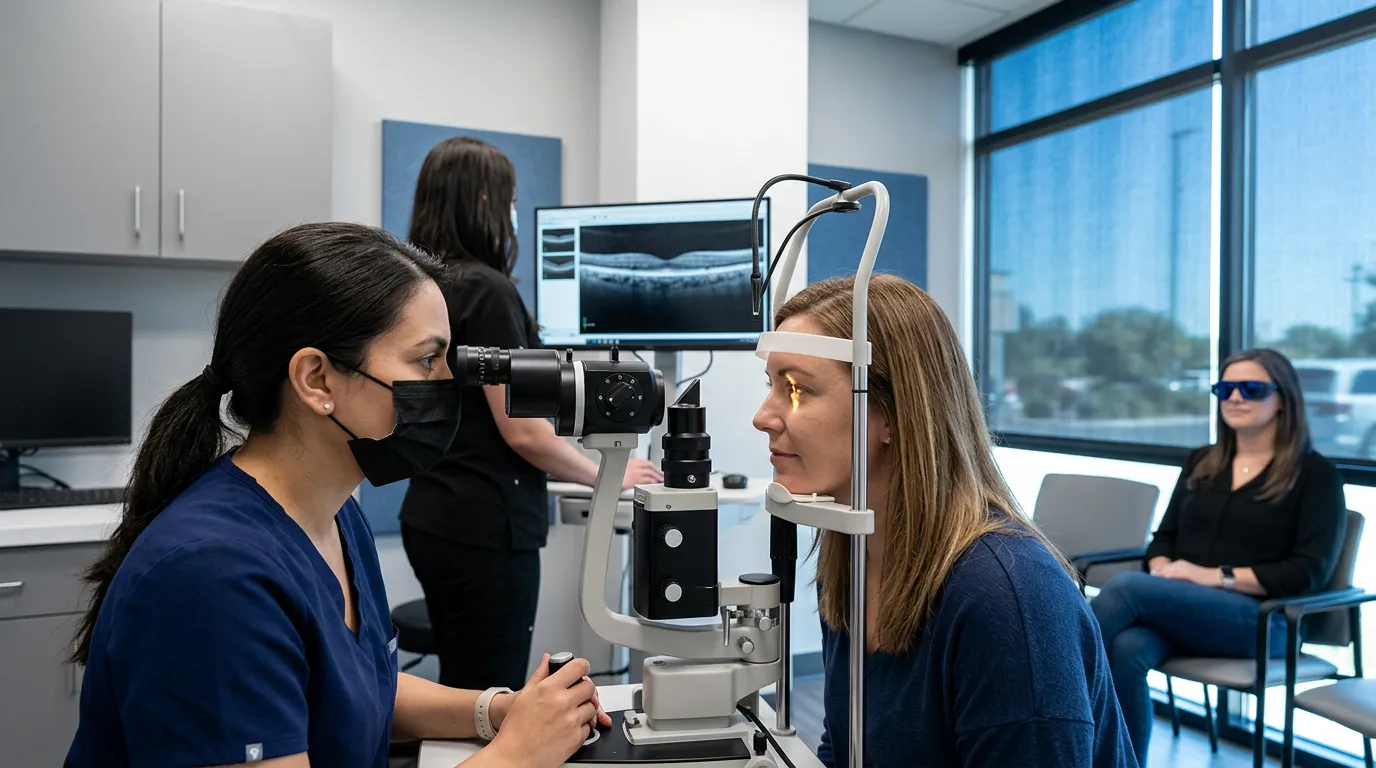
Ophthalmologists must document three things. First, the uveitis diagnosis. Second, the severity of photophobia. Third, how light exposure affects driving. The letter should include slit-lamp exam findings and explain why standard tints do not work.
Most states require renewal based on disease activity and treatment response. Chronic uveitis cases may qualify for longer exemptions. Acute recurrent cases need regular review to confirm the medical need continues.
Qualifying Uveitis Subtypes and Severity Criteria
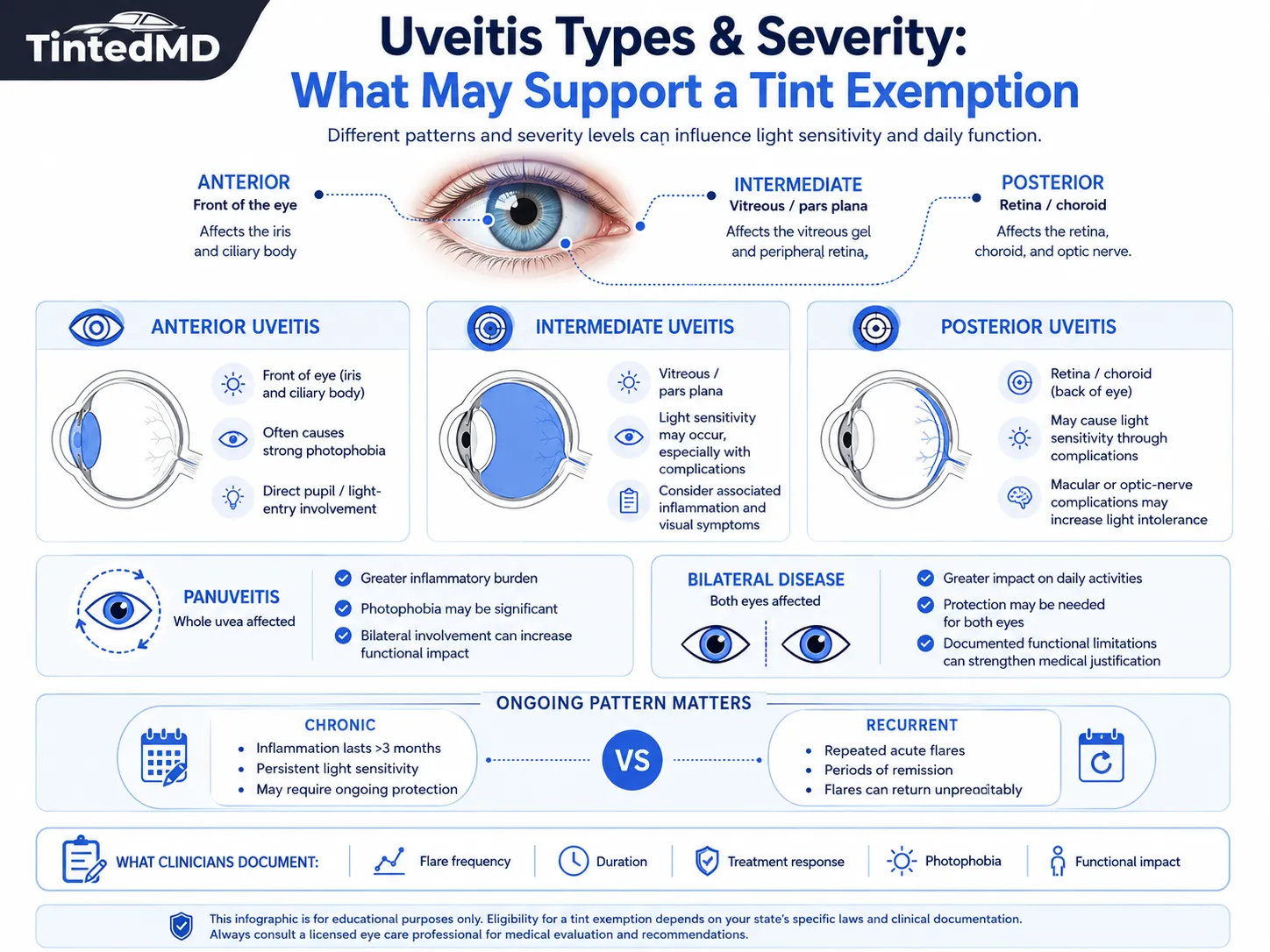
Uveitis affects people differently. Some experience severe light sensitivity and vision problems, while others have milder symptoms. To qualify for window tint exemptions, you need to know how the type of uveitis you have affects your light sensitivity and ability to drive.
Anterior, Intermediate, and Posterior Uveitis Classifications
Anterior uveitis, also called iritis, this condition that inflames the iris and ciliary body at the front of the eye. It causes the most severe photophobia. The inflammation directly affects the structures that control pupil size and light entry.
Patients with anterior uveitis often cannot tolerate normal daylight without significant pain. This makes it the most common form qualifying for medical window tint exemptions.
Intermediate uveitis affects the vitreous cavity and pars plana. Anterior disease causes more direct photophobia. But posterior uveitis creates complications like cystoid macular edema or vitreous opacities. These can create light sensitivity that justifies tint exemptions.
Posterior uveitis involves the retina and choroid. International researchers identified 25 subtypes of uveitis. Posterior disease may qualify based on complications affecting the macula or optic nerve. These complications increase light intolerance.
Panuveitis and Bilateral Disease Considerations
Panuveitis inflames the whole uvea at once. This clearly shows a need for medical treatment. Patients often feel sensitive to light because several eye structures are affected. When both eyes are affected, people lose more ability to function. If both eyes need protection, regular legal tints may not be enough to drive safely or handle daily life. Behçet’s disease, sarcoidosis, and ankylosing spondylitis often cause panuveitis. They can also inflame both eyes. These systemic diseases help support exemption applications. They show ongoing medical need beyond eye inflammation alone.
Chronic Versus Recurrent Patterns
Chronic uveitis lasting more than three months shows persistent inflammation requiring continuous light protection. This pattern demonstrates ongoing need rather than temporary accommodation.
Recurrent acute uveitis involves frequent flares separated by remission periods. Even between episodes, patients need protective measures because flares can occur unpredictably and light exposure may trigger inflammation.
Both patterns appear among qualifying medical conditions for window tint exemptions. They show ongoing light sensitivity that affects daily life. When supporting exemption applications for repeated flare-ups, ophthalmologists record how often flares happen, how long they last, and how patients respond to treatment.
The Application Process: From Diagnosis to Approved Exemption
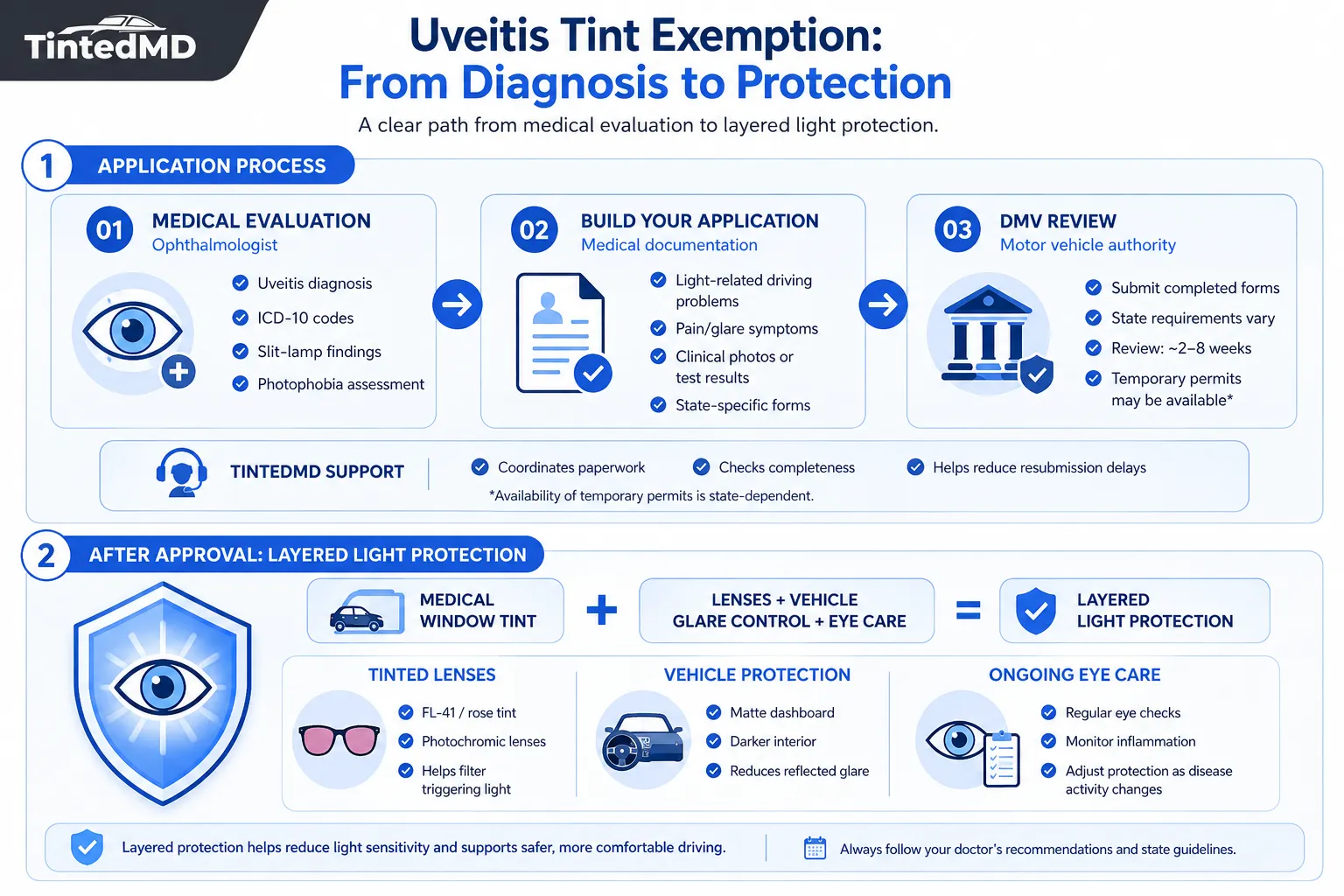
To get a medical window tint exemption for uveitis, you need to work with your ophthalmologist. First, gather clinical records. Then, fill out your state’s forms. Finally, send your application to your local motor vehicle authority.
Required Medical Documentation
Your eye doctor needs to write you a letter about your uveitis diagnosis. Please include the correct ICD-10 codes. Add the slit-lamp exam results and inflammation markers too. Also include a photophobia check that shows how sensitive your eyes are to light.
Add impact statements that explain how light affects your driving. Describe the specific problems you run into, like eye pain on daytime drives or trouble seeing in bright conditions. Clinical photos or test results that show active inflammation can also back up your statements.
State-Specific Application Procedures
You’ll need to complete forms with your doctor in most states. The New York DMV requires medical certification forms sent in with your exemption request.
Georgia offers standard medical exemption forms listing required documents. Since each state differs, check with your local motor vehicle department first to learn what you need.
Timeline and Approval Expectations
Processing takes 2-8 weeks on average. The exact timeline depends on your state’s DMV procedures and application volume. Many states offer temporary permits during the review period, letting you install your medical-grade tint sooner.
TintedMD coordinates all your paperwork and state-specific requirements for you. They verify your application is complete before submission, which helps prevent delays and resubmission requests.
See if you Qualify
Complementary Light Protection Strategies for Uveitis Management
Medical window tints deliver maximum protection when combined with other light management tools. This layered approach addresses photophobia from multiple angles, reducing symptom burden during both driving and daily activities.
Prescription Photochromic and Tinted Lenses
FL-41 tinted lenses Filter light wavelengths between 480-520nm. This range triggers photophobic responses in uveitis patients. Rose-tinted glasses work indoors and outdoors. They block blue-green light that medical window tints may miss.
Photochromic lenses darken when exposed to UV light. They provide variable protection as light conditions change. When combined with darker medical window tints, they create a controlled light environment. This reduces inflammatory triggers.
Vehicle Interior Modifications
Dashboard surfaces and light-colored upholstery reflect a lot of light, even with tinted windows. Matte-finish dashboard covers and darker interior materials reduce glare from reflected sunlight. Sun visors and side window shades provide extra protection during peak sunlight hours.
These modifications work with medical tints to block light from angles that window films cannot fully cover.
Coordinated Treatment Approaches
Your tint darkness should match your current immunosuppressive treatment plan. When you have active flares that need higher medication doses, darker tints within your state’s exemption rules may help control symptoms better. Research shows that vision problems affect how well you live day-to-day.
Regular eye checkups help make sure your tint level matches your disease activity, so you can adjust your eye protection as inflammation gets better or worse.
Conclusion
Uveitis and window tint exemption programs intersect at a clear medical need. They protect inflamed ocular tissue from light. This light causes both immediate pain and long-term disease progression. Uveitis patients find bright light painful due to eye inflammation. Medical exemptions allow darker tints to treat this real medical need.
If you have uveitis, chat with your eye doctor. Ask if a medical window tint exemption could help. This makes sense if bright light makes driving painful or unsafe. You’ll need medical records showing your diagnosis, inflammation signs, and how light sensitivity impacts your day-to-day life. Most states accept uveitis as a valid reason for the exemption. The application needs specific forms and a letter from your doctor that meets state rules.
TintedMD handles your paperwork and submissions. You get the legal protection you need to drive safely with your condition.
Frequently Asked Questions
What causes photophobia to become so severe in uveitis patients?
Inflammation in the uveal tract releases cytokines and prostaglandins that flood the eye. These inflammatory proteins make pain receptors hyperresponsive to light. The iris swells and can't constrict properly, letting too much light reach the retina. Nerve endings that normally tolerate bright light become oversensitive. This creates stabbing pain, tearing, and involuntary eye closure even in normal indoor lighting. The trigeminal nerve carries these pain signals directly to the brain's pain centers.
How does UV radiation worsen uveitis inflammation?
UV radiation directly increases intraocular inflammation in patients with uveitis. When UV light penetrates inflamed eye tissue, it triggers additional inflammatory responses. This creates a cycle where light exposure causes flares, and each flare makes the eye more sensitive to subsequent light. Research shows UV exposure can trigger inflammatory episodes even during remission periods. Darker window tints block more UV radiation than standard tints, helping prevent these inflammation cycles. This protection becomes necessary for safe driving and daily activities.
Why don't standard window tints provide enough relief for uveitis patients?
Standard legal tints typically allow 70-75% light transmission, which remains too bright for inflamed eyes. Uveitis creates such severe photophobia that even filtered sunlight triggers pain and vision loss. The iris loses its ability to constrict properly during inflammation, so normal tint levels can't compensate. Patients need darker tints that block more light and UV radiation. Medical exemptions allow tint darkness levels that match the severity of light sensitivity. This provides the therapeutic light reduction needed to prevent flares and protect vision.
Which types of uveitis qualify for window tint exemptions?
Both anterior and posterior uveitis can qualify for medical exemptions. Anterior uveitis causes direct iris inflammation with immediate, severe photophobia. Posterior uveitis affects the retina and choroid, creating gradual light sensitivity as inflammation spreads. Chronic uveitis patients experience persistent photophobia even during remission because of permanent structural changes. The qualifying factor is documented photophobia severe enough to impair safe driving. Your ophthalmologist must verify that standard tints don't provide adequate protection. The exemption application requires clinical documentation of your specific uveitis subtype and light sensitivity.
How do I start the medical window tint exemption application process?
Start by scheduling an appointment with your ophthalmologist to discuss your photophobia symptoms. Your doctor will document your uveitis diagnosis and assess how light affects your ability to drive safely. They'll need to complete a medical certification form specific to your state. This form verifies that you have a documented condition causing severe light sensitivity. Your ophthalmologist will specify the recommended tint darkness level based on your symptoms. Once you receive the signed medical form, submit it to your state's motor vehicle department with any required fees.
Can window tint exemptions prevent uveitis flares during driving?
Darker medical tints reduce UV exposure and visible light that can trigger inflammatory episodes. By blocking more radiation, therapeutic tints help prevent the cycle of light-induced inflammation. This protection is especially important during peak sunlight hours when UV levels are highest. However, tints work best as part of a complete treatment plan. You'll still need to follow your prescribed anti-inflammatory medications and attend regular ophthalmology appointments. The tint provides environmental protection while medications control the underlying inflammation. Together, these strategies reduce flare frequency and protect your vision.
Do chronic uveitis patients need permanent window tint exemptions?
Chronic uveitis often causes lasting changes to the uveal tract and retina. These structural alterations create permanent photophobia that persists even during remission. Patients with chronic forms typically need continuous light protection, not just during active flares. Your exemption duration depends on your state's regulations and your doctor's assessment. Some states issue exemptions valid for several years, while others require annual renewal. Your ophthalmologist will indicate whether your condition is temporary or permanent on the medical certification. This helps determine the appropriate exemption length for your situation.
What complementary strategies work with medical window tints for uveitis?
Wrap-around sunglasses provide additional protection when you're outside the vehicle. Photochromic lenses adjust darkness based on light levels throughout the day. Wide-brimmed hats block overhead sunlight before it reaches your eyes. Inside your vehicle, use sun visors and avoid driving during peak UV hours when possible. Some patients benefit from blue light filtering glasses for indoor environments. Anti-inflammatory eye drops prescribed by your ophthalmologist control the underlying inflammation. Regular monitoring appointments help catch flares early before they cause lasting damage. These strategies work together to minimize light exposure and protect your vision.

Meet the author
Nida Hammad
I am a professional writer with over five years of experience creating clear, engaging, and well-researched content. I specialize in medical window tint exemptions and state compliance topics, helping readers understand tint laws and exemption requirements in simple, easy-to-follow language. Currently, I write for TintedMD, where I focus on producing accurate, trustworthy guides to help drivers navigate the medical tint exemption process with confidence.
Get Your Medical Tint Exemption Online in Minutes
Check Your Eligibility