
Can You Drive with Medical Tint in North Carolina?
 by Anam Moin
Last updated:
Medically reviewed by:
Dr. Matthew Reynolds, MD


Can you drive with medical tint in North Carolina? Yes. A licensed physician must certify your qualifying condition. You must also carry a valid exemption that matches the film on your vehicle.
The exemption is a medical exception to the state tint law. It does not replace that law. Keep the certificate in the vehicle at all times. Officers will ask for it during a traffic stop.
This guide explains the North Carolina medical tint exemption process. You will learn which conditions qualify. You will see how to complete your DMV application and install compliant tint. You will also learn how to handle traffic stops with the right papers.
We cover renewal rules and penalties for driving without authorization.
Can You Drive With Medical Tint in North Carolina? Standard Tint Laws and Medical Exceptions
North Carolina sets rules for window tint. The rules balance driver visibility with privacy and comfort. Knowing the rules, and how medical exemptions change them, helps you stay legal and protect your health.
Standard VLT Requirements for All Vehicles
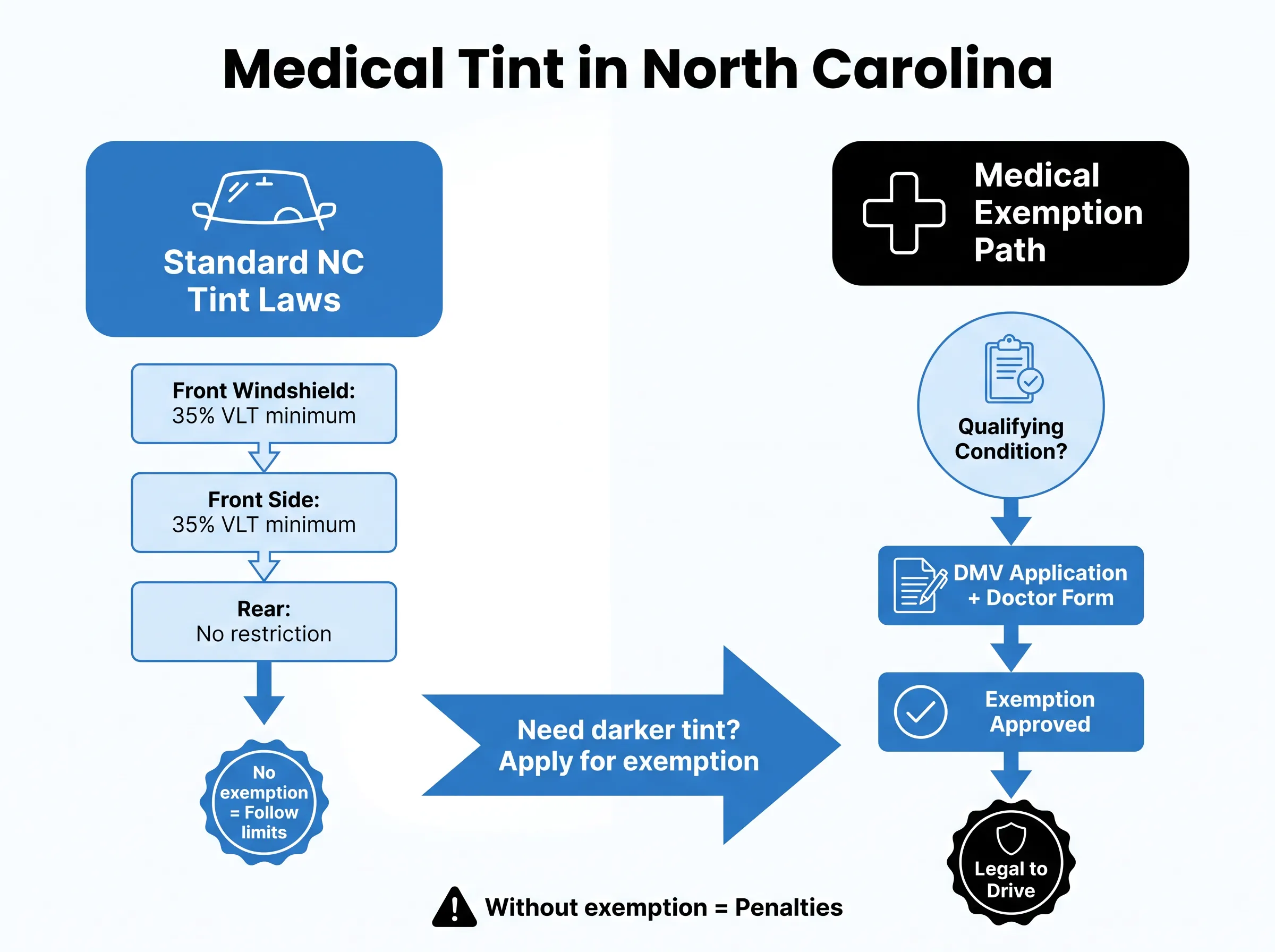
North Carolina requires 35% visible light transmission (VLT) on front side windows for most passenger vehicles. Multipurpose vehicles have exceptions. At least 35% of light must pass through the tint on the windows that the rule covers.
For passenger cars, rear side windows and the back window must also allow at least 35% VLT. Multipurpose vehicles, such as SUVs, trucks, and vans, have no VLT limit on rear side and back windows.
The windshield can have tint only above the AS-1 line. That is usually the top five inches. This rule applies to all vehicles.
How Medical Exemptions Modify These Rules
Medical exemptions allow darker tint on front side windows. A physician must certify the need. Most approved exemptions allow 20% VLT or darker, based on how severe your condition is.
The permit is issued to you for a specific vehicle, listed by VIN and tag number. Check the terms on your permit before you let anyone else drive the vehicle.
For example, a person with lupus might get approval for 15% VLT on the front windows. That blocks harmful UV rays that trigger disease flares. Read the North Carolina medical window tint exemption rules before you apply. You will know what papers to gather.
The windshield stays limited to the AS-1 line, even with medical approval. Some severe conditions may qualify for more windshield coverage. That needs specific documentation.
Legal Basis for Medical Tint Waivers
According to NC General Statute § 20-127, the state allows medical tint exemptions. They require physician certification and DMV approval.
The law requires licensed physicians to document your diagnosis. They must explain why darker tint is medically necessary. The document must give the recommended VLT percentage.
The DMV Medical Review Program reviews each application. It checks the medical need and whether the requested tint matches your condition. This protects patients who need exemptions. It also protects public safety.
Medical Conditions That Qualify for Tint Exemptions in NC
North Carolina recognizes certain medical conditions that need darker tint than the standard limit. A licensed physician must document each one. The physician must explain why UV protection through window tint matters for your health.
The state looks at how badly light exposure affects your condition. It also asks whether darker tint clearly protects you from symptom triggers or disease progression.
Photosensitivity and Light-Triggered Conditions
Lupus and systemic lupus erythematosus (SLE) qualify because UV exposure triggers severe flares. These flares can harm internal organs, not just skin. Sunlight can set off immune system attacks in people with lupus. Protection inside the vehicle helps with daily activities.
Porphyria causes extreme reactions to light. These include painful blistering, scarring, and possible liver damage. Even brief sun through car windows can trigger symptoms that last for days.
Xeroderma pigmentosum and polymorphous light eruption also qualify because of severe UV sensitivity.
Read about which medical conditions meet exemption criteria to see if your diagnosis fits.
Autoimmune and Skin Disorders
Albinism qualifies. Low melanin causes extreme light sensitivity, vision problems, and a much higher risk of skin cancer from UV. People with albinism lack the natural sun protection most people have.
At TintedMD, we guide patients with photosensitive conditions through the exemption process.
Medication-induced photosensitivity can qualify with proper documentation. Antibiotics, chemotherapy drugs, and other treatments can cause it. Your physician must name the medication and say how long you need protection.
The clinical evidence supporting window tint for photosensitive conditions shows clear benefits. Tint reduces how often and how badly symptoms occur.
Eye Conditions and Vision Impairments
Photophobia from various causes may qualify. Light sensitivity must interfere with safe driving or daily life. Your ophthalmologist must document the cause and how bad it is.
Corneal dystrophies and post-surgical sensitivity can warrant an exemption. This includes sensitivity after cataract surgery, LASIK, or other eye procedures. The exemption may be temporary or permanent. These conditions often improve, so the length varies.
Every condition needs specific medical documentation. It must detail your diagnosis and how much it affects you. Your doctor must explain why darker tint is a medical need, not a preference. General statements about light sensitivity will not pass DMV review.
Step-by-Step Application Process for NC Medical Tint Exemption
A medical tint exemption in North Carolina takes careful paperwork. Your physician and the DMV both play a part. The process is simple when you follow the steps.

Required Medical Documentation from Your Physician
Book a visit with the right specialist. Dermatologists handle skin-related sensitivity like lupus. Ophthalmologists treat eye conditions. Rheumatologists manage autoimmune disorders.
Your physician must complete the medical certification section of the Tinted Window Waiver Application Form. The form asks for three things. These are your diagnosis, a clear reason why window tint is medically necessary, and the VLT percentage you need.
The doctor must link your condition to the need for darker tint. Vague statements will not work. The DMV wants clear medical reasons. They must show how standard tint fails to protect your health.
Completing the DMV Application Forms
Get the Tinted Window Waiver Application Form from the official NC DMV waiver documents page. You can also pick up a paper copy at any driver license office. Fill in the personal section. Add your name, address, driver’s license number, and vehicle details.
Many people save time by learning how to apply without visiting DMV offices. At TintedMD, we help clients pick the documentation method that fits their situation.
Review the form before you send it. Missing details or unclear physician notes will delay processing. You may have to resubmit.
Submission and Processing Timeline
Send your completed Tinted Window Waiver Application Form to the NC DMV Medical Review Unit. Mail it to 3112 Mail Service Center, Raleigh, NC 27697-3112. You can also call the unit at (919) 861-3570 with questions about your application.
The DMV does not state a set processing time, so allow several weeks. Complex cases may need more review or more paperwork from your physician. That adds time. Call the Medical Review Unit if you need an update.
There is no application fee. You will pay for your physician visit and any fees for documents. Once approved, you get an official exemption certificate. It must stay in your vehicle whenever you drive with medical tint.
Installing Tint After Receiving Your Medical Exemption
After you get your certificate, find a qualified installer. They must apply tint that meets your approved level. A good installer and good records protect you from legal trouble and keep you compliant with North Carolina law.
Choosing a Licensed Tint Installer in North Carolina
Pick a licensed and insured tint professional. Look for one with medical exemption experience. Many installers do not know the VLT rules for exemptions. Ask if they have done exemption work before.
Experienced installers know how to measure and apply tint at your approved level. They also know exemption jobs need more precision than standard jobs. Small errors can matter.
Keeping Your Tint Compliant With Your Exemption Specifications
Give your installer a copy of your certificate. It shows the approved VLT for each window. The installer uses it as a guide for the whole job.
A good installer measures VLT after the job to check compliance. They should give you the actual percentages for each window. These should match your certificate.
Your tint must not be darker than your exemption allows. That is true even if darker tint might help your condition. Darker tint than approved voids your exemption. It also exposes you to citations.
Documentation Requirements for Installation
Ask for a receipt or installation certificate. It should list the installer’s business details, the install date, and the VLT for each window. It proves a professional applied your tint to match your exemption.
Keep copies of all installation papers in your vehicle with your exemption certificate. At a stop, knowing what to show police during a stop keeps the exchange calm. It also shows you follow state law.
Store a digital backup of both documents on your phone or in cloud storage. If you lose the paper copies, you can still show proof.
What to Do During Traffic Stops With Medical Tint
A traffic stop can be stressful. Preparation makes it easier. How you handle the stop can decide whether you drive away or face extra trouble.
Required Documentation to Present to Officers
Tell the officer about your medical exemption as soon as they reach your window. Hand over your exemption certificate with your license, registration, and insurance card when asked.
Store your certificate in the glove box or center console. Make it easy to reach. A phone photo works as a backup. Officers still want to see the paper certificate to check that it is real.
If you left your certificate at home, you will likely get a citation. You can often get it dismissed. Show the valid certificate to the court or DMV within the set timeframe.
How Law Enforcement Verifies Medical Exemptions
Officers use a visible light transmission (VLT) meter to measure your tint. They compare the reading with the VLT on your certificate.

The check takes a few minutes. The officer places the meter on your window and gets an instant reading. It shows whether your tint matches your approved level.
According to North Carolina window tint citations guidelines, officers can also check your exemption in state databases during the stop.
Your Rights During Tint-Related Stops
Officers cannot require medical details beyond what your certificate shows. Your diagnosis and treatment stay private.
Stay calm and polite. Officers recognize medical exemptions as legal documents when you present them properly.
Did you get a citation despite valid papers? You can contest it in court. Bring your certificate, installation receipts, and any photos from the stop.
Maintaining Your Medical Tint Exemption and Renewal Requirements
Keep your exemption current. That protects you from citations at traffic stops. Exemptions do not last forever. Know your renewal timeline so you stay legal.
Exemption Validity Periods and Expiration Dates
Medical tint exemptions in North Carolina are usually valid for 1-5 years. The length depends on whether your condition is temporary or permanent. Chronic conditions like lupus or albinism often get longer terms. Post-surgical or medication-related sensitivity may get shorter ones.
Your certificate shows the expiration date. The DMV sets the term based on your physician’s view of how long you need UV protection. Conditions that may improve get shorter terms. Lifelong conditions get longer ones.
When and How to Renew Your Medical Exemption
Set a reminder 60 days before your exemption expires. Then start the renewal. This helps you avoid driving with an expired exemption. You will submit an updated Tinted Window Waiver Application Form. Your physician must state that your condition still needs window tint.
Your doctor must verify that you still have one of the qualifying medical conditions for tint. They must also state that darker windows are still needed. Renewal follows the same steps as your first application. Processing time varies, so contact the Medical Review Unit if you need an update.
Submit early. A gap in coverage can lead to citations at routine traffic stops.
Transferring Exemptions Between Vehicles
Each permit is issued to you for a specific vehicle, listed by VIN and tag number. If you buy a different vehicle, you need a new application. The permit does not follow the vehicle to a new owner.
If you sell a vehicle with medical tint, the exemption does not transfer. The buyer must meet standard NC tint laws or get their own exemption. Otherwise, the buyer must remove the tint.
Keep digital and paper copies of your certificate in case the original is lost or damaged. Store a photo on your phone. Keep a laminated copy in your glove box for police.
Penalties for Driving With Illegal Tint Without Proper Exemption
Illegal window tint in North Carolina brings real costs. A warning is not the only outcome. Knowing the penalties shows why the right exemption paperwork is worth the effort.
Citations and Fines for Non-Compliant Window Tint
Non-compliant tint is an equipment violation under North Carolina law. An officer can issue a citation with a fine of up to $200. Court costs may apply on top of the fine.
Repeat violations can bring more trouble. Court costs and other fees may also apply. Ask the court or a licensed attorney how a second citation could affect your record.
Tint Checks and Safety Inspections
North Carolina removed window tint from the annual safety inspection under Senate Bill 391 (S.L. 2025-47). A vehicle with illegal tint no longer fails inspection for that reason.
Officers can still cite illegal tint during a traffic stop, and the fines above apply. Keep your exemption certificate and installation receipts ready so you can show compliance.
Legal Consequences of Fraudulent Exemption Claims
Providing false information on an exemption application or physician form is a serious mistake. Apply only if your condition meets the state’s medical criteria. Ask the DMV or a licensed attorney which penalties could apply to your case.
Law enforcement and DMV staff check exemptions against state databases. Fraud is easy to spot. A real exemption gives you full legal protection. The risk of faking one is not worth it.
Conclusion
Can you drive with medical tint in North Carolina? Yes. You can drive legally with darker window tint when you get a medical exemption through the DMV Medical Review Program. The exemption protects your health and keeps you within state law.
Do you have light sensitivity from lupus, albinism, or another qualifying condition? Start with a visit to your physician. Talk about your symptoms and treatment needs. Ask your doctor to complete the Tinted Window Waiver Application Form. Then send the form to the NC DMV.
After approval, hire a licensed installer who knows medical exemptions. Ask them to check that the tint matches your approved VLT. Keep your certificate in the vehicle. Mark your calendar for renewal before the expiration date.
TintedMD can guide you through each step. We help you learn which conditions qualify. We also connect you with installers who specialize in medical tint. Get the UV protection you need without legal worry.
Ready to get your medical tint exemption? Start your application today and confirm your tint meets the exemption limit before you drive.
Frequently Asked Questions
Can you drive with medical tint in North Carolina?
Yes. You can drive in North Carolina with window tint darker than the standard limit when you carry a valid exemption signed by a licensed physician and the film on your vehicle matches what the exemption describes. Keep the paperwork in the vehicle so you can show it if an officer asks about your tint.
Does a medical tint exemption replace the North Carolina tint law?
No. The standard tint law still applies to every driver. A medical exemption documents an exception to that law for a specific medical need, so you can run darker film than the general limit without a violation. It only covers the film and vehicle described in your paperwork.
What are the standard window tint limits in North Carolina?
Front side windows on most passenger vehicles must allow at least 35% visible light transmission (VLT). Passenger cars have the same limit on rear side and back windows, and windshield tint is allowed only above the AS-1 line. A medical exemption is for drivers whose condition calls for darker film than these limits allow.
Is the medical tint certificate a template?
No. It is a clinician-issued note written after a visit. A licensed physician reviews your condition and documents the darker film level that is medically appropriate for you, so the certificate reflects your individual case rather than a generic form.
Does TintedMD install window tint film?
No. TintedMD issues the medical certificate only. A licensed installer handles the film installation, so choose an installer who can apply film that matches the darkness listed on your exemption.
Can I get my medical tint exemption on the same day?
Often, yes. Many patients receive their certificate the same day after the online visit when it is clinically appropriate. Timing depends on the physician's review of your information, so complete the visit before you schedule your tint installation.
What if I am not approved for a medical tint exemption?
Approval is a medical decision made by the physician. TintedMD states a money-back path when a patient is not approved, so you are not left paying for a certificate you cannot use. Read the refund terms during checkout for the details.
Where do I start if I want to drive legally with medical tint in North Carolina?
Start the North Carolina online visit at https://patient.tintedmd.com/tinted-window/welcome?state=nc. You answer health questions, a licensed physician reviews them, and you receive your certificate if you are approved.

Meet the author
Anam Moin
I’m Anam Moin, a health-focused writer at TintedMD. I write about medical window tint exemptions, light-sensitive conditions, and state tint regulations, bringing together health and regulatory information in a reader-friendly way.
Get Your Medical Tint Exemption Online in Minutes
Check Your Eligibility