Get Your Kansas Medical Window Tint Exemption Online
See What Our Customers Are Saying!
in DMV Window Tint Exemption evaluation.
Common Conditions That Qualify for
Medical Tint Exemption
Autoimmune Disorders
- Systemic Lupus Erythematosus (SLE)
- Discoid and Cutaneous Lupus
- Dermatomyositis (Classic/Juvenile)
- Scleroderma and Mixed Connective
- Other Photosensitive Autoimmune
Skin Disorders
- Total or Facial Vitiligo
- Chronic Actinic Dermatitis
- Photosensitive Eczema Types
- Solar Urticaria (Sun Allergy)
- Polymorphous Light Eruption
Eye Conditions
- Photophobia (Light Sensitivity)
- Cataracts and Glaucoma
- Macular Degeneration Issues
- Retinitis Pigmentosa Types
- Post-Surgery Light Sensitivity
Neurological Pain
- Chronic Migraines (Light-Triggered)
- Migraine-Associated Photophobia
- Cluster Headaches with Aura
- Post-Concussion Light Sensitivity
- Neurological Light Intolerance
Genetic Conditions
- Xeroderma Pigmentosum (XP Types)
- Oculocutaneous Albinism (OCA)
- Porphyria / Erythropoietic Proto
- Cockayne Syndrome Variants
- Bloom Syndrome and Related
Drug Photosensitivity
- Tetracycline Antibiotics (Doxy)
- Chemotherapy Medications
- Retinoids Like Isotretinoin
- NSAIDs and Diuretics
- Psychiatric/Cardiac Medications
Kansas: Everything You Need to Know
Kansas Window Tint Exemption Laws
Kansas's medical window tint exemption is authorized under Kansas Statutes § 8-1749a(c). The exemption allows individuals with qualifying medical conditions to install clear, colorless, transparent UV-blocking film on any vehicle window, with written certification from a licensed physician or optometrist.
- A physician or optometrist licensed to practice in Kansas must provide a signed statement identifying the driver or occupant with reasonable specificity and stating that, in their professional opinion, equipping the vehicle with UV-protective film is necessary to safeguard the patient's health.
- The exemption applies to clear, colorless, and transparent UV-blocking film installed on the windshield, side windows, and rear windows.
- The film must have a minimum visible light transmittance of 78% on its own and a combined transmittance of at least 70% when measured with the existing window glass per Federal Motor Vehicle Safety Standard No. 205.
- The film must be designed and manufactured to enhance the ability of the existing window glass to block the sun's harmful ultraviolet A or B rays.
- If the film tears, bubbles, or becomes otherwise worn to prohibit clear vision, it must be removed or replaced immediately.
- The physician's signed statement must be carried in the vehicle at all times.
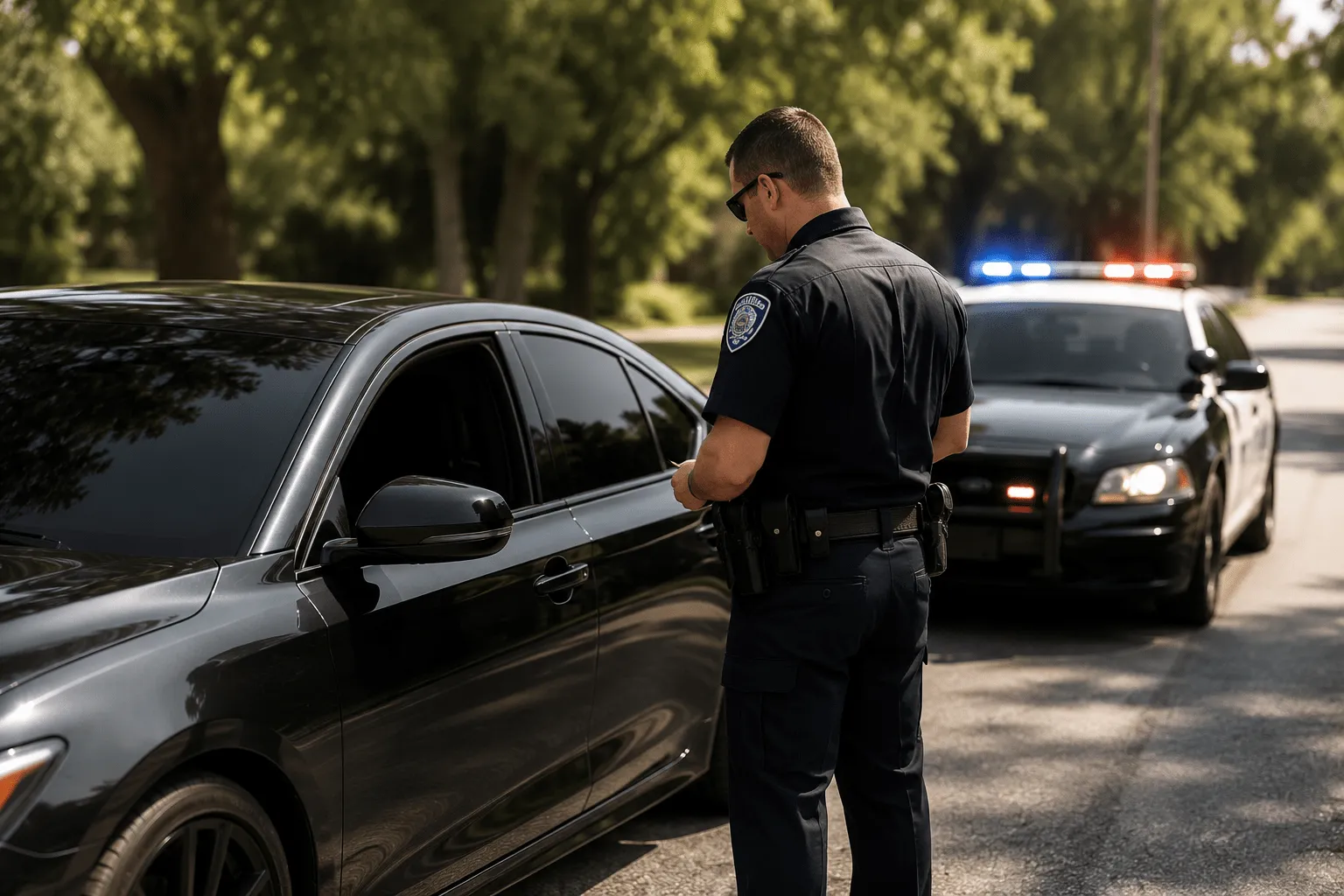
- If a driver is cited for failure to possess the signed statement, they have 60 days to either produce the statement in court or remove the film, if they do, the citation is dismissed under KSA § 8-1749a(d).
- Violations of KSA § 8-1749a are classified as a misdemeanor.
Documents You’ll Need
To apply for a medical window tint exemption in Kansas, you'll need:
- A signed physician statement completed by a licensed Kansas physician or optometrist
The statement must be completed by one of the following:
- Licensed physician licensed to practice in Kansas
- Licensed optometrist licensed to practice in Kansas
The statement must include:
- Identification of the driver or occupant with reasonable specificity
- A professional opinion that equipping the vehicle with UV-protective film is medically necessary to safeguard the patient's health
If applying through a telehealth service like TintedMD, you will receive:
- A signed physician statement delivered via email within 24-48 hours, ready to carry in your vehicle and present to law enforcement upon request
Note:
The signed statement must be carried in the vehicle at all times and presented to law enforcement upon request. Kansas does not issue a state certificate or sticker, the physician's signed statement is the required documentation.

Legal Tint Limits
Kansas law sets specific tint limits under KSA § 8-1749a. The same limits apply uniformly to all vehicle types. Patients with a valid physician or optometrist statement under subsection (c) are authorized to install clear UV-blocking film within the specified parameters.
Standard Kansas Tint Limits (Without Exemption):
- Windshield: Non-reflective tint permitted only above the AS-1 line. Must not be red, yellow, or amber in color.
- Front Side Windows: Must allow more than 35% VLT. No metallic or mirrored appearance permitted.
- Back Side Windows: Must allow more than 35% VLT. No metallic or mirrored appearance permitted.
- Rear Window: Must allow more than 35% VLT. Dual side mirrors required if rear window is tinted.
- Prohibited Colors: Red, yellow, and amber tints are not permitted on any window.
With a Medical Exemption:
- Patients with a valid physician or optometrist statement under KSA § 8-1749a(c) may install clear, colorless, transparent UV-blocking film on the windshield, all side windows, and the rear window.
- The film must maintain a minimum VLT of 78% on its own and a combined VLT of at least 70% with the existing glass – it does not permit darker-than-legal tint.
- The film must be specifically designed to block UV A or B rays.
- The physician's signed statement must be carried in the vehicle at all times.
How to Get Your Doctor-Signed Exemption Form
See If You Qualify
(5 minutes)
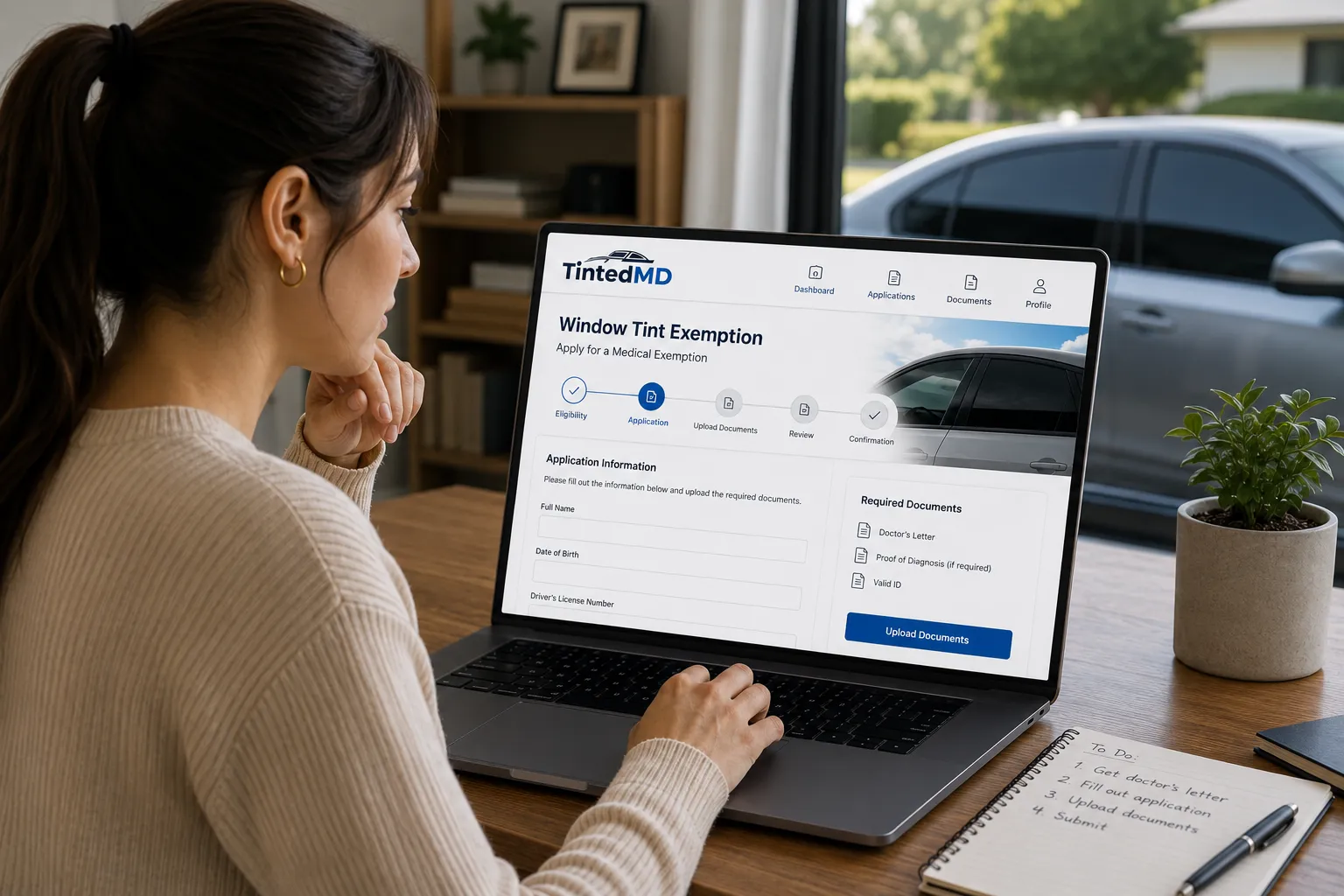
Answer simple questions about your qualifying condition to confirm eligibility for a medical window tint exemption.
Complete Medical Questionnaire
Fill out your medical history questionnaire – all online, from any device.
Licensed Doctor Evaluation
Kansas-licensed physician will conduct your medical evaluation and review your condition.
Your Certification Is Generated
Your physician-signed exemption letter will be completed, signed, and uploaded to your patient portal.
Get Your Signed Exemption Form
Download and print your physician-signed exemption certificate to keep in your vehicle. We're also happy to mail it to you.
See If You Qualify
(5 minutes)
Answer simple questions about your qualifying condition to confirm eligibility for a medical window tint exemption.
Complete Medical Questionnaire
Fill out your medical history questionnaire – all online, from any device.
Licensed Doctor Evaluation
Kansas-licensed physician will conduct your medical evaluation and review your condition.
Your Certification Is Generated
Your physician-signed exemption letter will be completed, signed, and uploaded to your patient portal.
Get Your Signed Exemption Form
Download and print your physician-signed exemption certificate to keep in your vehicle. We're also happy to mail it to you.
Why Do People Choose TintedMD?
100% Money-Back Guarantee
Flexible Payment Options
Fast Same-Day Processing
Licensed Kansas Physicians Only
HIPAA Compliant & Secure
State-Approved Documentation
Don’t just take our word for it!
or connect with our licensed medical professionals today.
Benefits of Having Medical Tint Exemption
Legal Protection
No Renewal Required
UV Protection
All Windows Covered
FAQs
Why do I need TintedMD? Can’t I just get my windows tinted?
Kansas law under KSA § 8-1749a(c) requires a signed statement from a licensed Kansas physician or optometrist before UV-protective film beyond standard legal limits can be legally installed. Without that document in your vehicle, you are subject to a misdemeanor citation. TintedMD connects you with a licensed Kansas physician online, without a clinic visit.
What exactly does TintedMD provide?
TintedMD connects you with a licensed Kansas physician who evaluates your qualifying condition online and provides a signed physician statement as required under KSA § 8-1749a(c). The statement is delivered to your patient portal, ready to carry in your vehicle and present to law enforcement.
How much does TintedMD cost?
TintedMD offers the lowest cost in the US for medical window tint exemption certifications. You only pay if our licensed physician approves your evaluation – 100% money-back guarantee. We also offer interest-free payment plans to make it even more affordable.
What medical conditions qualify for a Kansas window tint exemption?
Kansas law does not specify a list of qualifying conditions. Any condition for which a licensed Kansas physician or optometrist certifies that UV-protective film is medically necessary qualifies. Commonly approved conditions include Lupus, Vitiligo, Xeroderma Pigmentosum, Albinism, Photophobia, chronic migraines, and drug-induced photosensitivity.
What does the Kansas exemption actually allow?
The Kansas exemption under KSA § 8-1749a(c) authorizes clear, colorless, transparent UV-blocking film on all windows including the windshield. The film must maintain at least 78% VLT on its own and a combined VLT of at least 70% with the existing glass. It does not authorize darker-than-legal tinted film, it only authorizes transparent UV-protective film that blocks harmful UV A and B rays while maintaining clear visibility.
Do I need to register my exemption with the Kansas DMV?
No. Kansas does not require registration of the exemption with any state agency. The physician's signed statement is the only required documentation and must be carried in the vehicle at all times.
Explore Kansas Hotspots
With Medical Window Tint Exemption
Kansas City
Straddling the Kansas-Missouri border, this vibrant metro delivers legendary barbecue and rich jazz heritage. Explore world-class fountains, thriving arts districts, and passionate Chiefs Kingdom spirit.
Wichita
Kansas' largest city blends aviation history with a revitalized downtown arts and entertainment scene. Discover world-class museums, beautiful riverside parks, and authentic Great Plains hospitality.